
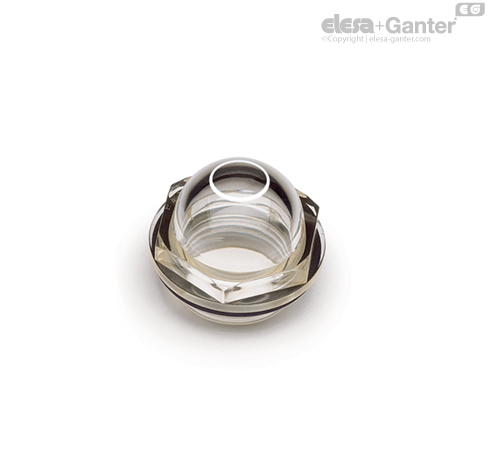
Elesa+Ganter 11106 HCFE.24/C-1 Oil Level Sight Glass
The Elesa+Ganter 11106 HCFE.24/C-1 oil level sight glass is a compact visual inspection component used to check oil level directly on reservoirs, gearboxes, lubrication units and hydraulic tanks. Its transparent technopolymer body allows quick level verification without removing covers or opening the system.
Technical Characteristics
This HCFE-C model is made from transparent polyamide-based PA-T technopolymer. The 11106 version has a G 1 thread, 24 mm reference size and a red circular reading reference. The red circle helps operators identify the correct level area quickly during routine checks.
Sealing and Temperature Range
The sight glass uses an NBR synthetic rubber packing ring. It is designed for a maximum continuous working temperature of 100°C. The printed reference marking is resistant to oils with additives, greases, alkali and white spirit under normal working conditions. Contact with alcohol, solvents or detergents containing alcohol should be avoided.
Elesa+Ganter 11106 HCFE.24/C-1 Oil Level Sight Glass Installation Notes
Correct tightening is important because the indicated torque helps keep the packing ring in the correct position and supports optimal tightness. For this model, the tightening torque is 18 Nm. For more brand and product information, visit Elesa+Ganter.
Elesa+Ganter 11106 HCFE.24/C-1 Oil Level Sight Glass FAQ
What is an oil level sight glass used for?
It provides a direct visual check of the oil level in a reservoir, helping maintenance teams confirm whether the fluid level is within the expected range.
What does the red circle indicate?
The red circle is a visual reference mark. It helps the operator read the fluid level quickly and consistently during inspection.
Which thread does this model use?
The HCFE.24/C-1 version uses a G 1 thread, making it suitable for compatible tank or reservoir ports.
Can it be cleaned with alcohol?
No. Alcohol and detergents containing alcohol should be avoided because they may affect the transparent technopolymer material or printed marking.
When should compatibility be checked?
Compatibility should be checked whenever the fluid includes special additives, operates at unusual temperatures or is used in a non-standard industrial environment.