
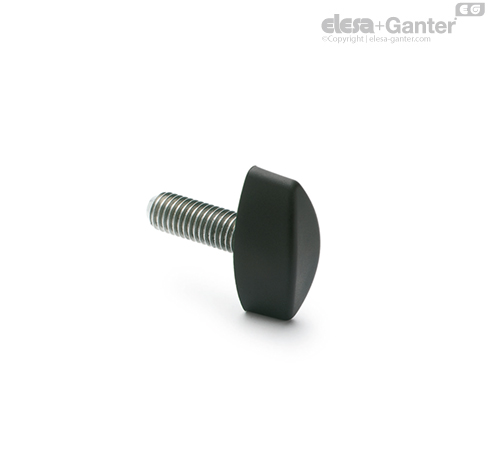
Elsa+Ganter CT.476/30-SST-P-M6X16 Wing Knob in Industrial Adjustment Systems
The Elesa+Ganter CT.476/30-SST-P-M6X16 wing knob is a useful manual fastening element for machines and devices that need frequent adjustment without sacrificing material quality. In many technical assemblies, the right knob is not just a minor hardware item. It directly affects how comfortably operators interact with guards, positioning points, removable sections, and maintenance-access features.
This model is built with a black matte glass-fibre reinforced polyamide technopolymer body and an AISI 303 stainless steel threaded stud. That combination supports reliable daily handling while also offering the corrosion-resistant properties often expected in modern industrial and process-oriented environments.
Technical Profile of the Elesa+Ganter CT.476/30-SST-P-M6X16 Wing Knob
The Elsa+Ganter CT.476/30-SST-P-M6X16 wing knob includes a 32 mm wing diameter, an M6 thread, a 15 mm hub length, and a 16 mm threaded stud. The body width parameter is 13 mm, and the tightening torque value is listed at 10 Nm. These specifications position it between shorter and longer M6 stud variants, making it a balanced choice for many general machine applications.
- 32 mm wing diameter
- M6 stainless steel threaded stud
- 16 mm stud length
- Black reinforced PA technopolymer body
- 10 Nm tightening torque value
Why the M6x16 Format Is Often a Practical Middle Ground
The Elesa+Ganter CT.476/30-SST-P-M6X16 wing knob suits applications where a 10 mm stud may be too short, but a longer stud would add unnecessary projection or take up too much internal space. This makes it well matched to equipment covers, brackets, alignment systems, modular assemblies, and service points where a moderate engagement length improves fastening confidence.
Designers often benefit from this middle-range stud length because it allows more flexibility during assembly while still keeping the component compact. In practical terms, that can mean easier installation, fewer clearance concerns, and more predictable manual operation for staff who use the equipment every day.
Material Benefits in Real Working Conditions
The reinforced polyamide body supports repeated gripping and manual tightening. At the same time, the stainless steel stud helps maintain performance where humidity, washdown routines, or long-term environmental exposure are factors. This material pairing is especially relevant for machine builders and maintenance planners who want durable but user-friendly components.
The wing profile itself also matters. A well-shaped wing knob allows better finger contact than many round alternatives in situations where fast, repeatable hand adjustment is needed. That is one reason this style remains widely used across industrial sectors.
Elesa+Ganter CT.476/30-SST-P-M6X16 FAQ
What is the advantage of choosing the Elesa+Ganter CT.476/30-SST-P-M6X16 wing knob?
Its main advantage is balance. The 16 mm stud provides more engagement than shorter versions while keeping the overall assembly compact. That makes it a versatile option for a wide range of machine components and operator-access points.
Elesa+Ganter CT.476/30-SST-P-M6X16 Where can an M6x16 wing knob be used effectively?
It is commonly suitable for machine guards, adjustment stops, removable covers, support frames, and panel-mounted fastening points. Anywhere regular manual operation is needed, this kind of wing knob can improve day-to-day usability.
Elesa+Ganter CT.476/30-SST-P-M6X16 Why does the tightening torque value matter?
The listed torque value helps indicate the intended manual tightening range of the component. It gives designers and users a better understanding of how the knob is expected to perform in normal operating conditions.
Elesa+Ganter CT.476/30-SST-P-M6X16 Is the stainless steel stud useful in cleaning-sensitive environments?
Yes, it can be beneficial in environments where corrosion resistance and material durability matter. The final decision should still be based on the actual cleaning agents, moisture level, and equipment requirements involved.
Does the technopolymer body reduce quality compared with all-metal parts?
Not necessarily. In many manual clamping applications, reinforced technopolymer offers important benefits such as lower weight, comfortable handling, and resistance to surface wear, while the metal stud provides the necessary threaded performance.
For more information about Elesa+Ganter, you can review related wing knob configurations and compare other CT series dimensions for more specific machine requirements.