
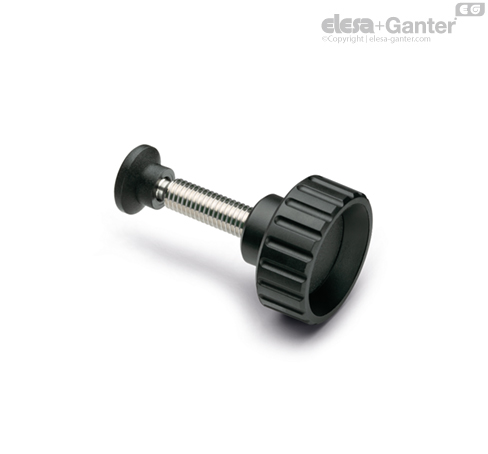
Elesa+Ganter BT.40-SST-P-M10X35-SV21 Fluted Knob Overview
The Elsa+Ganter BT.40-SST-P-M10X35-SV21 fluted knob is a manual clamping and adjustment component intended for industrial systems that require a larger grip size, an M10 stainless steel threaded stud, and a locking thrust pad for more controlled surface contact. It is part of the BT-SST-p-SV range, which is built for mechanical fastening points where frequent manual use and material reliability are both important.
What This Model Offers
This version is larger than the 32 mm variants and is intended for applications that benefit from a more substantial hand grip and an M10 thread size. The thrust pad helps prevent direct metal-to-surface contact at the locking point, which is useful in assemblies where surface integrity and repeatable clamping matter.
The Elsa+Ganter BT.40-SST-P-M10X35-SV21 fluted knob includes a 40 mm knob diameter, an M10 threaded stud, a 35 mm stud length, and a 21 mm thrust pad diameter. This makes it suitable for compact but stronger fastening points that require a larger grip format.
Material Composition
The knob body is manufactured from black matte polyamide-based technopolymer. The threaded stud is AISI 303 stainless steel with a spherical end. The thrust pad is made from black POM-based technopolymer and is supplied separately. This material combination supports industrial use where corrosion resistance, reliable handling, and good contact behavior are desired.
Industrial Use Cases
This model may be used in machine construction, industrial enclosures, process equipment, modular frames, jigs, adjustment devices, tooling supports, and operator-controlled locking points. The M10 thread makes it relevant where stronger clamping hardware is required compared with smaller M8 versions.
Elesa+Ganter BT.40-SST-P-M10X35-SV21 Technical Dimensions
- Knob diameter (D): 40 mm
- Thread: M10
- Threaded stud length (L): 35 mm
- d1: 27 mm
- d2: 19 mm
- d3: 25 mm
- Thrust pad diameter (d4): 21 mm
- l1: 8 mm
- l2: 35 mm
- l3: 13 mm
- l4: 4 mm
- l5: 10 mm
- Overall reference value: 48 mm
Why This Product Matters in Design Selection
Choosing the right clamping knob is often about balancing thread size, reach, grip comfort, and contact behavior. This model addresses those needs with a larger diameter knob for improved handling and an M10 threaded stud for applications that need a more robust fastening interface.
Elesa+Ganter BT.40-SST-P-M10X35-SV21 For more information about industrial standard components and related product ranges, learn more about Elesa+Ganter.
FAQ
What is the main difference between this model and the BT.32 series?
The main differences are the larger 40 mm knob diameter and the M10 threaded stud. These features make it more suitable for applications that require a stronger thread size and a larger hand grip.
Why is an M10 fluted knob useful?
An M10 thread is often selected when the assembly needs a more substantial fastening point than M8 can provide. It can be useful in equipment frames, heavy fixtures, and adjustment systems that require a larger mechanical interface.
Elesa+Ganter BT.40-SST-P-M10X35-SV21 What does the locking thrust pad do here?
The thrust pad helps separate the stud from the surface being locked. This can improve contact behavior, reduce marking risk, and support more controlled clamping performance.
Is the BT.40-SST-P-M10X35-SV21 suitable for frequent adjustment?
Yes. The fluted knob shape and larger diameter are both helpful for repeated manual operation, especially where the user needs a comfortable grip during setup or routine machine changes.
Elesa+Ganter BT.40-SST-P-M10X35-SV21 Where can this product typically be installed?
It can be installed in machinery, industrial fixtures, guarding systems, adjustable frameworks, and process equipment where manual tightening and controlled positioning are required.
Why choose stainless steel for the stud?
AISI 303 stainless steel offers better corrosion resistance than many standard steel alternatives, which makes it a strong option for industrial environments where durability and material stability are part of the specification.