
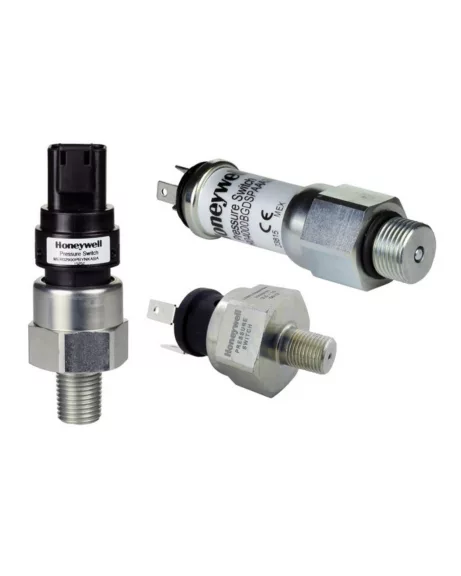
Honeywell 1485067-1 Pressure Switch Spring Guide
The Honeywell 1485067-1 pressure switch spring is identified in public component listings as a Honeywell Sensing and Productivity Solutions part described simply as SPRING. That concise label matters more than it may seem. In pressure switch assemblies, a spring is rarely a generic add-on. It is typically one of the parts that helps determine how the switch responds to pressure changes, how consistently it returns to its normal state, and how stable the switching behavior remains over time.
What Is the Honeywell 1485067-1 Pressure Switch Spring?
When engineers search for a Honeywell 1485067-1 pressure switch component, they are often looking for a precise replacement part rather than a complete switch body. In this case, the Honeywell 1485067-1 spring appears in public listings as a bulk-supplied Honeywell component. That suggests it is intended for system-level service, repair, or controlled assembly work where exact fit and mechanical behavior are important.
Within a pressure switch system, a spring can influence the set point, reset behavior, and repeatability of the switching action. Even when the public catalog entry is short, the practical role is not minor. A small mechanical element can directly affect reliability in applications that depend on consistent response to rising or falling pressure.
Why This Component Matters in Pressure Switch Applications
Honeywell’s standard pressure switch families are known for electromechanical on/off switching, durable construction, and options such as SPST or SPDT circuitry in broader product lines. In that context, a dedicated spring component like the Honeywell 1485067-1 pressure switch spring supports the mechanical integrity of the switching mechanism. That makes it relevant in industrial equipment, fluid control assemblies, pneumatic systems, and service environments where maintaining original switch behavior is more important than using a visually similar substitute.
One reason technicians prefer an original Honeywell part number is consistency. Springs are highly sensitive to material properties, geometry, tension profile, and long-term fatigue behavior. Using the correct part number can help preserve the intended operating feel and response characteristics of the pressure switch assembly.
Key Technical Points to Review
- Manufacturer: Honeywell Sensing and Productivity Solutions
- Part number: 1485067-1
- Public description: SPRING
- Packaging: Bulk
- Part status in one public listing: Discontinued at DigiKey
If you are validating a replacement, check the exact equipment model, service documentation, and the original assembly reference before ordering. Public listings do not provide a full dimensional or material breakdown, so matching only by appearance is not enough.
For more information about Honeywell, it is worth reviewing the broader product family and application context before specifying a spare or maintenance part.
Frequently Asked Questions
Is the Honeywell 1485067-1 a complete pressure switch?
No. Public listings identify the Honeywell 1485067-1 pressure switch related item as a spring, not as a full switch assembly. It should be treated as a component used within a larger mechanical or sensing system.
Why would a spring be important in a pressure switch?
A spring can affect switching threshold behavior, return force, repeatability, and long-term consistency. In mechanical switching systems, a small change in spring characteristics can alter how the device responds in real operating conditions.
Can I replace it with a similar-looking spring?
That is not recommended. Two springs may look similar but behave differently under load. Material, tolerance, coil design, and mechanical response all matter. If the goal is to maintain original switch behavior, the exact part number is the safest route.
Is this part still active?
One public distributor listing marks it as discontinued at that distributor. That does not always mean the manufacturer has completely retired the part everywhere, but it does mean availability should be verified carefully through current channels.
What should I confirm before using 1485067-1 in maintenance work?
Confirm the equipment model, original bill of materials, switch family, assembly drawing if available, and whether the spring is part of a calibrated mechanism. This is especially important in systems where pressure response needs to remain stable after service.