
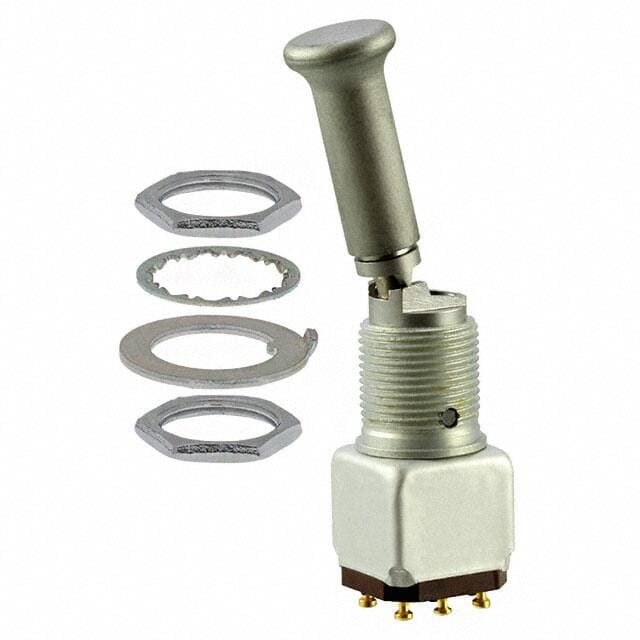
Honeywell 12TW1-50N Toggle Switch Details
The Honeywell 12TW1-50N toggle switch is a compact, application-specific control component from the Honeywell TW Series. Built for more demanding switching environments, this Honeywell 12TW1-50N operator control accessory is intended for panels where rugged construction, controlled manual input, and consistent wiring performance are all important.
Technically, the Honeywell 12TW1-50N DPDT toggle switch is a 2-pole, 3-position switch with special circuitry, solder terminals, and a 15/32 inch bushing. Its key differentiator is the mushroom-style locking lever that is locked out of the extreme position opposite the keyway. For engineers, that means this model offers a distinct operator interaction profile compared with other TW Series variants.
Why Lever Behavior Is Important
When specifying a manual switch, the electrical diagram is only part of the story. The lever action influences the safety logic of the panel, the operator’s feel, and the likelihood of unintended switching. The Honeywell 12TW1-50N toggle switch is useful in cases where one extreme position should not be entered freely, helping reduce accidental or casual movement into a sensitive operating state.
This matters in advanced machinery, transportation controls, instrumentation systems, and aerospace-style interfaces. In these environments, the switch is not just a component; it is part of the operator control strategy.
Technical Characteristics at a Glance
- Honeywell TW Series miniature toggle switch
- DPDT, 3-position architecture
- Special circuitry variant
- Solder terminal design for reliable wiring
- 15/32 inch threaded bushing
- Mushroom-style locking lever
- Locked out of the extreme position opposite keyway
Use Cases and Selection Logic
The Honeywell 12TW1-50N accessory switch is a practical choice when a design team wants a compact switch but cannot compromise on operator control integrity. A locking or lockout feature can be essential in systems where a specific state changes the machine mode, power path, signal route, or functional behavior.
Because the wider TW Series is associated with rugged service in environments exposed to vibration, shock, dust, splashing, and temperature variation, the Honeywell 12TW1-50N toggle switch is often considered in technical applications where long-term reliability is part of the specification conversation.
FAQ
What does “locked out of the extreme position” mean on the Honeywell 12TW1-50N?
It means the switch is designed so that movement into a specific extreme position is intentionally restricted by the lever mechanism. This supports more deliberate actuation and can help reduce unintended changes in system state.
Is the Honeywell 12TW1-50N suitable for compact control panels?
Yes. One reason the TW Series is widely used is its miniature format. It helps engineers work within tight panel layouts while still using a robust, high-reliability manual switch platform.
How is the 12TW1-50N different from other Honeywell TW models?
The main difference is the locking arrangement. TW Series part numbers may share the same family architecture while delivering different lever behaviors, circuit options, or operator protection characteristics.
What should be checked before final specification?
Always verify the exact lever function, switching sequence, mounting needs, and end-use operator logic. In critical systems, choosing the correct suffix variant is just as important as choosing the correct series.
Learn more about Honeywell and its broader portfolio of operator controls and industrial components.