
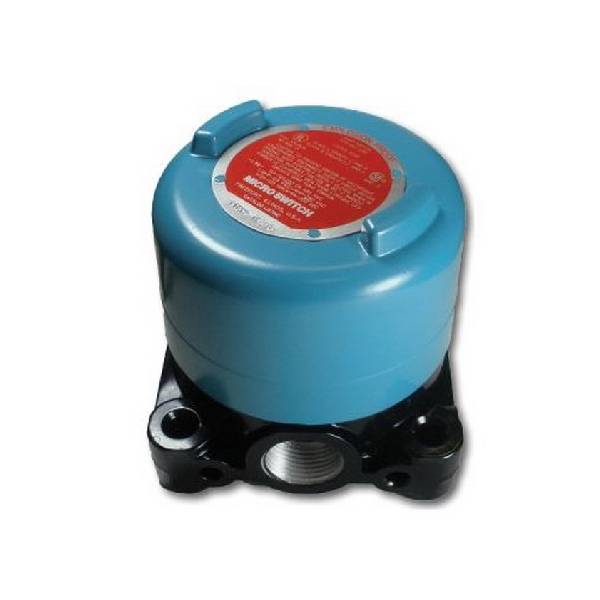
Honeywell 12CX15-D01 Limit Switch Technical Overview
The Honeywell 12CX15-D01 limit switch is one of the more clearly defined members of the Honeywell CX hazardous area switch family. Based on Honeywell’s official CX Series order guide, this model uses an epoxy-coated aluminum short housing, maintained action, and BA basic switches with two SPDT circuits. It also carries the CX Series 20 A electrical rating code, making the Honeywell 12CX15-D01 industrial limit switch a strong fit for heavy-duty applications that need reliable position signaling in demanding environments.
What Makes the Honeywell 12CX15-D01 Distinct?
One of the most useful technical distinctions in the Honeywell 12CX15-D01 limit switch is the “D01” configuration. Honeywell’s datasheet explains that the D01 suffix indicates a flat shaft for direct coupling. That matters because it allows easier integration with rotating mechanical equipment through standard couplers, reducing the need for custom linkage arrangements. For designers who want a cleaner mechanical interface, a Honeywell 12CX15-D01 direct-coupled limit switch can simplify installation.
Verified Technical Features
The CX Series documentation identifies this model as a short-housing unit with maintained action and two BA type SPDT basic switches, each associated with the CX family’s 20 A rating category. The same family datasheet lists operating temperature from -25°C to 85°C, IP66 protection, and NEMA 1, 3, 4, 4X, 6, 6P, and 13 sealing. Conduit options within the series include 3/4 x 14 NPT and M25 x 1.5 mm. Taken together, these traits position the Honeywell 12CX15-D01 hazardous location limit switch as a robust choice for industrial switching in exposed or hazardous service areas.
Application Advantages
The Honeywell 12CX15-D01 limit switch is well suited to rotary motion monitoring, actuator position verification, and machinery status feedback where a maintained switch state is preferred. Maintained action can be helpful when a system needs a stable switched condition rather than a spring-return momentary response. Combined with the direct-coupling shaft option, the device is particularly relevant in engineered motion assemblies, rotary equipment, and mechanically linked control points.
Why This Model Matters in Hazardous Environments
Not every industrial switch is designed for hazardous area use. The Honeywell 12CX15-D01 hazardous location limit switch benefits from the CX platform’s explosion-proof, weather-sealed design intent. That makes it valuable in applications where electrical switching must be dependable even when the environment includes moisture, dust, corrosive exposure, or classified-area concerns.
For more information about Honeywell, reviewing Honeywell’s wider switch portfolio can help compare maintained-action and momentary-action CX configurations.
FAQ
What type of switch is the Honeywell 12CX15-D01?
The Honeywell 12CX15-D01 is a Honeywell limit switch in the CX Series. Honeywell’s order guide identifies it as a short-housing, maintained-action model with BA basic switches and two SPDT circuits.
What does the D01 suffix mean on the Honeywell 12CX15-D01?
It indicates a flat shaft for direct coupling. This allows the switch to connect more easily to rotating equipment through standard shaft coupling methods, which can simplify mechanical integration.
Is the Honeywell 12CX15-D01 suitable for hazardous locations?
Yes. It belongs to the CX family, which is documented for hazardous atmospheres and outdoor industrial service. The final project specification should still confirm the exact certification and installation requirements for the ordered version.
What is the benefit of maintained action in this model?
Maintained action means the switch remains in its actuated state until mechanical movement changes it back. This can be useful in systems that need a steady positional indication rather than a brief pulse signal.
Where is the Honeywell 12CX15-D01 commonly used?
It is suitable for rotary position detection, actuator status monitoring, machine sequencing, interlock confirmation, and industrial equipment feedback in tough environments where a conventional limit switch might not provide enough protection or durability.