
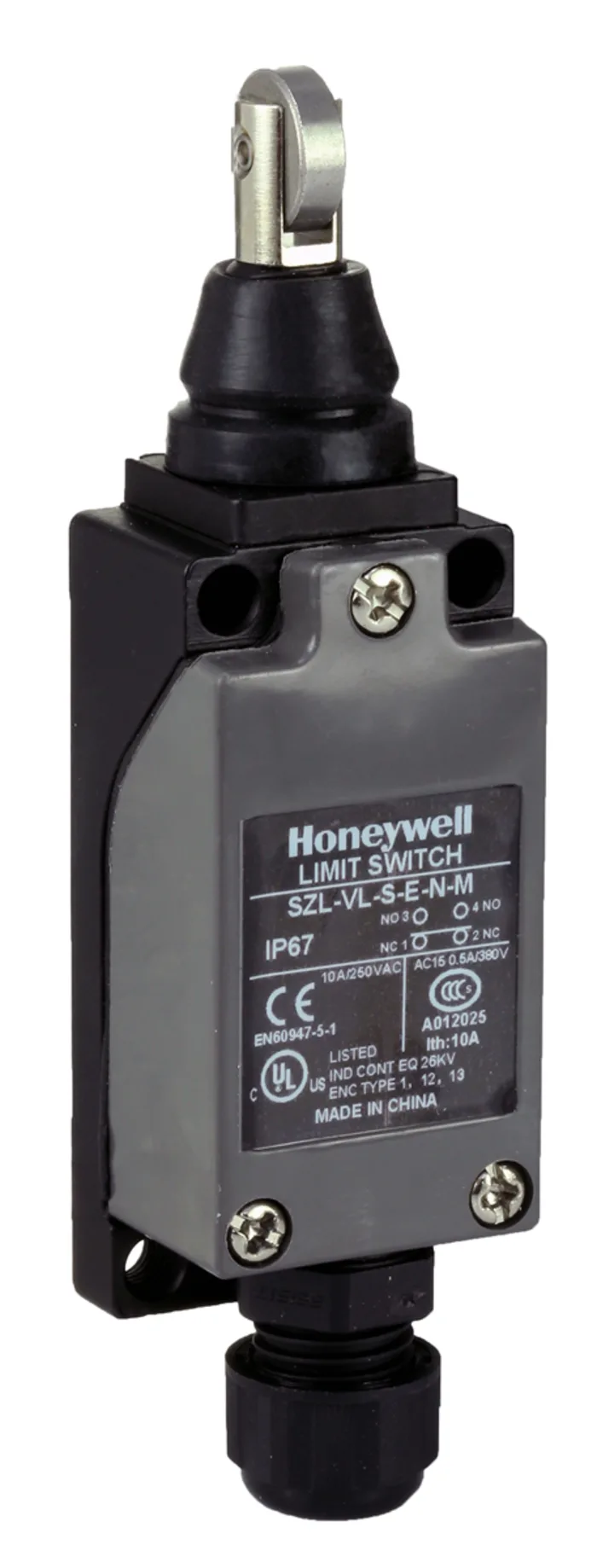
Honeywell 12CX105 Limit Switch Guide for Hazardous Industrial Use
The Honeywell 12CX105 limit switch belongs to a product category widely associated with rugged industrial position sensing and motion control. Public product references identify this model as a Honeywell 12CX105 limit switch, while Honeywell’s CX family documentation shows that this switch platform is designed for hazardous and demanding environments where enclosure integrity, weather sealing, and dependable switching matter. For engineers, maintenance planners, and system integrators, that makes the Honeywell 12CX105 hazardous location limit switch relevant in facilities where standard commercial switches may not be enough.
What Is the Honeywell 12CX105 Limit Switch?
The Honeywell 12CX105 limit switch is part of an industrial switch class used to detect presence, position, end-of-travel movement, or mechanical actuation in machinery and process systems. In practical terms, a Honeywell 12CX105 industrial limit switch can help translate mechanical motion into a clear electrical signal for monitoring and control logic.
Core Technical Characteristics of the CX Platform
Honeywell CX Series switches are engineered for outdoor and hazardous atmospheres. The official family datasheet describes weather-sealed, explosion-proof construction, support for NEMA 1, 3, 4, 4X, 6, 6P, and 13 sealing, and IP66 protection. The same platform documentation also notes operating temperatures from -25°C to 85°C, conduit termination options such as 3/4 x 14 NPT or M25 x 1.5 mm, and housings available in epoxy-coated aluminum or corrosion-resistant bronze. These are important context points when evaluating the Honeywell 12CX105 limit switch for process plants, fuel handling areas, outdoor mechanical equipment, or corrosive industrial spaces.
Where the 12CX105 Limit Switch Fits Best
A Honeywell 12CX105 limit switch is best understood as a heavy-duty device for machine position verification in demanding environments. Typical use cases include conveyor travel confirmation, gate or valve position status, mechanical interlocks, and equipment stop-point detection. Because the broader CX family is intended for hazardous atmospheres, the Honeywell 12CX105 limit switch can be especially relevant in oil and gas, chemical processing, bulk storage, and exposed outdoor installations.
Why Engineers Choose Hazardous Location Limit Switches
In real-world industrial systems, switch reliability is not only about electrical performance. It is also about surviving vibration, moisture, dust, washdown, and potential explosive atmospheres. That is why a Honeywell 12CX105 hazardous location limit switch stands apart from lighter-duty alternatives. It supports long-term operational consistency where enclosure strength and environmental sealing directly affect uptime.
For more information about Honeywell, it is useful to compare the CX platform with other heavy-duty industrial switching solutions used in hazardous areas.
FAQ
What type of product is the Honeywell 12CX105?
The Honeywell 12CX105 is publicly listed as a Honeywell limit switch. It belongs to an industrial switching family used for motion detection, position confirmation, and end-of-travel signaling in machinery and process equipment.
Is the 12CX105 suitable for harsh environments?
Yes. The relevant Honeywell CX platform is built for demanding industrial service, including outdoor and hazardous atmospheres. That makes the Honeywell 12CX105 limit switch a strong candidate where sealing, durability, and environmental resistance are important.
Can the 12CX105 be used in hazardous locations?
Honeywell’s CX family is documented for hazardous area use, including explosion-proof and weather-sealed construction. When specifying the Honeywell 12CX105 hazardous location limit switch, buyers should still confirm the exact listing and certification for the final ordered configuration.
What industries commonly use this kind of limit switch?
Common industries include oil and gas, chemical processing, material handling, utilities, marine-adjacent facilities, and heavy manufacturing. These sectors often need durable position switches that keep working in moisture, dust, and corrosive surroundings.
Why is a limit switch like the 12CX105 important in automation?
It helps controllers know whether a mechanism has reached a defined position. That function improves safety, reduces process uncertainty, and supports more reliable machine logic. In many systems, a rugged limit switch is a simple but essential part of dependable automation.