
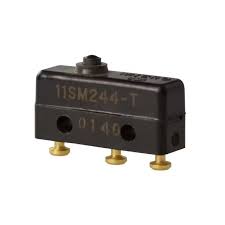
Honeywell 11SM703-T Basic Switch Guide for Reliable Electromechanical Switching
The Honeywell 11SM703-T basic switch is a compact electromechanical component designed for dependable position detection and switching in space-sensitive equipment. As part of the Honeywell SM Series, this Honeywell 11SM703-T basic switch combines a subminiature body with a practical SPDT contact arrangement, making it a suitable choice for engineers who need consistent switching performance in industrial, control, and instrumentation designs.
What Is the Honeywell 11SM703-T Basic Switch?
The Honeywell 11SM703-T is a subminiature electromechanical switch with an SPDT circuit and a pin plunger actuator. It is commonly selected for applications where accurate mechanical actuation is required without adding unnecessary bulk to the assembly. The solder turret termination style also makes it practical for secure wired installations where vibration resistance and stable terminations matter.
Key Technical Characteristics
This Honeywell basic switch is associated with a 4 A AC rating and a 5 A DC rating, with voltage ratings up to 250 V AC and 30 V DC. It uses a round pin plunger actuator and chassis-mount construction. Typical operating force is 56 gf, while release force is 14 gf. The operating position is approximately 8.4 mm, with 0.5 mm pretravel, 0.05 mm differential travel, and 0.13 mm overtravel. Mechanical life reaches up to 10,000,000 cycles, and the operating temperature range extends from -55°C to 125°C.
Where the Honeywell 11SM703-T Electromechanical Switch Fits Best
The Honeywell 11SM703-T electromechanical switch works well in compact industrial controls, test fixtures, small appliances, motion-control assemblies, and mechanism status detection. Because the switch body is small and the actuation values are predictable, it can support designs that require repeatable switching behavior across long operating life cycles.
Why Engineers Use This Honeywell Basic Switch
One reason this model remains relevant is balance. It offers a small footprint without giving up durability. Another advantage is flexibility: SPDT switching allows designers to integrate the component into control logic, interlock circuits, and signal feedback systems. The broad temperature capability also supports use in environments that are more demanding than standard room-temperature electronics.
In practice, the Honeywell 11SM703-T basic switch is often valued when precision, longevity, and installation simplicity all matter at once. It is not an overly complex part, but that is exactly why it fits so many real-world designs.
FAQ
What type of switch is the Honeywell 11SM703-T?
It is a subminiature SPDT basic switch with a pin plunger actuator. It is designed for momentary snap-action operation in compact electromechanical systems.
What are the voltage and current ratings of the Honeywell 11SM703-T basic switch?
This model is generally listed with a 4 A rating at AC loads and a 5 A rating at DC loads, with maximum ratings up to 250 V AC and 30 V DC. Designers should still confirm load type and circuit conditions against the latest datasheet before final specification.
Is the Honeywell 11SM703-T suitable for industrial equipment?
Yes. It is often considered for industrial control panels, mechanism monitoring, compact machine assemblies, and similar applications where repeatable switching and long mechanical life are important.
Why does actuator style matter on a Honeywell electromechanical switch?
The pin plunger design affects how force is applied, how accurately the switch changes state, and how the surrounding mechanism must be designed. For compact linear actuation, a plunger style is often a practical solution.
Can the Honeywell 11SM703-T basic switch handle frequent operation?
Yes. With a mechanical life rating up to 10 million cycles, it is intended for repeated actuation in systems where reliability over time is a design priority.
For more information about Honeywell, review the broader product range and application options.