
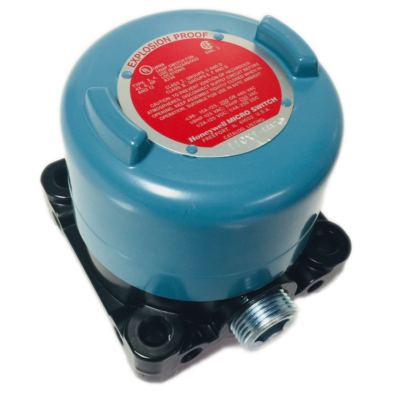
Honeywell 11CX1 Hazardous Location Limit Switch Guide
The Honeywell 11CX1 hazardous location limit switch is part of the MICRO SWITCH CX Series, a product line built specifically for demanding indoor and outdoor environments where hazardous atmospheres may be present. Public sources describe the CX Series as weather-sealed, water-tight, dust-tight, and designed for explosive environments. The Honeywell 11CX1 limit switch itself is identified in distributor data as a side-actuated model with SPDT contact form, 1NC/1NO configuration, and ratings reaching 15 A and up to 250 V in published listings.
What Makes Honeywell 11CX1 Different
Unlike a general-purpose limit switch, the Honeywell 11CX1 CX Series hazardous location switch is intended for environments where enclosure integrity and environmental resistance are central design priorities. Honeywell’s CX Series literature highlights certifications for applicable portions of NEMA 7 and 9 hazardous locations, while also describing sealing for outdoor exposure and resistance to rain, blowing dust, and other harsh conditions. That profile makes the 11CX1 relevant in petrochemical facilities, grain handling, material handling, control valves, and other industrial sites that demand rugged switching hardware.
Technical Highlights of the Honeywell 11CX1
Public product information for the Honeywell 11CX1 hazardous location limit switch identifies a single-pole double-throw switching arrangement, side rotary actuation, and screw termination. Other listings specify IP66 environmental protection and a temperature range of approximately -25 °C to +85 °C. These details point to a switch designed not only for electrical performance, but also for survivability in exposed industrial installations where contamination, moisture, and mechanical stress can shorten the life of lighter-duty devices.
Common Use Cases for Honeywell 11CX1
The Honeywell 11CX1 explosion-proof limit switch fits applications where machine position, valve position, or moving equipment status must be confirmed under severe environmental conditions. It is often associated with oil and gas installations, refineries, chemical plants, conveyors, grain elevators, and material-handling systems. In these sectors, switch failure is not merely inconvenient. It can affect uptime, safety logic, and inspection compliance.
Why Exact Specification Matching Matters
Hazardous-area components should never be selected casually. When specifying the Honeywell 11CX1 CX Series limit switch, engineers must verify the exact actuator style, approvals, enclosure rating, electrical load, wiring method, and environmental classification. A switch that looks similar on the outside may not meet the same hazardous-location requirements or installation rules. Exact code matching is therefore a necessary part of responsible maintenance and engineering governance.
FAQ
What type of switch is Honeywell 11CX1?
It is a Honeywell CX Series hazardous location limit switch designed for rugged industrial use in severe or potentially explosive environments.
Is Honeywell 11CX1 suitable for hazardous areas?
Yes. The CX Series is specifically presented for hazardous atmospheres, and Honeywell literature references certification for applicable portions of NEMA 7 and 9, along with outdoor sealing characteristics.
What contact arrangement does Honeywell 11CX1 use?
Public listings identify it as an SPDT switch with a 1NC/1NO configuration, which is a common format for industrial control and limit-switch logic.
What environmental protection is associated with 11CX1?
Published references connect the model and its series with weather-sealed construction, dust-tight and water-tight characteristics, and in some distributor data an IP66 rating.
Where is 11CX1 commonly installed?
Typical references include petrochemical plants, refineries, conveyors, grain elevators, control valves, and material-handling equipment operating in harsh industrial environments.
Why should buyers avoid substitute guessing for Honeywell 11CX1?
Because hazardous-location switches must align with exact environmental, electrical, and approval requirements. A near match may still be unsuitable from a safety or compliance perspective.
For related CX Series context and broader product-family references, more information about Honeywell can help support specification review.