
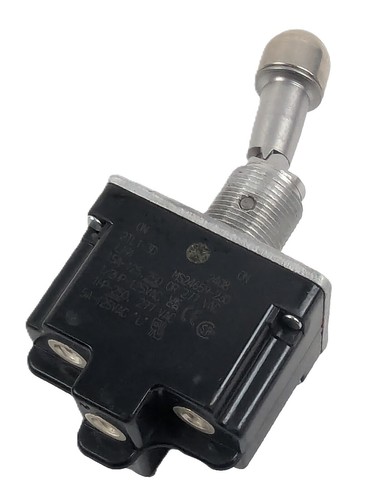
Honeywell 111TW1-3D Operator Control Switch Review
The Honeywell 111TW1-3D operator control switch is a compact TW Series toggle switch built for panel-based operator interfaces where controlled actuation and reliable switching are important. What distinguishes this version most clearly is its locking lever configuration, which adds an extra layer of intentionality to switch operation. In practical terms, the Honeywell 111TW1-3D operator control switch is often relevant in systems where accidental actuation must be reduced and where a standard miniature toggle switch would not offer enough operational security.
Technical Profile of the Honeywell 111TW1-3D Operator Control Switch
Published product references identify the Honeywell 111TW1-3D operator control switch as a TW Series panel mount SPDT toggle switch with a 2-position function, IWTS termination, and locking lever design. Distributor sources place the model in the 5 A at 125 Vac class, with compact panel mounting and sealed operator control construction associated with the broader TW family. Honeywell’s product literature for the series emphasizes miniature military-grade design, multiple circuitry and lever options, and environmental sealing capabilities for applications exposed to vibration, dust, splashing, or demanding operating conditions.
Why the Locking Lever Format Is Important
In many control environments, the biggest issue is not whether a switch can change state, but whether it can resist unintended movement. A locking lever helps address that concern by creating a more deliberate actuation process. That makes the Honeywell 111TW1-3D operator control switch especially relevant for panels where safety, mode selection discipline, or operational confidence are priorities.
From a design perspective, this model also benefits from the TW Series platform. Engineers can stay within a familiar family while selecting a variant that better matches application risk and user interaction needs. For more about Honeywell, the TW switch line shows how locking, standard, and specialty lever options are used to refine operator control performance without changing the overall switch architecture.
FAQ
What makes the Honeywell 111TW1-3D different from a standard TW toggle?
The main difference is the locking lever. That feature is designed to reduce unintended actuation and create a more deliberate operator control action.
Is the Honeywell 111TW1-3D operator control switch a 2-position switch?
Yes. Published sources commonly identify it as a 2-position SPDT toggle switch within the TW Series.
Why would someone choose a locking operator control switch?
Locking designs are often used where accidental switching could affect machine state, operating mode, or system behavior. They add a practical safeguard at the interface level.
What should be checked before panel installation?
Users should confirm panel cutout size, bushing thread details, termination format, switch function, and whether the locking action aligns with the intended user experience and system requirements.