
Honeywell 111SM23-T Basic Switch Technical Review
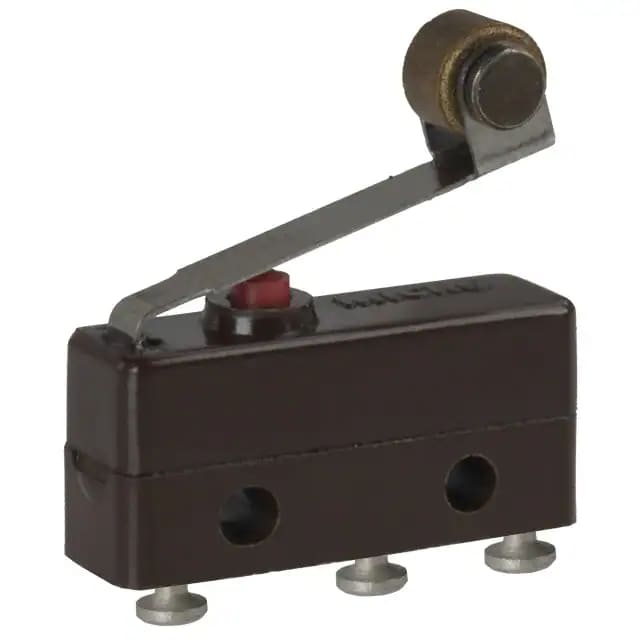
The Honeywell 111SM23-T basic switch is a subminiature snap-action switch built for compact assemblies that still require accurate, repeatable electrical switching. Within the SM Series, this model stands out because it is associated with a roller lever actuator, solder termination, SPDT contact arrangement, and a lower current class than many 5 A variants in the same family. For engineers working with low-voltage controls, signal-level switching, or tightly packaged mechanisms, the Honeywell 111SM23-T basic switch is often a relevant reference point.
Technical Characteristics of the Honeywell 111SM23-T Basic Switch
Published distributor data identifies the Honeywell 111SM23-T basic switch as an SPDT switch with solder termination, a roller lever actuator, 1 A current rating, 125 V AC rating, and 30 V DC capability. Available technical listings also note mechanical life around 10,000,000 cycles, an operating temperature range approximately from -53 °C to 121 °C, and an operating force around 1.95 N. These details matter because they show the part is not simply a generic micro switch; it is a compact switch intended for controlled actuation, long service life, and stable switching behavior in space-limited assemblies.
Why the Roller Lever Configuration Matters
A roller lever can reduce friction at the contact point between the moving machine element and the switch actuator. In real equipment, this can support smoother engagement and reduce wear in applications where the switch is actuated repeatedly by cams, slides, or rotating parts. That is one reason the Honeywell 111SM23-T basic switch is often considered in motion-related mechanisms rather than only in push-style interfaces.
The model also benefits from Honeywell’s established SM Series design language: compact housing, predictable snap action, and suitability for applications where clean electrical transfer is important. For more about Honeywell, reviewing the broader line helps explain why engineers often stay within the same switch family when they want mechanical consistency across multiple device variants.
FAQ
What makes the Honeywell 111SM23-T basic switch different from standard plunger switches?
The most visible difference is the roller lever actuator. Instead of relying on a direct push only, the switch can be triggered by moving mechanical parts with less sliding resistance, which may improve consistency in repetitive motion systems.
Is the Honeywell 111SM23-T basic switch a high-current model?
No. It is generally listed as a 1 A switch, so it is better understood as a compact precision switch for lighter electrical loads rather than a heavier 5 A branch of the SM Series.
Why is long mechanical life important for this switch?
Mechanical life gives a useful indication of how the switch may perform under repeated cycling. In applications with constant actuation, cycle life can be as important as voltage rating because wear accumulates through movement as well as electrical load.
What should designers verify first?
They should check the actuator travel geometry, force requirement, and actual circuit load. A switch can fit electrically on paper but still perform poorly if the mechanical path does not match the roller lever design.