
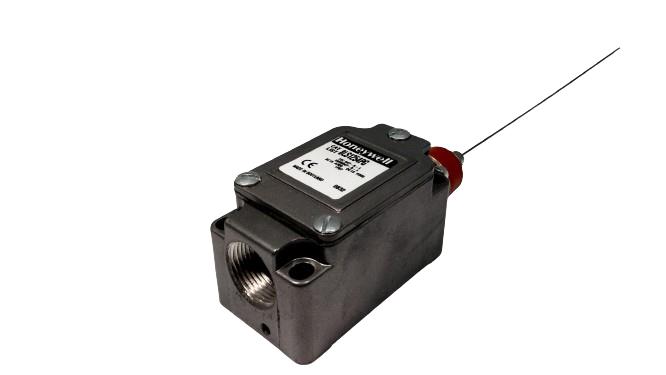
Honeywell 8LS125-4PG Limit Switch Overview
The Honeywell 8LS125-4PG limit switch is an industrial switching device built for mechanical position detection in demanding environments. Searches for Honeywell 8LS125-4PG usually come from maintenance teams, machine builders, and sourcing specialists who need to confirm actuator style, contact arrangement, enclosure strength, and switching ratings before replacement or system integration.
What Kind of Product Is the Honeywell 8LS125-4PG?
The Honeywell 8LS125-4PG is generally identified as a limit switch within the compact LS product family. Available references associate it with a wobble-style actuator, often described as a cat whisker actuator, plus a contact arrangement of 1NC + 1NO in SPDT snap action format. That combination makes the Honeywell 8LS125-4PG limit switch suitable for machine motion feedback, end-of-travel detection, and industrial equipment monitoring.
Technical Characteristics of the Honeywell 8LS125-4PG Limit Switch
Available source data describes the Honeywell 8LS125-4PG switch with an epoxy-coated aluminum housing and IP67 protection. Additional listing details associate it with switching capability up to 10 A at 500 VAC and 0.4 A at 230 VDC, along with an operating temperature range of about -30°C to +70°C. These details matter because they show the product is intended for real industrial duty rather than light indoor switching only.
Some distributor references also indicate that the product is obsolete or withdrawn from standard offer in certain channels. In practice, that makes model verification even more important. Users searching Honeywell 8LS125-4PG limit switch are often not casually comparing options. They are usually trying to match an installed part with the correct actuator and contact behavior.
Why This Limit Switch Remains Relevant
The 8LS125-4PG industrial switch remains relevant because many working systems continue to rely on established mechanical feedback devices. A well-defined actuator geometry and sealed industrial housing are often more important than novelty. The 8LS125-4PG fits that pattern: it is a purpose-built field component that supports predictable switching in rugged installations.
Common Application Context
The 8LS125-4PG limit switch can be relevant in conveyors, machine tools, automated equipment, industrial doors, and motion-based control systems. Where a moving mechanism needs to trigger a durable switch at a precise point, a product in this class continues to make practical sense.
For more information about Honeywell, it is helpful to compare related industrial switch families and actuator configurations.
FAQ
What is the 8LS125-4PG?
The Honeywell 8LS125-4PG is an industrial limit switch used for position sensing and mechanical motion detection in equipment and automation systems.
What actuator style is associated with the 8LS125-4PG?
Available references commonly associate this model with a wobble-style actuator, often described as a cat whisker actuator. This format is useful when the triggering movement can come from varying directions.
What contact arrangement does the 8LS125-4PG use?
Published references associate the part with 1NC + 1NO SPDT snap action switching, which supports clear state change for control and monitoring circuits.
Is the 8LS125-4PG protected for industrial environments?
Yes. Available listing data associates the switch with an epoxy-coated aluminum housing and IP67 protection, which indicates suitability for demanding operating conditions.
What switching ratings are mentioned for the 8LS125-4PG?
Available sources associate this model with switching capability up to 10 A at 500 VAC and 0.4 A at 230 VDC. Exact project suitability should still be confirmed against the application requirements.
What temperature range is associated with the Honeywell 8LS125-4PG?
Published listing data commonly references an operating range of about -30°C to +70°C for this model.
Where is the Honeywell 8LS125-4PG limit switch used?
It can be used in conveyors, machine tools, industrial automation systems, and other equipment where mechanical position must be detected reliably.