
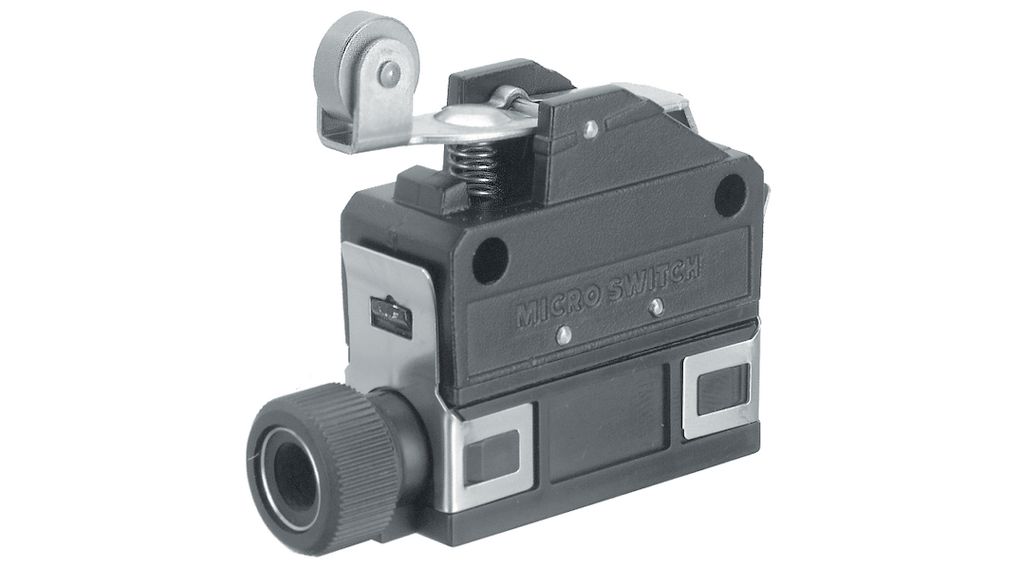
Honeywell SL1-P Limit Switch Guide for Compact Roller Lever Systems
The Honeywell SL1-P limit switch is a compact sealed switch intended for industrial applications where a roller lever actuator provides the most practical method of mechanical detection. As a Honeywell SL1-P limit switch, this model belongs to the SL1 family and is typically associated with SPDT switching, compact enclosed construction, and an IP67 protection level suitable for demanding machine environments.
Roller lever designs are often selected when a moving part approaches the switch along a sweeping path rather than a direct push line. That is why the Honeywell SL1-P limit switch can be especially useful in machines with cam-driven movement, guided travel, or lateral actuation points. In these cases, the lever creates a more forgiving mechanical interface while still delivering repeatable electrical switching.
Technical Perspective on the Honeywell SL1-P Limit Switch
Available product listings describe the Honeywell SL1-P limit switch as a roller lever SPDT model with industrial voltage handling and IP67 environmental protection. It is part of a product family that Honeywell positions as sealed, sensitive, and compact enough for machinery miniaturization. That family-level engineering approach has made SL1 series switches relevant in applications where space is tight but service expectations remain high.
The compact format is not just a packaging benefit. It can also improve mechanical layout flexibility, especially in imported equipment or densely assembled industrial systems. For maintenance teams, this matters because finding a full-size substitute for a compact switch often introduces new mounting and actuation problems. The Honeywell SL1-P limit switch avoids that issue when the original machine was built around this footprint.
Where the Honeywell SL1-P Limit Switch Fits Best
A Honeywell SL1-P limit switch is commonly useful in packaging equipment, automated travel detection, small transfer systems, enclosure monitoring, and compact machine assemblies where the actuator path favors a roller lever rather than a plunger. Because the housing is sealed, it is also more appropriate for environments where dust or incidental moisture may affect exposed components.
This type of switch is also relevant in modernization projects. Not every machine requires a complex non-contact sensor. In many cases, a robust compact electromechanical switch is still the most practical choice because it delivers simple diagnostics, predictable operation, and easier spare-parts management. For more product-family context, visit more information about Honeywell.
Why the Honeywell SL1-P Limit Switch Remains in Demand
Exact-code demand for the Honeywell SL1-P limit switch typically comes from engineers and maintenance teams who need confirmation of actuator type, sealing, and compact fit. In industrial use, the wrong actuator geometry can create premature wear, incomplete actuation, or unreliable switching. That is why precise model identification matters.
Content for this model is most useful when it explains where the switch fits, how the roller lever behaves, and why compact sealed switches continue to matter in modern industrial systems. The Honeywell SL1-P limit switch remains valuable because it answers those practical needs directly.
FAQ: Honeywell SL1-P Limit Switch
What actuator style does the Honeywell SL1-P use?
The Honeywell SL1-P limit switch is commonly listed with a roller lever actuator, which works well in cam-driven or side-contact motion paths.
Is the SL1-P suitable for harsh industrial conditions?
Yes. Product listings commonly describe it with IP67 sealing, which supports use in dusty and wet environments.
What kinds of machines use the SL1-P limit switch?
It is relevant for compact industrial machinery, packaging equipment, guided motion systems, and imported machines using small sealed switch bodies.
Why do engineers choose a roller lever switch instead of a plunger model?
A roller lever can offer smoother mechanical engagement in applications where a moving part approaches the switch from the side or along an arc.
Why is the exact Honeywell SL1-P code important?
Because compact switches are often chosen for very specific installation spaces, and actuator mismatch can affect both fit and performance.