
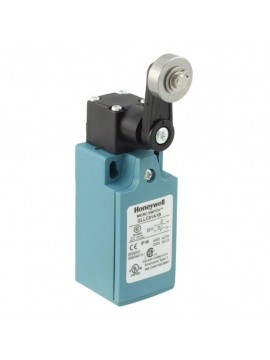
Honeywell ZLAC01A2B Side Rotary Limit Switch Overview
The Honeywell ZLAC01A2B limit switch is commonly identified as a side rotary industrial limit switch used in machinery that depends on reliable mechanical position detection. Distributor records for this model list it as a 1NO/1NC limit switch, which immediately makes it useful in machine control architectures where both normally open and normally closed signaling paths are required. In production systems, side rotary limit switches are especially valuable when the machine movement does not approach the switch in a straight vertical path. That makes the Honeywell ZLAC01A2B side rotary limit switch a practical choice for cams, doors, moving levers, guided arms, and compact automation assemblies.
What Sets a Side Rotary Limit Switch Apart
A side rotary switch solves a different mechanical problem than a plunger or roller plunger switch. Instead of requiring direct linear contact from above, it can respond to movement coming from the side through a rotary mechanism. This often helps in designs where space, motion angle, or travel geometry do not support a straight-actuated switch. The Honeywell ZLAC01A2B industrial switch therefore becomes relevant in equipment where machine motion is transmitted through a rotating lever action rather than direct top pressure. For machine builders, this kind of switch can simplify the physical interface between moving equipment and control logic.
Technical Characteristics That Matter
The most practical specification tied to the Honeywell ZLAC01A2B limit switch is its 1NO/1NC contact structure. That arrangement gives engineers more flexibility when building interlocks, permissive circuits, alarms, and position status loops. A single switch can support multiple logic needs without adding an additional device. The side rotary format also supports machine layouts that would otherwise require more complex mounting or custom actuation. In industrial design reviews, these mechanical details often matter more than headline voltage numbers because they affect integration speed and serviceability.
Where Honeywell ZLAC01A2B Is Commonly Used
The Honeywell ZLAC01A2B side rotary limit switch can be relevant in machine guards, transfer modules, compact process machines, door or cover monitoring, and equipment that uses a rotating actuator path to indicate status. It can also support motion confirmation in applications where the moving part sweeps past the switch rather than pushing directly into it. Search interest for terms like side rotary limit switch, industrial limit switch 1NO 1NC, and Honeywell ZLAC01A2B remains strong because these products address highly specific but very common machine design needs.
Engineering and Maintenance Perspective
From a maintenance standpoint, a mechanical rotary limit switch has a major advantage: the actuation path is visible and understandable. A technician can inspect the lever movement, verify switching continuity, and confirm whether the actuator is being engaged correctly. This is still one of the reasons limit switches remain popular in industry despite the growth of non-contact sensing technologies. The Honeywell ZLAC01A2B industrial limit switch fits into that tradition by offering a familiar and mechanically intuitive way to detect position or motion endpoints.
For more information about Honeywell, exploring additional industrial switch families can help compare side rotary, plunger, and roller-based actuation formats.
FAQ
What actuator style is used on Honeywell ZLAC01A2B?
This model is commonly identified as a side rotary limit switch, which is suitable when machine motion approaches from the side rather than directly from above.
Does Honeywell ZLAC01A2B include both NO and NC contacts?
Yes. It is commonly listed with a 1NO/1NC contact configuration.
Why choose a side rotary switch instead of a plunger switch?
A side rotary switch is often a better match when the machine’s motion path is angular, sweeping, or cam-driven rather than straight-line actuation.
Where can this switch be used in industry?
It can be used in guarding systems, compact automation units, transfer mechanisms, and equipment where rotating or side-entry actuation is more practical than direct top contact.
Is a side rotary limit switch easy to maintain?
Yes. One of its strengths is that technicians can visually confirm the motion path and quickly test continuity during troubleshooting.
What should be checked before installation?
Engineers should verify actuator travel, mounting direction, expected force, wiring arrangement, and whether the machine’s motion profile fits rotary actuation correctly.