
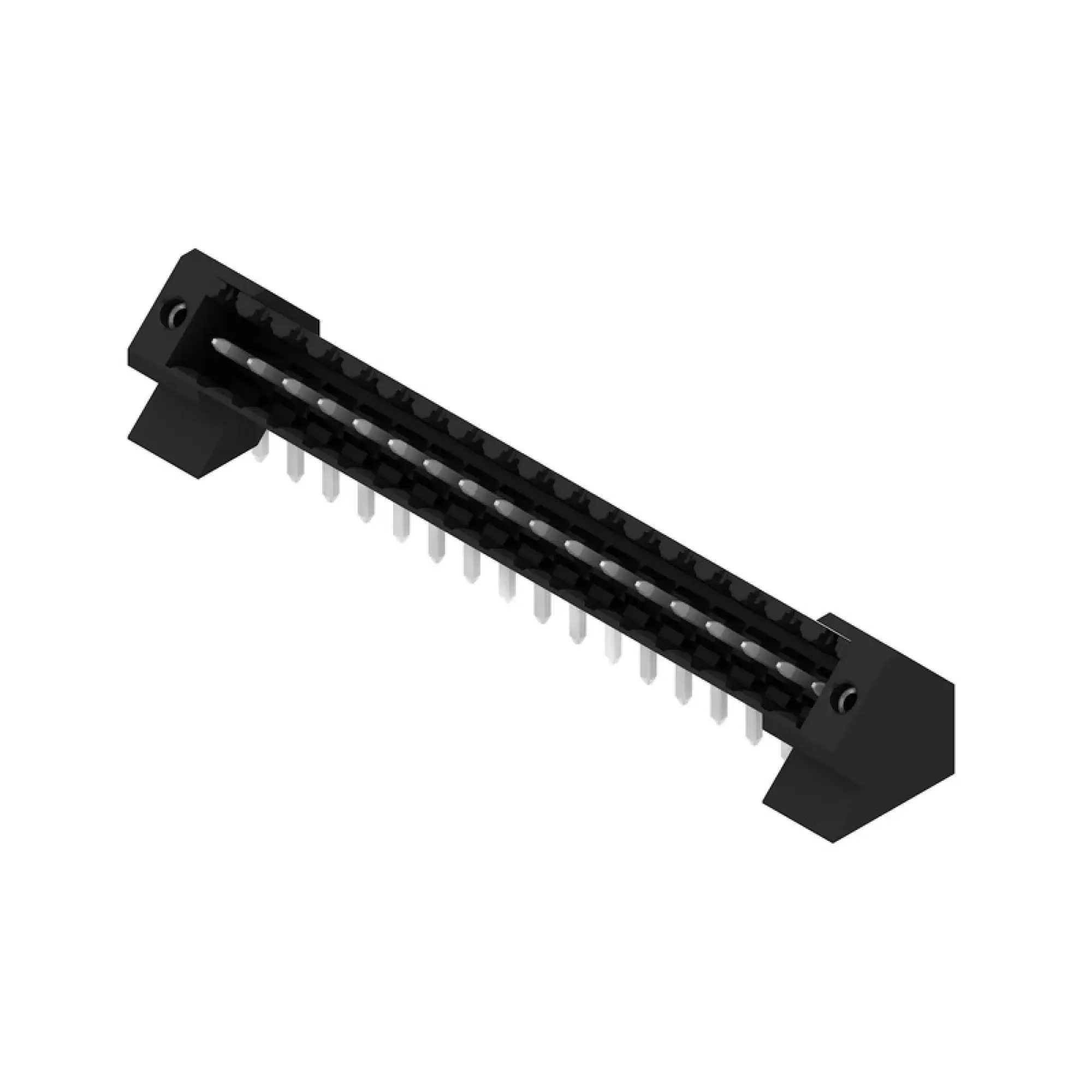
Weidmüller 1003680000 SL-SMT 3.50/18/135F 3.2SN BK BX Guide
The Weidmüller 1003680000 SL-SMT 3.50/18/135F 3.2SN BK BX is an 18-pole PCB male header for compact but higher-capacity pluggable board connection. As a Weidmüller 1003680000 PCB plug-in connector male header, it is especially suitable for engineers building advanced control electronics, automation interfaces, communication boards, and other technical products that require a larger grouped connector interface without moving beyond a compact 3.50 mm pitch platform.
At 18 poles, the connector begins to act as a major interface element in the device. It shapes how functions are grouped, how the board edge is organised, and how service personnel understand the connection structure. The Weidmüller 1003680000 SL-SMT 3.50/18/135F 3.2SN BK BX male header helps bring order to that complexity through a clear, standardised connector design.
Product construction and interface value
This connector is a flanged male header with THT/THR solder connection and a 135-degree geometry. That configuration is well suited to products where both mechanical stability and careful cable or mating direction matter. The flange supports consistent interface positioning, while the soldering concept helps the connector stay secure on the board during service and operation.
The angled design also improves integration flexibility. In dense products, connector angle often determines whether the internal layout remains manageable. A 135-degree interface can help preserve space and create a cleaner connection route inside the housing.
Technical characteristics
The official product profile for the Weidmüller SL-SMT 3.50/18/135F 3.2SN BK BX PCB connector includes a 3.50 mm pitch, 18 poles, 3.2 mm solder pin length, tinned contacts, black housing, and box packaging. Official electrical ratings are IEC 320 V / 15 A and UL 300 V / 10 A. That gives the connector a strong position in high-density compact board interconnection.
Eighteen poles offer significant flexibility for grouped signal, reference, and low-voltage interface planning. That can help reduce connector count elsewhere on the board and produce a more disciplined product architecture.
Where the 18-pole version is useful
This model is suitable for advanced compact controllers, dense automation modules, interface electronics, smart building platforms, and instrumentation systems that need more capable grouped connectivity. Instead of using multiple smaller headers and increasing assembly complexity, one larger connector can create a more readable and serviceable connection layout.
That clarity matters throughout the lifecycle of the product. It can make commissioning easier, reduce wiring mistakes, and simplify service documentation in the field.
Why this connector supports platform design
The Weidmüller 1003680000 product type fits well into a scalable connector strategy. Teams can stay within one family while increasing interface capacity as product functionality grows. That supports common design rules, consistent service expectations, and smoother portfolio expansion.
Weidmüller 1003680000 For more information about Weidmüller, it is useful to compare adjacent family sizes before finalising a board-edge connection concept.
Weidmüller 1003680000 FAQ
What is Weidmüller 1003680000?
It is an 18-pole PCB plug-in connector male header with flange, 3.50 mm pitch, THT/THR solder connection, and 135-degree orientation.
Why would an 18-pole male header be selected?
It is selected when a device needs a higher-capacity grouped interface while still benefiting from a compact connector family and a clean board layout.
What is the benefit of using one larger connector?
One larger connector can reduce board clutter, simplify circuit grouping, and make installation and service documentation easier to follow.
Is this connector mechanically suitable for professional devices?
Yes. Its flanged construction and THT/THR soldering concept support reliable PCB integration in professional electronics.
How does the 135-degree format help in practice?
It helps manage plug approach direction and can improve enclosure fit, cable routing, and access around the board connection area.
What should engineers confirm before final selection?
They should confirm the mating counterpart, PCB footprint, applicable end-product insulation requirements, and available mechanical space inside the enclosure.