
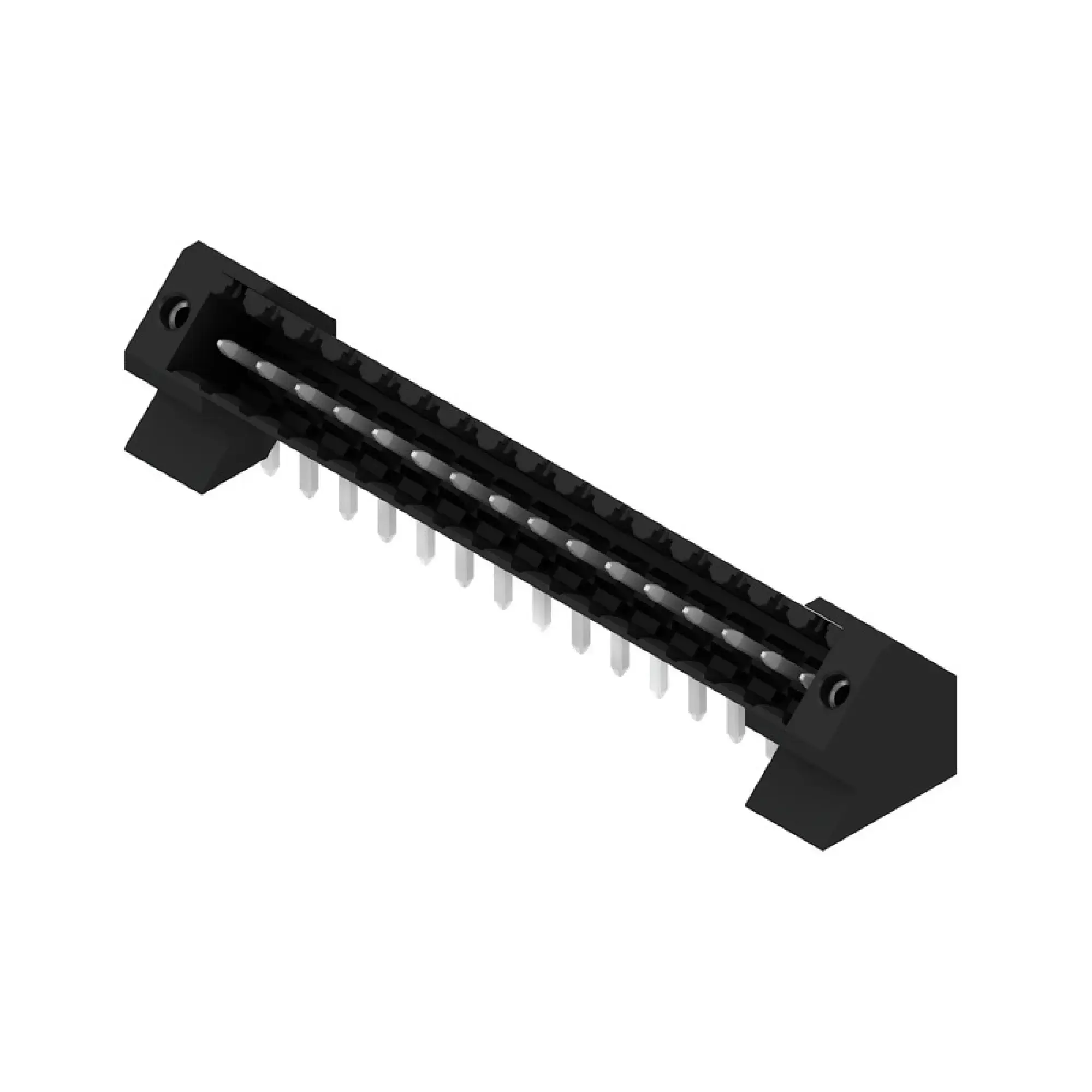
Weidmüller 1003660000 SL-SMT 3.50/16/135F 3.2SN BK BX Guide
The Weidmüller 1003660000 SL-SMT 3.50/16/135F 3.2SN BK BX is a 16-pole PCB male header built for compact board interfaces that need greater functional density without sacrificing structure or maintainability. As a Weidmüller 1003660000 PCB plug-in connector male header, it supports engineering teams working on industrial control products, automation subsystems, embedded devices, and advanced interface electronics.
As pole count increases, connector choice becomes more strategic. It is no longer just about making electrical contact. The connector begins to shape the board architecture, determine service access, and influence enclosure design. The Weidmüller 1003660000 SL-SMT 3.50/16/135F 3.2SN BK BX male header is designed for that reality, offering a disciplined multi-pole interface in a compact connector family.
Product structure
This connector is a flanged male header with THT/THR solder connection and a 135-degree orientation. That combination is valuable in products where the connector must stay stable over time and where the cable or plug approach needs to be carefully managed. The flange contributes to mechanical control, while the soldering format helps support PCB durability.
The angled geometry can also make a real difference in dense products. A connector that approaches the board at the wrong angle can complicate service access and consume unnecessary space. A 135-degree design often creates a more efficient routing path.
Technical details
The Weidmüller SL-SMT 3.50/16/135F 3.2SN BK BX PCB connector features 3.50 mm pitch, 16 poles, and a 3.2 mm solder pin length. It is tinned, supplied in black, and packed in a box. The official series ratings are IEC 320 V / 15 A and UL 300 V / 10 A. This gives the connector a strong profile for compact industrial electronics where more connection capacity is required.
Sixteen poles can significantly simplify interface planning. Instead of mixing connector sizes or multiplying connection points, designers can preserve one clear board-edge interface for broader grouped functionality.
Where this connector fits
This model is relevant in decentralised automation electronics, compact control units, industrial communication boards, building technology devices, and advanced I/O modules. A 16-pole connector can support a richer functional grouping while still staying manageable from an installation and documentation perspective.
That balance matters in professional products. Engineers want higher functionality, but they also need maintainable wiring and accessible service logic. A structured connector family helps deliver both.
Why family consistency matters
The Weidmüller 1003660000 product type is especially useful in portfolio development. Teams can keep a familiar connector platform across different product versions while scaling pole count as features grow. That reduces redesign effort and supports consistent field practices across the installed base.
For more information about Weidmüller, reviewing the wider 3.50 mm family is worthwhile when building a long-term product architecture.
FAQ
What is Weidmüller 1003660000?
It is a 16-pole PCB plug-in connector male header with flange, 3.50 mm pitch, THT/THR solder connection, and 135-degree orientation.
What is the benefit of using 16 poles in one connector?
It allows more functions to be grouped into one organised interface, which can reduce layout complexity and make documentation easier.
Is it suitable for industrial equipment?
Yes. Its connector family, ratings, and construction make it suitable for many industrial and professional electronics applications.
Why is the solder pin length relevant?
The 3.2 mm solder pin length affects PCB integration and should be checked alongside board thickness and assembly process requirements.
How does the angled format help?
It supports better routing and can improve mechanical integration in tight enclosures or crowded board assemblies.
What should be reviewed before design-in?
Engineers should review mating compatibility, footprint details, insulation rules for the final product, and enclosure access at the connector location.