
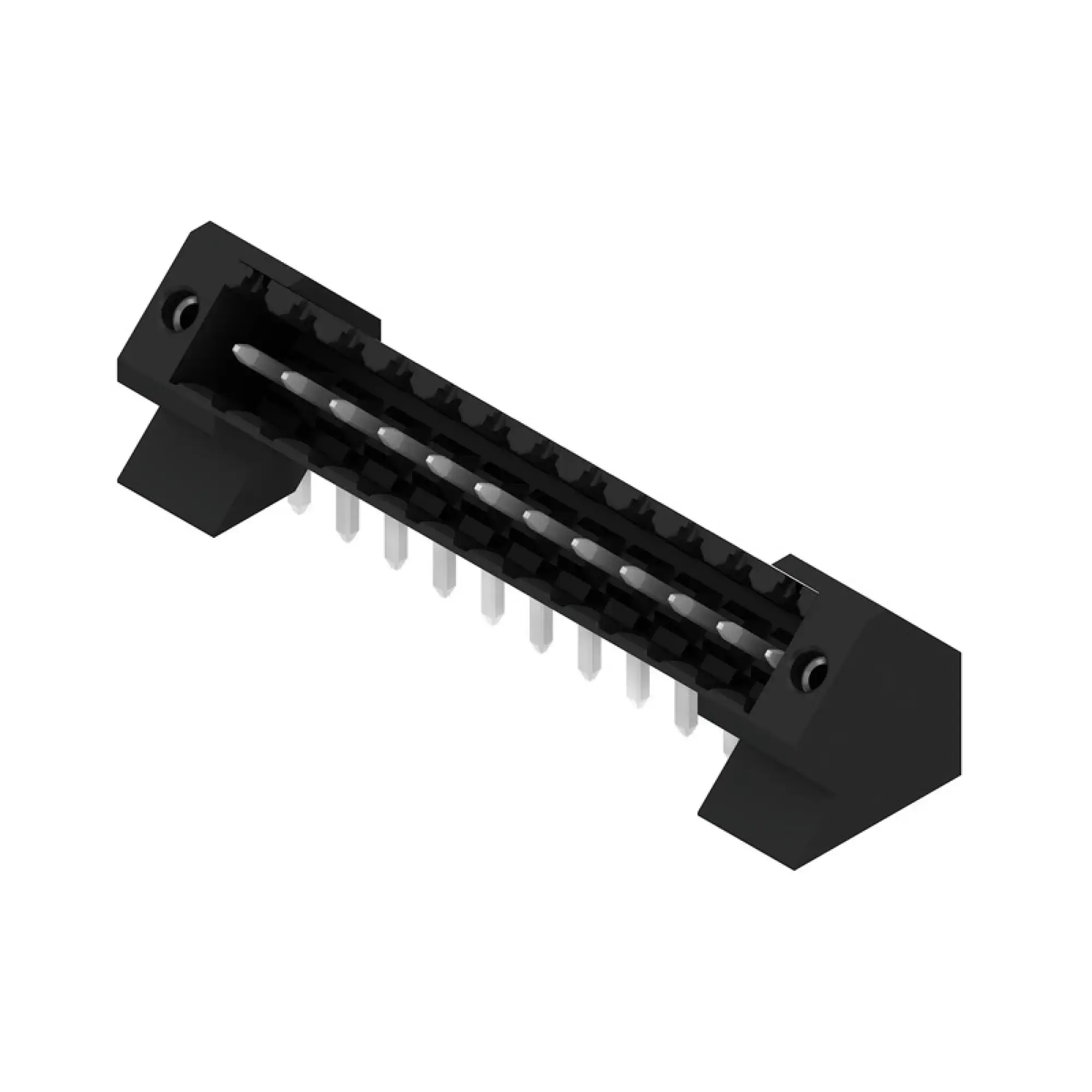
Weidmüller 1003620000 SL-SMT 3.50/12/135F 3.2SN BK BX Guide
The Weidmüller 1003620000 SL-SMT 3.50/12/135F 3.2SN BK BX is a 12-pole PCB male header designed for compact and organised pluggable board interconnection. As a Weidmüller 1003620000 PCB plug-in connector male header, it is highly relevant for engineers building control boards, automation electronics, interface modules, and embedded systems that require a clear multi-line connection strategy without moving to a larger connector class.
When a device reaches the point where 10 or 11 poles are no longer quite enough, a 12-pole connector often becomes the right structural step. It gives designers more freedom to group circuits logically and reduces the need to split connections across multiple smaller headers. That can make the final product easier to assemble, easier to document, and easier to maintain.
Connector format and mechanical concept
The Weidmüller 1003620000 SL-SMT 3.50/12/135F 3.2SN BK BX male header is specified as a flanged male header with THT/THR solder connection. This combination supports mechanical stability on the PCB while preserving the advantages of a pluggable connection concept. In professional electronics, this matters because the connector is not merely a board accessory. It is part of the physical user and service interface of the device.
The 135-degree design is particularly helpful where installation space is limited. Connector angle determines how the mating side approaches the board and how wires or plugs are directed inside the housing. A carefully chosen angle can improve service access and reduce unnecessary cable stress.
Technical profile
The official product description lists 3.50 mm pitch, 12 poles, 135° orientation, 3.2 mm solder pin length, black housing, tinned surfaces, and box packaging. Electrical ratings are IEC 320 V / 15 A and UL 300 V / 10 A. Those figures make the Weidmüller SL-SMT 3.50/12/135F 3.2SN BK BX PCB connector a strong option for compact yet capable board-level connectivity.
As pole count increases, interface planning becomes more important. Twelve poles give enough room for richer grouped functions while still staying in a compact connector family. That makes this model a strong fit for modern technical products that need higher connection density without sacrificing layout discipline.
Where the 12-pole version fits well
This connector is suitable for compact PLC-related electronics, smart control units, distributed I/O modules, industrial monitoring hardware, building automation boards, and instrumentation devices. In these environments, connector selection is closely tied to serviceability and mechanical integration. A single 12-pole interface can often be much cleaner than two smaller connectors placed side by side.
The flanged construction also helps where stable mating and positioning are important. In products expected to be serviced or replaced in the field, predictable connector behaviour is a valuable advantage.
Design value in real products
The Weidmüller 1003620000 PCB male header supports a cleaner system architecture because it allows multiple lines to be handled through one orderly interface. This can reduce connector variety across the board and create a more standardised platform for future revisions. For teams building product families, that kind of consistency has long-term engineering value.
Weidmüller 1003620000 For more information about Weidmüller, comparing adjacent pole-count versions in the same 3.50 mm family is a useful step during platform planning.
Weidmüller 1003620000 FAQ
What is Weidmüller 1003620000?
It is a 12-pole PCB plug-in connector male header with flange, 3.50 mm pitch, THT/THR solder connection, and a 135-degree orientation.
Why would a 12-pole version be selected?
It is useful when a board needs a more capable grouped connection interface without splitting the design across multiple smaller connectors.
What does the flange contribute?
The flange can support more controlled positioning and mechanical consistency in the connector interface.
Is this suitable for industrial applications?
Yes. Its construction and official ratings align well with many industrial and professional electronics use cases.
Why is 3.50 mm pitch popular?
It offers a practical balance between compact PCB usage and usable connector spacing in structured board connection systems.
What should be reviewed before design-in?
Engineers should review the mating connector, PCB footprint, required insulation distances, enclosure geometry, and cable or plug access around the 135-degree angle.