
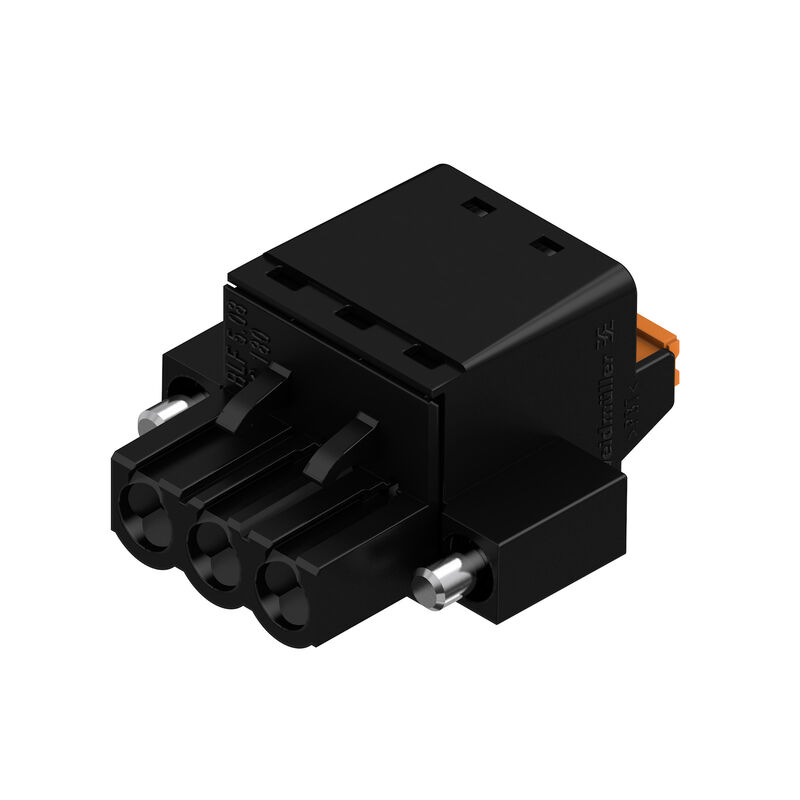
Weidmüller BLF 5.08HC/17/90F SN OR BX PCB Connector
The Weidmüller BLF 5.08HC/17/90F SN OR BX, item 1002240000, is a specialized pluggable connector for PCB-based industrial wiring. With a 17-pole layout, it serves applications where the circuit count does not line up neatly with more common connector sizes. That might sound like a small detail, but in serious engineering, selecting the right pole count can improve wiring clarity, reduce unused positions, and support a more disciplined board architecture.
Many engineers search for a Weidmüller BLF 5.08HC/17/90F SN OR BX PCB connector when designing custom control electronics, machine modules, or automation boards that need a stable and maintainable field connection. The combination of a 5.08 mm pitch, right-angle geometry, and PUSH IN connection technology makes this connector relevant in projects where both layout efficiency and installer convenience matter.
Technical Identity and Functional Position
This connector is part of the BLF 5.08HC/90F family and is described by Weidmüller as a female PCB plug with 17 poles and a 90-degree outlet direction. It uses PUSH IN with actuator, which supports efficient conductor insertion and more controlled conductor release during servicing. Within the product family, Weidmüller also emphasizes high vibration resistance, safe and durable contact, and tool-free wire connection.
Those points are not marketing filler in an industrial context. They reflect the practical expectations users place on a connector that may spend years inside a cabinet, on a machine, or in a control device where consistent uptime matters.
Why an Uncommon Pole Count Can Be Advantageous
The Weidmüller 17-pole PCB connector makes particular sense in customized equipment. Not every system is built around neat multiples. Some boards need a very specific number of signals, commons, auxiliary lines, or mixed-function circuits. A 17-position connector avoids the waste and visual clutter of unused poles while still keeping everything centralized in a single interface.
That can improve harness organization and reduce confusion during assembly. In technical support situations, it can also make the wiring easier to trace, because the connector mirrors the actual design logic more closely.
Layout and Service Benefits
The right-angle design helps guide conductors along the board plane, which is extremely helpful in compact housings and panel-mounted electronics. It can reduce wire crowding above the PCB and support a more deliberate routing strategy. In many industrial enclosures, this is essential rather than optional.
Because the connector is pluggable, it also supports faster replacement workflows. A technician can disconnect the board interface more quickly than with fixed wiring, which can reduce service time and simplify access during repairs.
PUSH IN Handling in Daily Use
PUSH IN technology remains popular because it reduces installation effort without compromising a professional wiring result. The actuator matters just as much, especially during maintenance, because it gives the user more controlled release. In products with higher pole counts like this one, handling quality becomes even more important.
Weidmüller BLF 5.08HC/17/90F For more information and additional industrial connectivity options, see Weidmüller.
Weidmüller BLF 5.08HC/17/90F FAQ
Who would use the Weidmüller BLF 5.08HC/17/90F SN OR BX?
It is well suited for OEMs, panel builders, control system designers, and electronics manufacturers that need a 17-circuit pluggable board connection in an industrial setting.
Why not just use a larger connector and leave positions unused?
You can, but using the correct pole count usually leads to a tidier layout, clearer labeling, and more logical documentation. It also helps the finished product look more intentional and professionally engineered.
Is the 90-degree format useful in compact housings?
Yes. It allows wires to exit horizontally, which often makes better use of enclosure space and can reduce conductor bending stress near the termination area.
Does this connector support easier maintenance?
Yes. The pluggable concept and actuator-supported PUSH IN design both contribute to easier servicing, especially when boards must be removed or rewired during inspection or replacement.
What kind of boards typically need 17 poles?
Custom control electronics, channel-based industrial modules, mixed I/O assemblies, and specialized automation boards are common examples. The exact need usually comes from the circuit architecture rather than from standardization alone.