
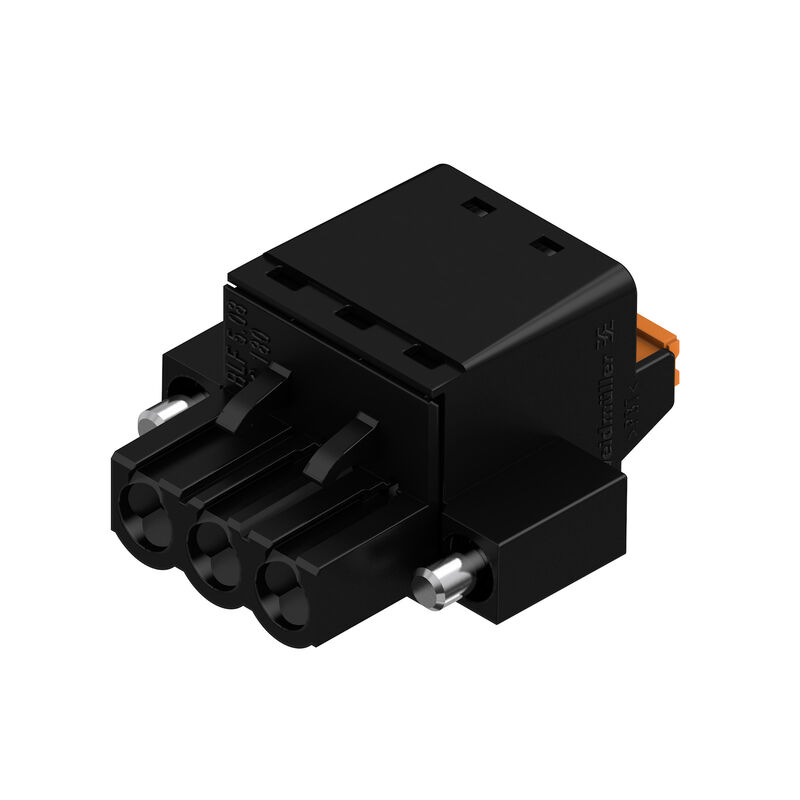
Weidmüller BLF 5.08HC/16/90F SN OR BX PCB Connector
The Weidmüller BLF 5.08HC/16/90F SN OR BX, order number 1002230000, is a pluggable female PCB connector designed for industrial wiring tasks where connection density and service access need to work together. A 16-pole connector is a highly practical format for many control, signal, and mixed-function boards because it provides generous circuit capacity without becoming unwieldy on the PCB.
In sourcing and engineering discussions, this part is often relevant when teams look for a Weidmüller 16-pole PCB connector, a 5.08 mm right-angle female plug, or a PUSH IN pluggable terminal connector with industrial-grade behavior. Those search patterns reflect real operational priorities: efficient board integration, fast field wiring, and dependable long-term contact quality.
Weidmüller BLF 5.08HC/16/90F Technical Profile
The Weidmüller 1002230000 belongs to the BLF 5.08HC/90F family and is identified as a female PCB plug-in connector with 5.08 mm pitch, 16 poles, and a 90-degree orientation. It uses PUSH IN with actuator, giving users a wiring method that is quick during installation and more controlled during conductor release. The family description emphasizes high vibration resistance, solid contact behavior, and tool-free wire connection, which are all highly relevant in industrial operating conditions.
The broader appeal of this connector lies in the fact that it combines familiar geometry with practical field handling. Engineers do not choose a connector only on paper; they choose it for how it behaves in assembly, in service, and over the life of the equipment.
Why 16 Poles Is a Strong Engineering Choice
A Weidmüller BLF 5.08HC/16/90F SN OR BX PCB connector is often used when a board needs a substantial but still manageable number of circuits in one connection point. Sixteen poles can support grouped inputs and outputs, multi-channel signal paths, distributed commons, or structured control blocks. That helps keep wiring architecture centralized and easier to understand.
For OEMs, that means fewer separate connection points and often a cleaner bill of materials strategy. For technicians, it means less guesswork when identifying and reconnecting a board during service. These are the kinds of practical advantages that become more valuable over time.
Board Layout and Enclosure Benefits
The 90-degree construction is especially useful in cabinet and machine electronics because it directs the wiring along the plane of the board. This supports compact housing design and can reduce unnecessary conductor strain. In dense electrical assemblies, that is more than a convenience. It can improve maintainability and preserve a cleaner internal wiring route.
Because this is a pluggable female connector, it also supports faster replacement workflows. A board can be disconnected more efficiently than with permanently wired solutions, which is one reason pluggable terminal connectors remain popular in industrial environments.
Weidmüller BLF 5.08HC/16/90F Handling Advantages in Real Use
PUSH IN technology is appreciated because it allows installers to work faster without turning the wiring step into a delicate manual process. The actuator makes disconnection more deliberate and service-friendly. When you multiply that benefit across multiple poles and repeated maintenance cycles, the operational gain becomes obvious.
For more information on related connector families and industrial connection products, see Weidmüller.
Weidmüller BLF 5.08HC/16/90F FAQ
What makes the Weidmüller BLF 5.08HC/16/90F SN OR BX useful in industrial electronics?
Its main value is that it combines a practical 16-pole count, service-friendly pluggability, right-angle cable exit, and PUSH IN wiring. That makes it suitable for control, automation, and signal distribution boards where clean wiring and reliable connection matter.
Is 16 poles a common requirement?
Yes, especially in more capable control boards and I/O assemblies. Sixteen positions can cover a wide range of channel layouts without forcing the design into multiple smaller connectors.
Why does vibration resistance matter in a PCB connector?
Industrial equipment may be exposed to machine motion, switching cycles, transport stress, or continuous mechanical influence. A connector family designed with vibration resistance in mind helps support long-term connection stability.
Does the right-angle format help with panel space?
Yes. It often allows a lower-profile wiring arrangement and better use of internal enclosure depth by guiding wires horizontally instead of vertically above the board.
Who usually selects a connector like this?
Typically design engineers, panel builders, purchasing teams, and service-oriented OEMs who want a connection solution that is technically sound and practical for installation teams to work with.