
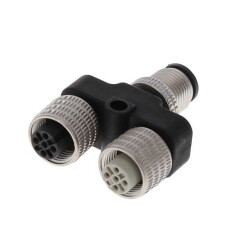
Weidmüller 1783430000 SAI-Y-5S PARA 2M12 Y-Adapter Overview
The Weidmüller 1783430000 SAI-Y-5S PARA 2M12 Y-adapter is an industrial connectivity component created for signal distribution and transfer in compact automation environments. In machine wiring, signal branching must be handled carefully. A poor connection concept can lead to cluttered installations, difficult troubleshooting, and increased maintenance time. The Weidmüller SAI-Y-5S PARA 2M12 adapter addresses this requirement with a structured Y-distribution format built around industrial M12 connectivity.
What Is the Weidmüller 1783430000 SAI-Y-5S PARA 2M12?
The Weidmüller 1783430000 is a sensor-actuator Y-adapter used for distributing and transferring electrical signals to downstream peripheral devices. It is designed around an M12 connection concept, using a 5-pole structure that supports standardized field-level integration in automation systems.
This type of adapter is especially useful when one signal path needs to be split or organized more efficiently without introducing unnecessary wiring complexity. In practical terms, it can help engineers create cleaner field layouts and more logical device interconnections.
Technical Features and Why They Matter
The Weidmüller 1783430000 SAI-Y-5S PARA 2M12 Y-adapter is associated with 24 V nominal voltage, 4 A nominal current, 5 poles, IP67 protection, and a housing concept suitable for industrial use. These details are important because field connectivity components must do more than simply fit together. They need to maintain signal integrity and mechanical stability under real operating conditions.
The adapter also uses gold contact surfaces and a robust housing material concept, which contribute to durable connection performance. In environments where vibration, dust, and variable operating temperatures are part of normal plant conditions, these design choices become highly relevant.
Why Y-Adapters Are Useful in Industrial Automation
The role of a Y-adapter in industrial automation is often underestimated. In reality, signal distribution is one of the points where system clarity is either strengthened or compromised. The Weidmüller 1783430000 Y-adapter helps avoid ad hoc branching methods by introducing a more defined connection strategy.
For engineering teams, this can improve documentation, installation speed, and maintenance traceability. Instead of relying on improvised junction solutions, the system benefits from a standardized branching element that aligns with industrial connectivity practices.
Typical Use Cases
The Weidmüller SAI-Y-5S PARA 2M12 sensor-actuator adapter can be relevant in applications such as:
- Sensor branching in machinery
- Actuator signal distribution
- Compact machine modules
- Conveyor and handling systems
- Distributed field wiring layouts
- Industrial automation systems using M12 connectors
In these environments, the value of the adapter is both technical and operational. It supports more organized field wiring while helping technicians understand the signal path more quickly during service work.
Engineering Considerations Before Use
Before integrating the Weidmüller 1783430000 SAI-Y-5S PARA 2M12, engineers typically assess the signal path requirements, current draw, mechanical routing, environmental exposure, and compatibility of all connected field devices. A Y-adapter can simplify the installation, but only when the broader system architecture has been planned with clarity.
It is also wise to think beyond commissioning. Components used in signal branching should remain accessible and understandable for future maintenance teams. A standardized Y-adapter makes that easier than improvised split wiring.
FAQ
What does the Weidmüller 1783430000 SAI-Y-5S PARA 2M12 do?
It distributes and transfers electrical signals to downstream peripheral devices using a structured M12 Y-adapter format. This helps create cleaner and more manageable field wiring in automation systems.
Why is IP67 protection important for this adapter?
IP67 protection is important because field-mounted adapters may be exposed to dust, moisture, and demanding industrial conditions. A higher protection class helps preserve connection reliability in real operating environments.
Where is this Y-adapter commonly used?
It is commonly used in machine automation, sensor-actuator distribution, conveyor systems, and compact field installations where signal branching must be handled in a controlled and standardized way.
Why choose a standardized Y-adapter instead of improvised split wiring?
A standardized Y-adapter improves installation consistency, makes documentation more accurate, and supports easier maintenance. It also helps reduce the risks associated with unclear or makeshift branching methods.
What should be checked before specifying this adapter?
Engineers should check voltage and current requirements, device compatibility, pole configuration, environmental conditions, and physical routing space. These points help ensure the adapter works well within the broader system design.
For more information about Weidmüller, you can review additional industrial connection technologies.