
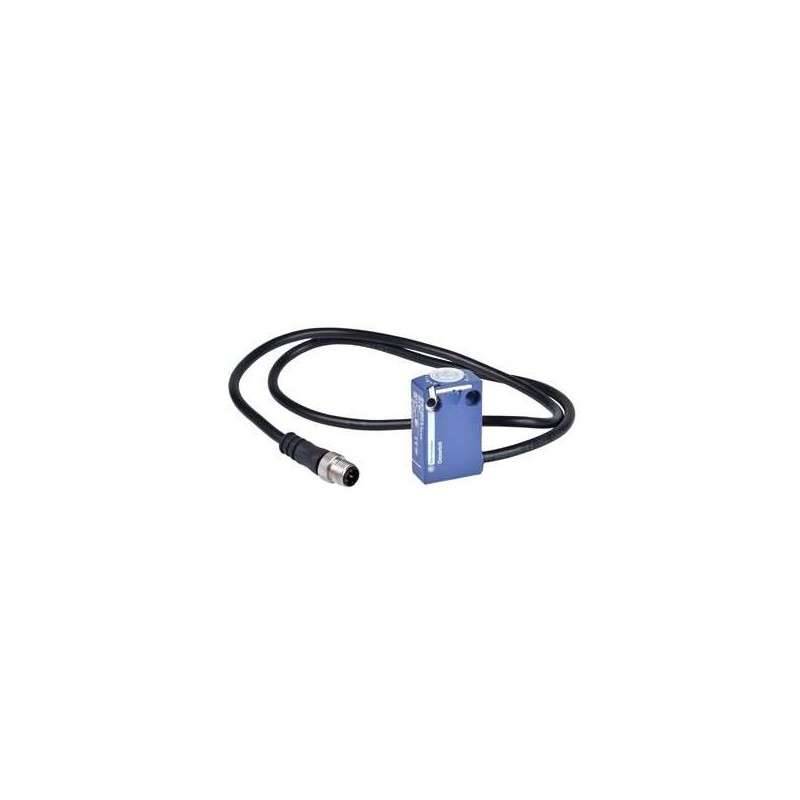
Telemecanique ZCMD21 Limit Switch Body: Miniature XC Standard Platform for Tight-Space Automation
The Telemecanique ZCMD21 Limit Switch Body is typically selected when machine designers need a compact limit switch solution without compromising industrial robustness. In real installations, “miniature” is not a preference—it’s a constraint. Tight guarding, dense conveyor modules, compact fixtures, and multi-axis assemblies often leave little room for conventional switch bodies. ZCMD21 addresses that footprint challenge while keeping the modular XC Standard concept: choose the body for electrical behavior, then choose the head for motion geometry.
For teams building a consistent parts ecosystem across machines, it’s common to combine miniature bodies with a small set of compatible heads and levers. For broader family options used in industrial sensing and switching, see Telemecanique sensor listings often used in automation inventories.
What ZCMD21 Does in a System
ZCMD21 is a switch body. It contains the switching mechanism and electrical termination, and it provides the foundation for mounting an operating head (plunger, roller, lever, rotary). The body defines the “electrical truth” your control system reads.
Telemecanique ZCMD21 Key Technical Characteristics
- Series: ZCMD miniature body family
- Contact arrangement: Commonly 1NC + 1NO
- Action type: Snap action
- Use case: Compact installations needing industrial-grade switching
- Compatibility concept: Works with defined compatible operating heads (ZCE family heads are often used in this architecture)
Why Positive Opening Concepts Matter (Design Mindset)
In many automation designs, engineers prefer mechanisms that fail predictably rather than ambiguously. Depending on the exact body configuration and compliance requirements, positive opening behavior can be part of a safety-minded architecture—especially where a stuck contact would be unacceptable. Always align with your safety standards and risk assessment.
Selection Guidance
1) Start with Space and Motion
Measure the available envelope and define the motion path (linear push, cam, rotation). This determines the operating head type. The body then provides the electrical interface and robustness.
2) Define Electrical Integration
Ensure your PLC input type, wiring convention, and contact logic are consistent with the 1NC+1NO approach. Document the expected “healthy” state to simplify troubleshooting later.
3) Consider Service Access
A compact switch that cannot be serviced becomes a downtime risk. Mount the body so technicians can access mounting hardware and connectors without disassembling half the machine.
Telemecanique ZCMD21 Installation Tips
- Rigid mounting: avoid bracket flex that shifts actuation points under vibration.
- Defined actuation: avoid “barely triggered” setups that lead to chatter.
- Strain relief: protect terminations from cable movement and repeated bending.
Telemecanique ZCMD21 Typical Applications
- Compact conveyors and diverter modules
- Small fixtures with limited sensor envelope
- Packaging machinery with dense station layouts
FAQ
Is Telemecanique ZCMD21 a complete limit switch?
No. It is a body. You must pair it with a compatible operating head to create a complete assembly.
Why choose a miniature body?
Because space constraints are real. ZCMD21 helps you keep industrial switching in tight mechanical envelopes.
How do I avoid switch chatter?
Ensure decisive actuation, avoid partial engagement, mount rigidly, and confirm return behavior across real machine cycles.
What should be documented for maintenance?
Head/body compatibility, wiring logic (NC/NO behavior), mounting alignment notes, and the expected PLC input states.