
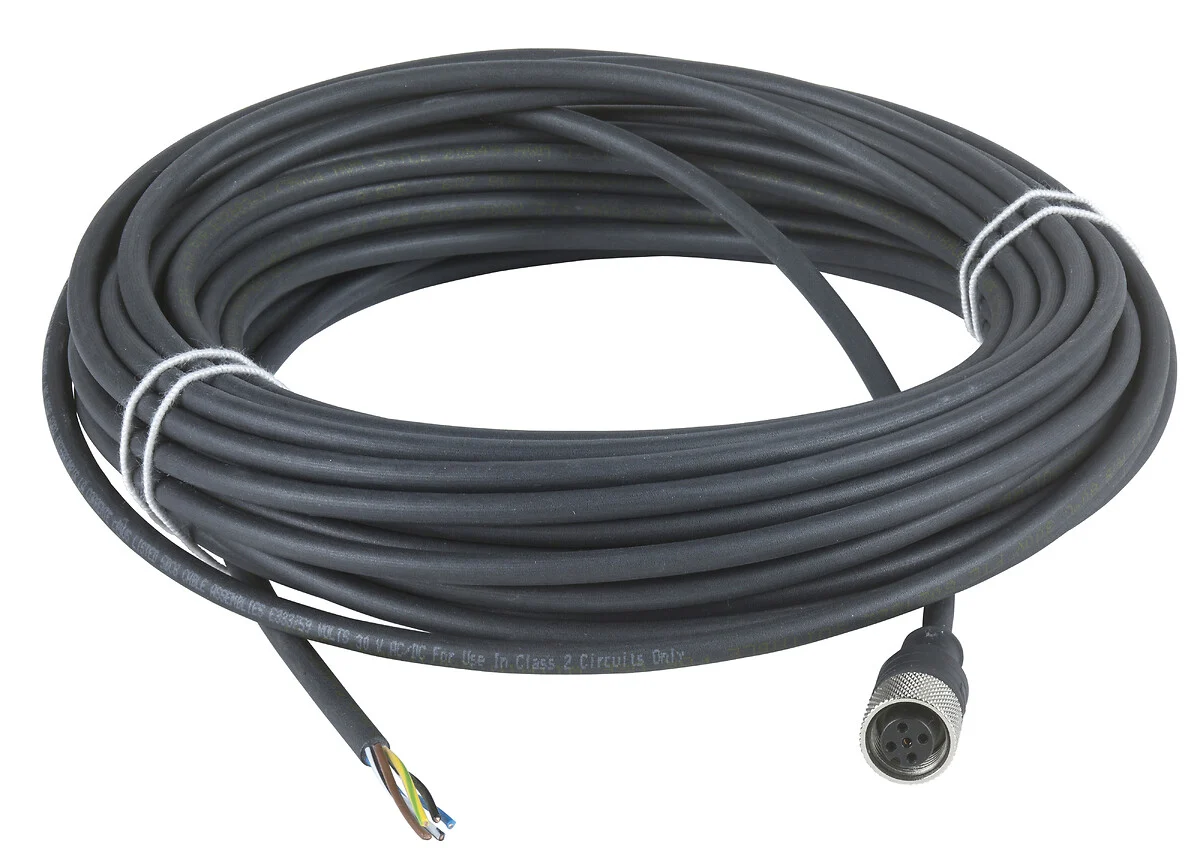
Telemecanique Sensors XUSL4E30H136N Safety Light Curtain: Type 4 Hand Protection with 30 mm Resolution
The Telemecanique Sensors XUSL4E30H136N safety light curtain is designed for safeguarding in industrial environments where personnel access must be detected reliably and the machine must transition to a safe state. Unlike general-purpose sensors, a safety light curtain is part of a functional safety system, meaning its selection, wiring, validation, and maintenance must follow safety standards and risk assessment principles.
Verified Technical Snapshot (Datasheet Highlights)
The datasheet identifies XUSL4E30H136N as a Safety light curtain type 4 for hand protection, with resolution 30 mm and protected height (Hp) 1360 mm. It uses a transmitter-receiver system, lists 2 safety outputs OSSD solid-state PNP, and specifies 24 V DC +/- 20% supply. It also states response time 17 ms, 68 beams, and indicates the nominal sensing distance can be set by cabling (ranges shown).
In addition, the datasheet lists safety and compliance positioning such as Type 4 (IEC 61496-1) and references SIL 3 (IEC 61508), SILCL 3 (IEC 62061), and Category 4 / PL e (ISO 13849-1) when correctly wired.
Telemecanique Sensors XUSL4E30H136N What 30 mm Resolution Means for Hand Protection
Resolution is a practical measure of the smallest object size the light curtain is intended to detect within the protective field. A 30 mm resolution is typically aligned with hand protection use cases in machinery safeguarding, but the final suitability depends on your risk assessment, safety distance calculations, and the machine’s stopping time.
In operations, the most important point is governance: treat resolution as one input to the safety concept—not the full answer. Integrators should validate the full system, including mounting position, safety distance, stopping performance, and restart logic.
Telemecanique Sensors XUSL4E30H136N OSSD Outputs: Why They Matter
The unit provides 2 safety outputs (OSSD) solid-state PNP. OSSD channels are designed for safety-rated monitoring. In practice, safety controllers or safety relays monitor these channels and verify correct behavior. The datasheet also outlines wiring for transmitter and receiver connections, including OSSD1/OSSD2 and feedback/restart inputs.
Operational benefit: OSSDs support robust fault detection and reduce the chance of latent failure going unnoticed. That said, the system-level design must still include correct external device monitoring (EDM) and restart strategy where required by the safety concept.
Telemecanique Sensors XUSL4E30H136N Protected Height (Hp 1360 mm) and Beam Count
The datasheet lists Hp = 1360 mm and 68 beams. This is directly relevant to mechanical layout: protected height must align with the hazard zone and the access routes you intend to guard. A light curtain can be technically correct and still fail operationally if it’s mounted too low/high or leaves bypass opportunities around the edges.
Commissioning and Maintenance: Practical Governance
- Validate stop performance: confirm real stopping time (not only theoretical) and apply safety distance rules.
- Document wiring mode: the datasheet indicates configuration by wiring; lock down configuration control to avoid drift over time.
- Implement periodic inspection: alignment, cleanliness of front panels, and bracket integrity directly impact reliability.
- Manage restart logic carefully: automatic vs manual restart should match the risk assessment and operational policy.
Required internal link: Telemecanique sensor.
FAQ: Telemecanique Sensors XUSL4E30H136N
What is XUSL4E30H136N?
It is a Type 4 safety light curtain intended for hand protection.
What is the resolution and protected height?
The datasheet states 30 mm resolution and Hp 1360 mm.
What outputs does it provide?
It provides 2 safety outputs OSSD solid-state PNP.
What is the supply voltage?
The rated supply voltage is 24 V DC +/- 20%.