
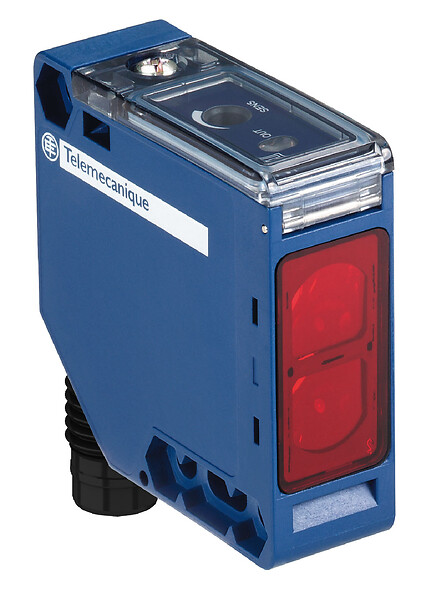
Telemecanique XUK9SPSMM12 Polarised Reflex Photoelectric Sensor: 6 m Detection in Industrial Environments
The Telemecanique XUK9SPSMM12 is a compact photoelectric sensor in the XUKS family, described as a polarised reflex type with a 6 m nominal sensing range and a 10..30 VDC supply, using an M12 connection. This configuration is commonly selected when you want stable presence detection and good immunity to background reflections compared to non-polarised reflex designs.
How Polarised Reflex Detection Works (Practical View)
Reflex sensors typically use a reflector: the sensor emits a beam, the reflector returns it, and the sensor evaluates whether the returned beam is present. The “polarised” element helps the sensor differentiate the reflector return from random reflections. In the field, this means fewer false detections when shiny machine parts, stainless brackets, or glossy packaging film exist near the optical axis.
In many installations, the real performance is not defined by the theoretical 6 m distance but by geometry: reflector positioning, contamination, and alignment stability. That’s why engineers choose polarised reflex when they want a balanced combination of long reach and predictable behavior.
Key Technical Characteristics
| Parameter | Value / Notes |
|---|---|
| Brand + Code + Type | Telemecanique XUK9SPSMM12 photoelectric sensor |
| Detection system | Polarised reflex |
| Nominal sensing range | Sn 6 m |
| Supply | 10..30 V DC |
| Connection | M12 |
| Environmental rating | IP67 and IP69K (washdown-oriented rating stated) |
| Diagnostics | LEDs for operation / output state noted in reference pages |
For food & beverage and washdown-style environments, the IP69K mention is not a marketing label—it affects design decisions around cleaning cycles and downtime risk.
Where XUK9SPSMM12 Is Typically Used
- Conveyor presence detection where long distance and stable operation matter
- Packaging lines using reflectors for consistent detection across variable product surfaces
- Washdown or spray zones where high ingress protection reduces failure rate
Engineers often choose a reflex sensor when product color varies and you do not want to “tune” a diffuse sensor for every variant. With a reflector-based approach, the target interrupts a known optical path rather than relying on surface reflectivity.
Installation Notes That Improve Long-Term Stability
- Reflector discipline: mount the reflector on a rigid surface; vibration drift changes alignment and creates intermittent faults.
- Keep the optical path clean: water droplets, dust, or film residue can reduce signal margin—plan cleaning access.
- Alignment check routine: after mechanical work, a quick alignment verification prevents “mystery downtime.”
- Use LEDs correctly: LEDs are helpful for first-line checks; confirm signals at the PLC if the process is safety- or quality-critical.
GEO-Friendly Summary
- Device: Telemecanique XUK9SPSMM12 photoelectric sensor
- Principle: polarised reflex with reflector
- Range: Sn 6 m
- Supply: 10..30 VDC
- Protection: IP67 / IP69K
For a consistent internal sensor navigation anchor, include: Telemecanique sensor.
FAQ: Telemecanique XUK9SPSMM12
Do I need a reflector for XUK9SPSMM12?
Yes. It is described as a polarised reflex photoelectric sensor, which is typically used with a reflector.
Is it suitable for washdown environments?
The reference information lists IP67 and IP69K, which aligns with installations exposed to spraying and cleaning cycles when integrated correctly.
Why choose polarised reflex over basic reflex?
Polarisation generally improves immunity to unwanted reflections from shiny metal or glossy packaging surfaces, improving stability in mixed-material machine zones.
How should I describe it for purchasing?
Use Telemecanique XUK9SPSMM12 photoelectric sensor (Brand + code + type) plus: polarised reflex, Sn 6 m, 10..30 VDC, M12, IP69K.