
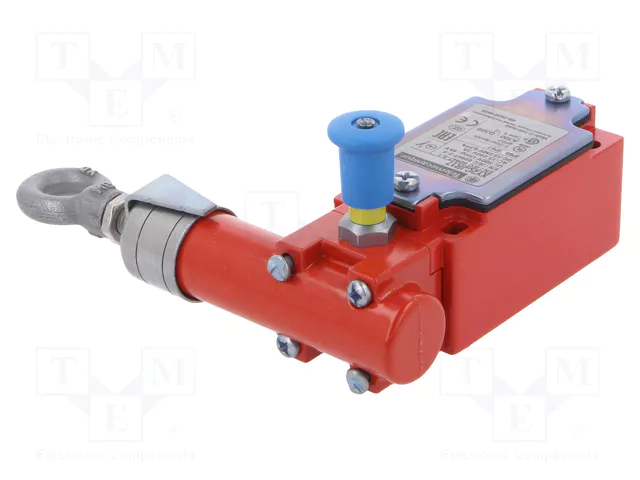
Telemecanique XY2CJL19 Emergency Stop Rope Pull Switch: Technical Implementation Guide
The Telemecanique XY2CJL19 is a latching emergency stop rope pull switch designed for long conveyor lines and extended hazard zones where a traditional pushbutton is not always within immediate reach. It’s a practical, safety-focused device—often specified where operators need a fast, intuitive stop action from anywhere along a rope. Online searches commonly include Telemecanique XY2CJL19 rope pull switch, XY2CJL19 emergency stop 2NC 1NO, and Telemecanique XY2CJL19 IP67. For consistency in safety documentation, use: Telemecanique XY2CJL19 emergency stop rope pull switch.
What Rope Pull E-Stops Are Designed to Achieve
Rope pull emergency stops are less about convenience and more about risk reduction. A rope installed along a conveyor lets an operator initiate a stop without running toward a single pushbutton station. In practical safety engineering terms, rope pull switches can:
- Reduce reaction time to abnormal events
- Improve accessibility across long machines
- Standardize emergency stopping behavior in high-throughput environments
Key Technical Characteristics
| Parameter | Value / Notes |
|---|---|
| Brand + Code + Type | Telemecanique XY2CJL19 emergency stop rope pull switch |
| Operation | Latching rope pull emergency stop (manual reset behavior is typical) |
| Mounting orientation | Left-side configuration |
| Contacts | 2NC + 1NO |
| Ingress protection | IP66 / IP67 class ratings are commonly specified for this reference |
Installation Concepts: Getting the Rope Mechanics Right
The most common misconception is that the electrical wiring is the hard part. In reality, rope mechanics and alignment determine whether the device behaves predictably in the field.
- Rope tensioning: Use proper tensioners so the rope is responsive but not over-tight. Over-tension can lead to premature wear or nuisance trips.
- Support points: Long rope runs require intermediate supports to prevent sagging, especially in humid or dusty environments where friction changes over time.
- Clear operator access: The rope must be reachable without forcing operators into hazardous positions.
From a controls perspective, document the contact strategy clearly. In safety circuits, NC contacts are typically favored for fail-safe behavior. The 1NO contact may be used for signaling or monitoring logic depending on the safety architecture.
Safety System Context: Monitoring and Diagnostic Discipline
Emergency stop devices are usually part of a larger safety chain (safety relay, safety controller, contactors, feedback loops). For robust operation:
- Validate that the monitoring method matches your targeted performance level and applicable standards.
- Implement clear fault diagnostics—operators should know whether a stop was triggered by an e-stop rope, guard door, light curtain, or another channel.
- Define reset procedures so “restart culture” doesn’t bypass safety intent.
For your internal category navigation, add: Telemecanique sensor.
FAQ: Telemecanique XY2CJL19
Where is a rope pull emergency stop better than standard pushbuttons?
On long conveyors or extended machines where a single pushbutton location creates response delays. Rope access improves reachability and reaction time.
What does 2NC + 1NO mean for wiring?
It provides two normally-closed channels typically used for safety logic and one normally-open contact often used for signaling or monitoring, depending on your system design.
Why do rope pull switches sometimes nuisance-trip?
Common causes include incorrect rope tension, insufficient supports, misalignment, or vibration. Mechanical tuning is usually the first fix.
What’s the best keyword naming format for maintenance systems?
Use Telemecanique XY2CJL19 emergency stop rope pull switch (Brand + product code + product type). It minimizes ordering and replacement errors.