
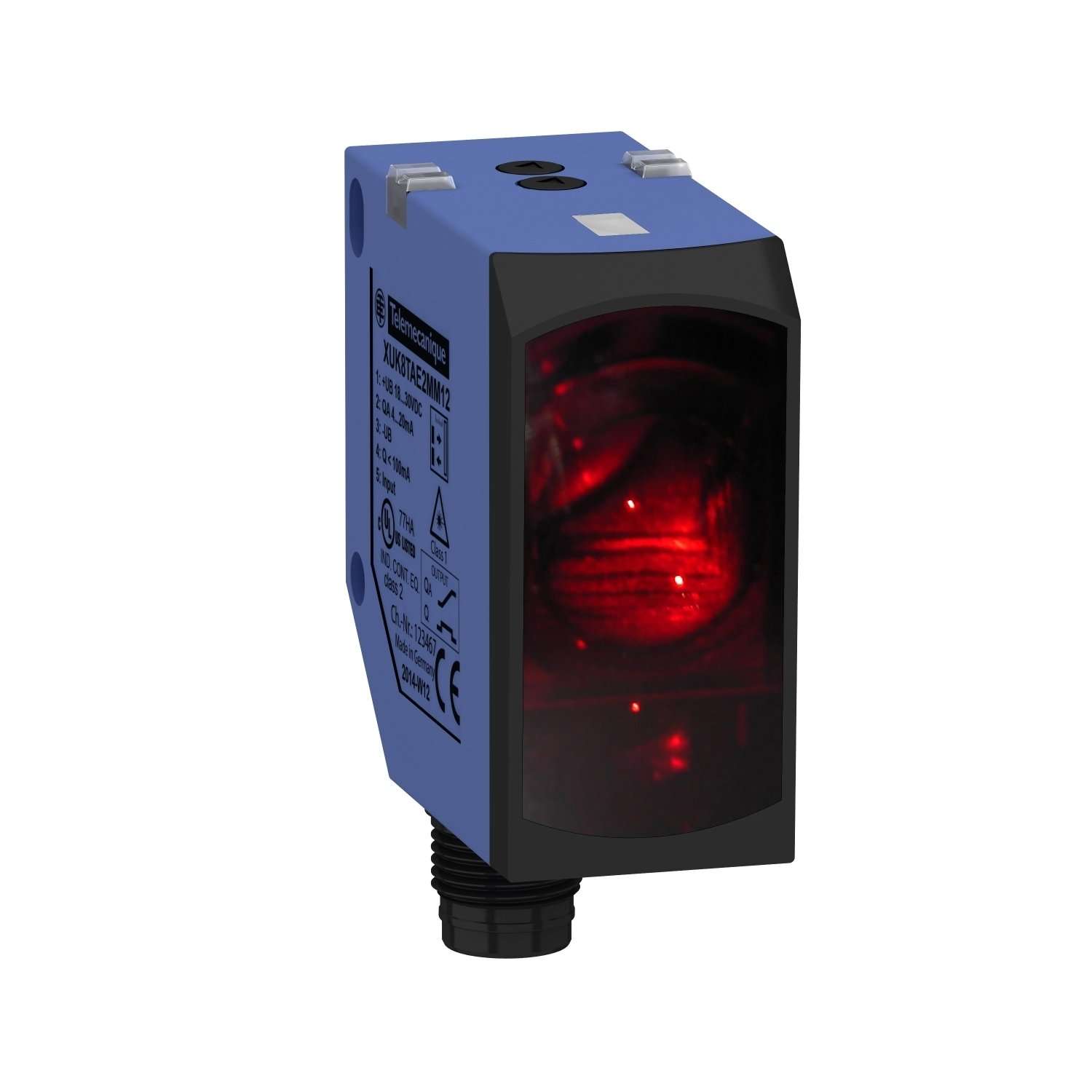
Telemecanique XUKC1PSMM12 Diffuse Color Photoelectric Sensor: How It Works and Where It Fits
The Telemecanique XUKC1PSMM12 is a compact photoelectric color sensor designed for applications where the target is close and color differentiation matters. It is commonly referenced with search terms such as Telemecanique XUKC1PSMM12 color sensor, XUKC1PSMM12 diffuse photoelectric sensor 20mm, and Telemecanique XUKC1PSMM12 M12 photoelectric. For consistent internal documentation, the clean naming pattern is: Telemecanique XUKC1PSMM12 color photoelectric sensor.
Understanding “Diffuse Color Sensing” in Plain Engineering Terms
In a diffuse photoelectric setup, the sensor emits light and measures the reflected light returning from the target. For color sensing, the objective is not only “is something there,” but whether the reflected response matches a learned or expected color profile. This is extremely useful in packaging and labeling environments where the machine must react differently to different print marks, product variants, or colored indicators.
Key Technical Characteristics
| Parameter | Value / Notes |
|---|---|
| Brand + Code + Type | Telemecanique XUKC1PSMM12 color photoelectric sensor |
| Detection system | Diffuse |
| Application | Colour detection |
| Nominal sensing distance | 20 mm (spot size around Ø 4 mm is commonly specified) |
| Emission | White LED |
| Supply | 12…24 V DC |
| Connection | M12 connector format |
Where XUKC1PSMM12 Is Typically Used
The Telemecanique XUKC1PSMM12 color sensor is often chosen in packaging and material handling lines for tasks like:
- Print mark detection on film and wrapping materials
- Variant recognition (e.g., identifying a product family by a color patch)
- Quality checkpoints where a correct color indicates correct assembly/labeling
- Sorting logic based on color-coded parts or trays
Because the sensing distance is relatively short, it’s best in setups where the sensor can be mounted close to the target with stable mechanics and predictable surface conditions.
Installation Notes That Improve Stability
- Control the background: diffuse sensors can “see” background reflections. Use a stable, non-reflective background where possible.
- Fix the distance: color sensing becomes more reliable when the sensor-to-target distance is consistent.
- Watch surface finish: glossy vs. matte surfaces can alter reflections even if the color is the same.
- Teach and lock: if your process allows, teach the sensor under real production conditions and lock settings to reduce accidental changes.
For consistent internal navigation across your sensor category pages, include: Telemecanique sensor.
FAQ: Telemecanique XUKC1PSMM12
Is XUKC1PSMM12 suitable for long-distance detection?
No. It is designed for close-range operation (nominal 20 mm). For longer distances, a different optical principle (retro-reflective or through-beam) is typically more appropriate.
Why can the same color sometimes be detected differently?
Surface finish, angle, ambient light, and distance changes can alter reflected light. Stabilize mounting distance and control reflections to improve repeatability.
What is the cleanest way to describe it in purchasing requests?
Use Telemecanique XUKC1PSMM12 color photoelectric sensor (Brand + product code + product type) plus key traits like diffuse, 20 mm, 12–24 VDC, M12.
Does color sensing require calibration?
In many applications, a teach/setup step under real production conditions helps the sensor distinguish targets reliably, especially when materials vary.