
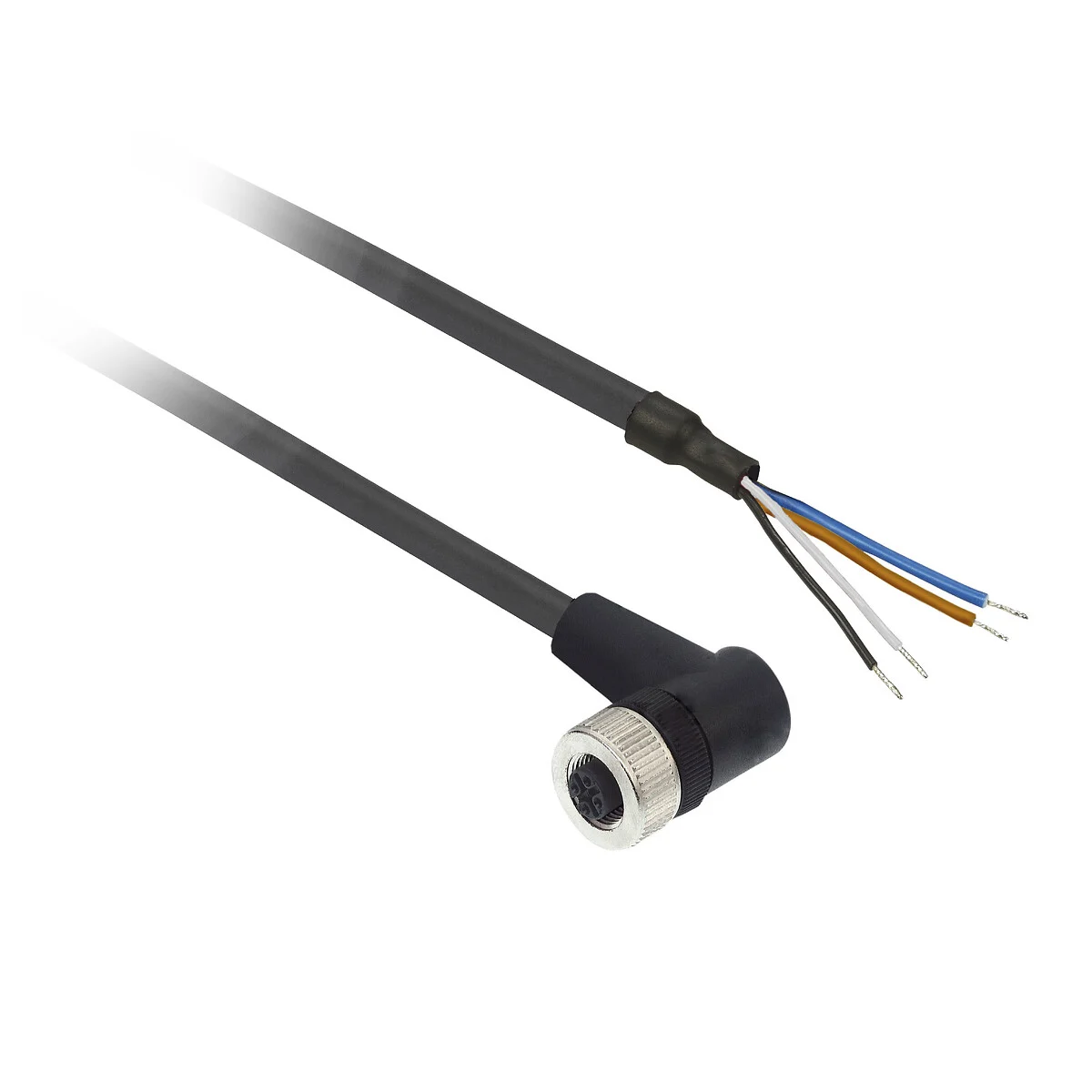
Telemecanique Sensors XMLR010G1P75 Electronic Pressure Sensor Technical Overview
Telemecanique Sensors XMLR010G1P75 electronic pressure sensor is designed for precise pressure monitoring in industrial automation systems. As part of the XMLR series, this device combines analogue measurement with discrete switching capability, making it suitable for applications where both monitoring and threshold control are required.
In industrial documentation, the full expression “Telemecanique Sensors XMLR010G1P75 electronic pressure sensor” is typically used to prevent confusion with similar pressure transmitters. Accurate naming improves traceability in maintenance records, PLC documentation, and procurement workflows.
For broader product family information and compatible accessories, you can review the official Telemecanique sensor portfolio.
Core Technical Specifications
- Pressure range: 0–10 bar measurement class
- Process connection: G 1/4 female thread (DIN 3852 standard)
- Power supply: 24 V DC
- Output signals: 0–10 V analogue output + 1 PNP switching output
- Designed for fluids such as air, water, hydraulic oil, and refrigeration media within operating limits
Telemecanique Sensors XMLR010G1P75 electronic pressure sensor integrates a continuous 0–10 V analogue signal for real-time monitoring while simultaneously providing a PNP switching output for threshold-based logic. This dual-output architecture simplifies control panel design and reduces the need for additional relays or signal converters.
Installation and Integration Considerations
When integrating Telemecanique Sensors XMLR010G1P75 electronic pressure sensor into a control cabinet, attention should be given to connector accessibility and proper sealing of the G 1/4 process connection. Correct torque application ensures long-term sealing performance and prevents micro-leakage.
Because the device operates on 24 V DC, stable power supply routing is critical. Voltage drops in long cable runs may influence signal accuracy. In high-vibration environments, mechanical support for wiring harnesses is recommended to prevent stress on the electrical interface.
Operational Advantages in Industrial Automation
Telemecanique Sensors XMLR010G1P75 electronic pressure sensor is commonly used in hydraulic units, compressor systems, pneumatic lines, and refrigeration circuits. The 10 bar range makes it especially relevant for medium-pressure monitoring scenarios where precision and durability must coexist.
Its PNP switching output enables direct PLC digital input connection, allowing alarm thresholds or safety interlocks to be configured without additional interface modules. Meanwhile, the analogue 0–10 V output provides continuous data for trend monitoring and predictive maintenance analytics.
Maintenance and Reliability Practices
Routine inspection of Telemecanique Sensors XMLR010G1P75 electronic pressure sensor should include checking thread sealing, cable strain relief, and connector integrity. In fluid-based applications, even minor leakage may contaminate electrical interfaces over time.
For troubleshooting, first verify supply voltage under load conditions. If analogue readings appear unstable, confirm correct PLC scaling parameters for 0–10 V interpretation.
Application Scenarios
Telemecanique Sensors XMLR010G1P75 electronic pressure sensor is well suited for packaging machinery, material handling equipment, hydraulic presses, and automated fluid regulation systems. In each of these environments, consistent signal transmission is critical for safe and efficient operation.
FAQ
1. What is the pressure range of XMLR010G1P75?
The device operates within a 0–10 bar pressure range.
2. What output types does it provide?
It offers a 0–10 V analogue output and one PNP switching output.
3. What type of power supply is required?
The sensor operates with a 24 V DC power supply.
4. What is the process connection type?
It uses a G 1/4 female threaded process connection.
5. In which industries is it commonly used?
It is frequently used in hydraulic systems, pneumatic circuits, refrigeration systems, and industrial automation environments.