
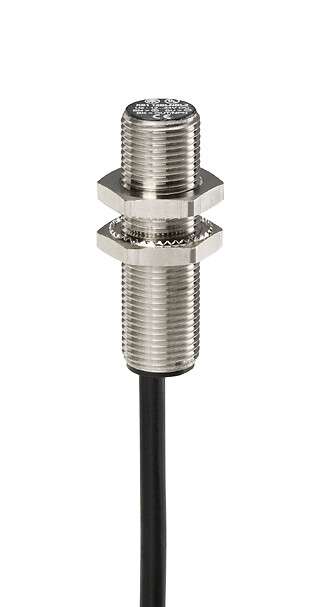
Telemecanique XS112BLPAL5 Inductive Sensor: M12 Sn 2 mm PNP NO with 5 m Cable for Reliable Metal Detection
Inductive proximity sensors remain a foundational technology in automation because they solve a common reliability problem: confirming metal presence without depending on optics. Dust, oil mist, and ambient light do not typically disrupt inductive detection, which makes it ideal for machine end-position checks, fixture verification, and cam detection. The Telemecanique XS112BLPAL5 inductive sensor is a general-purpose M12 sensor designed for stable metal detection in standard industrial architectures.
This article explains the specification set of the Telemecanique XS112BLPAL5 inductive sensor, how to integrate it for repeatable switching, and why mounting discipline is the deciding factor between a sensor that “works today” and a sensor that remains predictable for years.
Product Identity and Technical Characteristics
The product data sheet describes the Telemecanique XS112BLPAL5 inductive sensor as an inductive sensor XS1 M12 with Sn 2 mm, 12…24 VDC supply, and a 5 m cable.
- Sensor design: Cylindrical M12
- Enclosure material: Nickel plated brass
- Nominal sensing distance (Sn): 2 mm
- Output type: Discrete, 3-wire, PNP
- Output function: 1 NO
- Supply: 12…24 V DC (reverse polarity protection), limits 10…36 V DC
- Switching capacity: ≤ 200 mA with overload and short-circuit protection
- Switching frequency: ≤ 2500 Hz
- Protection: IP67
- Mounting acceptance: Flush mountable
These attributes make the Telemecanique XS112BLPAL5 inductive sensor suitable for high-cycle detection where fast switching (up to 2500 Hz) can support quick mechanical movements and dense event timing.
What Sn 2 mm Means in Real Machine Design
Sn is a nominal value, not a promise for every target material and geometry. With Sn 2 mm, stability depends on controlled approach and rigid mounting. A best-practice strategy is to design the mechanical target so the sensor operates inside a comfortable operating zone rather than at the edge of its capability. The datasheet lists an operating zone of 0…1.6 mm.
That margin matters operationally: slight bracket drift, thermal expansion, or minor target deformation can shift the switching point. If the sensor is already operating at the limit, those normal variations become downtime events.
Electrical Integration: PNP NO Output Governance
The Telemecanique XS112BLPAL5 inductive sensor is specified as PNP, 3-wire, 1 NO. PNP is widely compatible with common PLC input modules, but the operational advantage comes from standardization. Define a consistent mapping across machines:
- Input ON = metal present (recommended for clarity in many plants).
- Standard wire color conventions and terminal labeling.
- Documented spare strategy (M12 Sn 2 mm PNP NO, 5 m cable).
Because switching capacity is specified with overload and short-circuit protection, the sensor is designed for industrial resilience. Still, cable routing remains important: avoid pinch points and preserve bend radius so the 5 m cable does not become the failure point.
Mounting and Clearance: Avoiding Interaction Effects
Flush mountability helps when installing into metal structures, but clearance rules still matter. The datasheet provides minimum mounting distances for side-by-side and face-to-face installations. If sensors are packed too tightly, electromagnetic interaction can cause unpredictable triggering. In governed designs, spacing is treated as an engineering constraint, not an afterthought.
Maintenance Readiness and Lifecycle Stability
To keep the Telemecanique XS112BLPAL5 inductive sensor stable across its lifecycle, treat it as a controlled asset:
- Record the target type and the mechanical gap used at commissioning.
- Capture a reference photo of the bracket position.
- Note the PLC channel name and functional meaning.
For broader sensor ecosystem conventions and selection patterns, use: Telemecanique sensor.
FAQ
- What is the Telemecanique XS112BLPAL5 inductive sensor?
It is an XS1 M12 inductive proximity sensor with Sn 2 mm, PNP NO output, and a 5 m cable. - What supply voltage is specified?
12…24 V DC with reverse polarity protection (limits 10…36 V DC). - Is it suitable for high-cycle applications?
Switching frequency is specified up to 2500 Hz. - What protection rating is listed?
IP67 is specified. - What causes most false negatives in inductive sensing?
Mechanical gap drift that pushes the target outside the stable operating zone.
With controlled gap design and documented integration standards, the Telemecanique XS112BLPAL5 inductive sensor provides reliable Sn 2 mm metal detection for general-purpose industrial automation.