
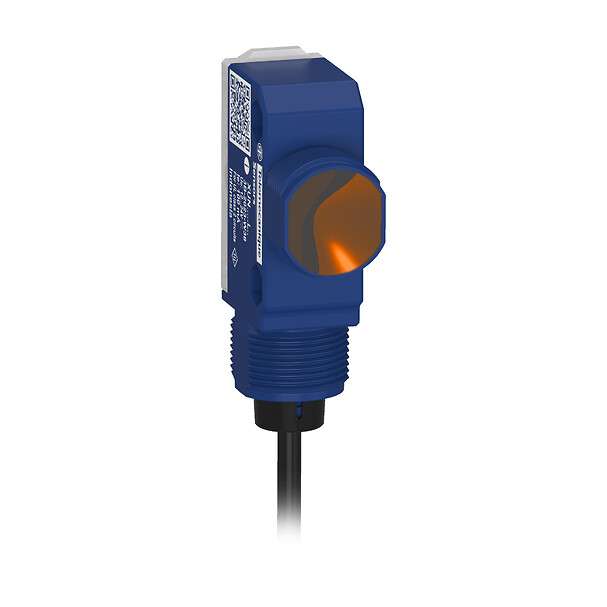
Telemecanique XUN6APXNL2 Photoelectric Sensor: Hybrid Diffuse Proximity for 0.5 m Class Detection
In production environments, “general-purpose” sensing is rarely simple. Targets change, surfaces vary, and backgrounds become reflective as machines evolve. The Telemecanique XUN6APXNL2 photoelectric sensor is positioned as a hybrid diffuse proximity solution intended for stable detection in common automation tasks without requiring a reflector or a separate receiver.
This technical guide describes how the Telemecanique XUN6APXNL2 photoelectric sensor is specified, what hybrid diffuse behavior means in practice, and how to integrate the sensor into PLC logic with predictable results.
Detection Method: Hybrid Diffuse Proximity
The Telemecanique XUN6APXNL2 photoelectric sensor is referenced as a hybrid proximity photoelectric sensor in a medium distance class. Distributor and datasheet references commonly identify it as a diffuse sensor around the 0.5 m class (and typical references list 420 mm in catalog contexts).
Diffuse sensors operate by reading light reflected from the target, so reflectivity and surface finish matter. Hybrid designs are used to improve functional robustness across typical industrial variation, but stability still depends on controlled geometry and disciplined mounting.
Core Technical Characteristics
- Technology: hybrid diffuse proximity photoelectric sensor (medium class)
- Distance class: ~0.5 m class; 420 mm is referenced in product listings
- Output type: PNP, NO/NC referenced in listings
- Cable: 2 m cable reference in distributor listing
These attributes make the Telemecanique XUN6APXNL2 photoelectric sensor a fit for compact conveyors, assembly fixtures, and packaging stations where the target is within a controlled distance window and a reflector would complicate mechanics.
PLC Integration and Signal Governance
The practical advantage of PNP switching is compatibility with common PLC input modules. The governance requirement is defining the signal meaning and keeping it consistent across stations:
- Define whether “ON” indicates presence or absence.
- Document whether NO or NC is used in each application.
- Label the I/O channel with a functional name, not only a number.
When governance is strong, troubleshooting becomes systematic. When governance is weak, identical symptoms can have different causes because logic assumptions vary across machines.
Mounting Strategy: Controlling Geometry and Backgrounds
Most nuisance stops occur when the sensor is operating at the edge of stability. To keep the Telemecanique XUN6APXNL2 photoelectric sensor stable:
- Mount on a rigid bracket to reduce vibration-driven distance drift.
- Validate detection with worst-case product surfaces (dark, matte, glossy).
- Avoid aiming toward highly reflective backgrounds that can create unintended returns.
- Maintain a consistent sensor-to-target distance across product variants when possible.
For lines with frequent product changeovers, capturing a simple “setup photo” and a defined mounting reference reduces re-alignment effort after maintenance interventions.
Use Cases Where Hybrid Diffuse Makes Sense
- Presence checks on small conveyors where target distance is repeatable.
- Part-in-place confirmation in assembly fixtures.
- Packaging transfer monitoring with moderate sensing gaps.
For broader selection logic and compatible sensor ecosystem references, see Telemecanique sensor.
FAQ
- What sensing method does the Telemecanique XUN6APXNL2 photoelectric sensor use?
It is referenced as a hybrid diffuse proximity photoelectric sensor. - What distance class should be expected?
Listings reference a 0.5 m class and 420 mm is referenced in product listings. - What output type is used?
PNP switching with NO/NC references is shown in distributor listings. - What cable length is referenced?
A 2 m cable is referenced in distributor listings. - What causes false switching in diffuse sensing?
Reflective backgrounds, unstable mounting, and operating too close to the limit of the sensing margin.
When geometry is controlled and logic conventions are documented, the Telemecanique XUN6APXNL2 photoelectric sensor delivers stable hybrid diffuse detection for everyday industrial automation tasks.