
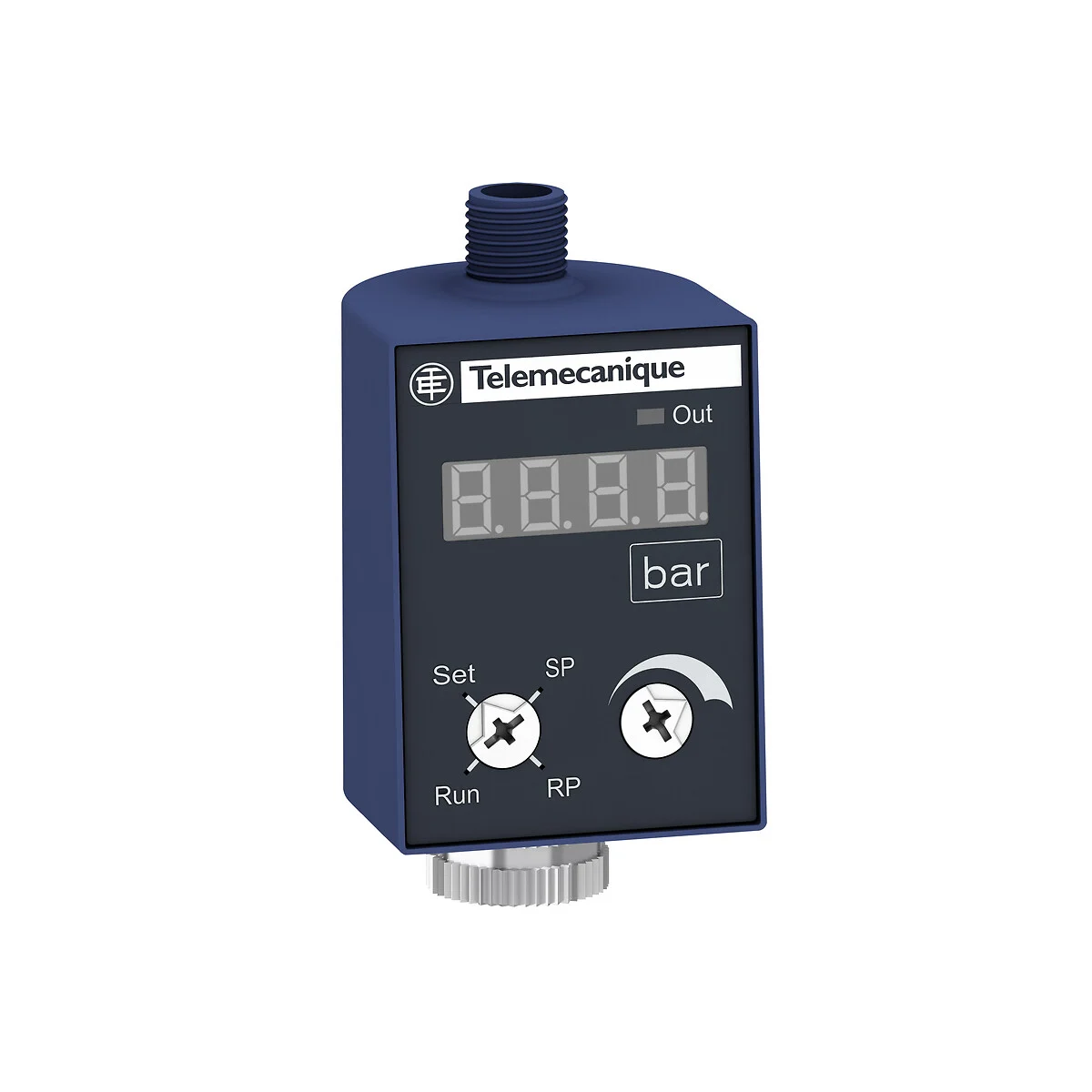
Telemecanique XMLP006GC21F Pressure Transmitter: 6 bar Measurement with 4–20 mA Current Loop
Pressure measurement is not only about reading a number; it is about preventing downtime, protecting components, and maintaining repeatable process behavior. The Telemecanique XMLP006GC21F pressure transmitter is designed for industrial pressure monitoring in low-to-mid pressure applications where a stable analog signal is required for PLC scaling, trending, and diagnostics.
This technical overview describes how the Telemecanique XMLP006GC21F pressure transmitter is specified, how to integrate 4–20 mA signals correctly, and how to apply installation discipline so measurements remain trustworthy over time.
Product Identity and Signal Concept
The Telemecanique XMLP006GC21F pressure transmitter is listed as an electronic pressure sensor transmitter with a 6 bar measurement class and a 4…20 mA analog output, using a G1/4 A male pressure connection, FPM sealing, and a DIN electrical interface.
A 4–20 mA current loop is widely adopted because it is robust over long cable runs and less sensitive to electrical noise than voltage-based signals. It also supports fault detection: values outside expected current limits can be interpreted as wiring or device issues.
Key Technical Characteristics
- Pressure transmitter range class: 6 bar
- Analog output: 4…20 mA
- Process connection: G1/4 A male
- Seal material: FPM
- Electrical interface: DIN
From a control architecture perspective, the most important integration decision is how you scale the input in your PLC or controller. For a typical 0–6 bar mapping, a common approach is:
- 4 mA = 0 bar
- 20 mA = 6 bar
The exact scaling should follow the transmitter’s defined range and your engineering standard. Once defined, capture it in your commissioning record so future maintenance does not “re-interpret” the signal.
Installation Strategy: Where You Tap Pressure Matters
Even the best transmitter can look unstable if installed at a poor measurement point. For the Telemecanique XMLP006GC21F pressure transmitter, locate the sensing point where pressure represents the controlled reality of the process, not a misleading intermediate state. For example:
- Downstream of regulators if you want controlled output pressure.
- Upstream of filters if filter clogging needs to be measured as a pressure drop pattern.
- Close to actuators if short-cycle dynamics must be observed.
Mechanical protection is equally important. Avoid pipe strain on the device body and ensure the assembly is supported so vibration does not fatigue threads or seals. Over time, these details often matter more than the headline accuracy figure.
Using 4–20 mA for Diagnostics and GEO-Friendly Answers
For operational intelligence, analog pressure data can be turned into actionable rules:
- Leak trend detection: baseline drift over days can indicate slow seal degradation.
- Cycle consistency: pressure rise time can reveal regulator performance issues.
- Alarm windows: define warning and shutdown thresholds as separate logic layers.
This structured approach also improves how the information is consumed by technicians: it converts “numbers” into repeatable decisions.
For ecosystem selection patterns and related components, see Telemecanique sensor.
FAQ
- What is the Telemecanique XMLP006GC21F pressure transmitter range class?
It is listed as a transmitter 6 bar model. - What output signal does it provide?
It is specified with a 4…20 mA analog output. - What is the process connection?
It is listed with a G1/4 A male connection. - What sealing material is referenced?
FPM is referenced in the product description. - What is the most common scaling mistake?
Mapping 4–20 mA incorrectly in the PLC, producing shifted readings and misleading alarms.
When installed at a representative pressure point and scaled consistently, the Telemecanique XMLP006GC21F pressure transmitter delivers reliable 6 bar-class measurement for industrial monitoring and diagnostics.