
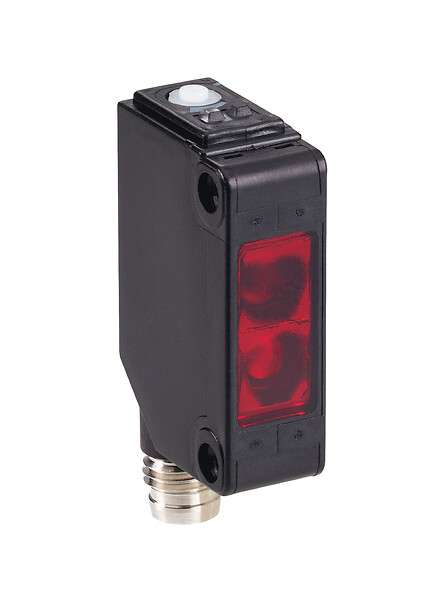
Telemecanique XUN9APXNM12 Photoelectric Sensor: Hybrid Polarized Reflex Detection up to 5 m
Retro-reflective photoelectric sensing remains a practical standard when you want reliable presence detection without mounting a separate receiver. However, reflective environments introduce a classic risk: shiny machine surfaces can behave like unintended reflectors. The Telemecanique XUN9APXNM12 photoelectric sensor is designed as a hybrid reflex sensor with polarization concepts to improve discrimination and reduce false switching in typical industrial backgrounds.
This technical article explains how the Telemecanique XUN9APXNM12 photoelectric sensor is specified, how polarized reflex sensing behaves operationally, and what integration practices produce stable performance across shifts and maintenance cycles.
Why Polarized Reflex Matters
A reflex sensor uses a reflector to return emitted light to the sensor. A polarized reflex sensor adds polarization handling to reduce sensitivity to random reflections. In practice, polarization helps when the background includes glossy guards, metallic brackets, or stainless frames that would otherwise create sporadic “beam return” events.
For the Telemecanique XUN9APXNM12 photoelectric sensor, distributor listings and the datasheet reference it as a hybrid reflex sensor with polarized operation and a nominal range class around 5 m.
Core Technical Characteristics
- Detection system: hybrid reflex, polarized.
- Range class: Sn 5 m (catalog/distributor references).
- Output: PNP discrete switching; NO/NC variants referenced in listings.
- Connection: M12 connector.
- Layout support: anti-interference concept is highlighted in XUN family listings for side-by-side installations.
These characteristics position the Telemecanique XUN9APXNM12 photoelectric sensor as a strong candidate for conveyors and packaging lines where reflectors are easy to mount and you want stable switching in reflective mechanical environments.
Installation Design: Reflector Selection and Mechanical Discipline
In reflex sensing, the reflector is a functional component, not an accessory. Stability depends on:
- Rigid reflector mounting to prevent vibration drift.
- Clean beam corridor, avoiding unintended reflective paths.
- Commissioning validation using real product geometry and speed.
Because the Telemecanique XUN9APXNM12 photoelectric sensor is used in the 5 m class, physical alignment tolerances are broader than short-range diffuse sensors, but long distances also increase the chance of background interference if the corridor is not controlled.
PLC Integration: Turning Switching into Operational Insight
Once wired, a discrete photoelectric sensor can do more than basic interlocks. With the Telemecanique XUN9APXNM12 photoelectric sensor, you can implement:
- Presence bit logic for transfer confirmation.
- Missed-object detection using timing windows.
- Jam prediction using pulse frequency and dwell time analytics.
These strategies transform a single sensor input into a more informative operational signal, supporting faster root-cause analysis during downtime events.
Dense Sensor Layouts and Anti-Interference
In high-density machines, multiple photoelectric sensors can operate in close proximity. The XUN family is marketed with anti-interference features that support side-by-side deployment, reducing mutual disruption when multiple channels are required across one station.
Even with anti-interference concepts, good practice is to avoid aiming multiple sensors into the same reflective corridor unless the layout has been validated under full production conditions.
For broader installation conventions and compatible ecosystem accessories, see Telemecanique sensor references.
FAQ
- What sensing method is used by the Telemecanique XUN9APXNM12 photoelectric sensor?
It is listed as a hybrid polarized reflex photoelectric sensor. - What is the nominal range class?
It is referenced as Sn 5 m in distributor listings. - What output type is provided?
PNP discrete switching; NO/NC variants are referenced in listings. - Why is polarization useful?
It helps reduce false switching caused by unintended reflections from shiny backgrounds. - What is the most common installation issue?
A flexible reflector bracket that moves under vibration, producing intermittent beam return.
When reflector placement is rigid and the beam corridor is controlled, the Telemecanique XUN9APXNM12 photoelectric sensor delivers stable long-range reflex detection for general-purpose industrial automation.