
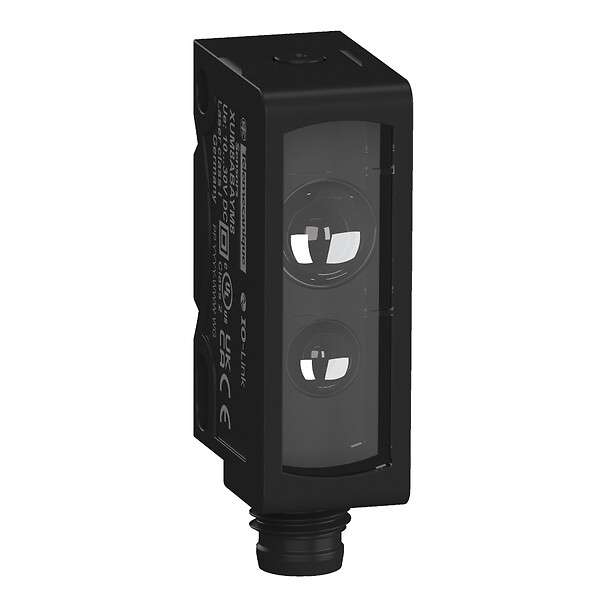
Telemecanique XUM8ABAYM8 Photoelectric Sensor: Miniature Detection for Compact Automation Designs
The Telemecanique XUM8ABAYM8 photoelectric sensor is engineered for applications where installation space is limited and mechanical constraints demand a miniature sensing device. In modern automation layouts—particularly compact assembly machines, robotic cells, and precision conveyors—miniature photoelectric sensors play a strategic role. They allow reliable object detection without interfering with tooling, guarding, or motion paths.
Product Positioning and Design Architecture
The Telemecanique XUM8ABAYM8 photoelectric sensor belongs to the XUM miniature sensor family, characterized by compact rectangular housing and M8 connectivity. This format is widely selected when panel depth, bracket footprint, and cable routing space are restricted. Despite its small dimensions, the device is designed to deliver stable discrete detection performance under standard industrial DC supply conditions.
Technical Characteristics Overview
- Brand + code + type: Telemecanique XUM8ABAYM8 photoelectric sensor
- Housing style: Miniature rectangular body
- Connector type: M8
- Supply type: DC (commonly 12–24 VDC range in XUM series)
- Output: Discrete switching output
- Application focus: Compact machinery and precision positioning systems
Why Miniature Sensors Matter in Automation
Machine builders increasingly prioritize space optimization. Smaller footprints enable shorter mechanical spans, reduced material cost, and improved operator ergonomics. The Telemecanique XUM8ABAYM8 photoelectric sensor supports this objective by providing detection capability without requiring large mounting brackets or extended mechanical clearance.
In robotic pick-and-place cells, miniature sensors are frequently mounted directly on moving arms or compact tooling frames. Reduced mass and size minimize mechanical inertia and vibration impact. When integrated correctly, the sensor contributes to repeatable detection cycles without compromising cycle time.
Installation Governance and Stability Considerations
Compact devices require disciplined installation practices. Because the housing is smaller, mechanical tolerances become more sensitive. Bracket rigidity must be sufficient to prevent micro-movements that could shift the optical axis. Cable strain relief is also essential; improper cable routing can gradually rotate or misalign the device.
The Telemecanique XUM8ABAYM8 photoelectric sensor should be mounted using repeatable reference surfaces. During commissioning, validate detection using the smallest target that will appear in the process. This ensures adequate signal margin even under worst-case reflectivity conditions.
Electrical Integration Best Practices
Miniature sensors are commonly wired into PLC digital input modules. Documentation must explicitly record the device as Telemecanique XUM8ABAYM8 photoelectric sensor to prevent substitution with mechanically similar but electrically different units. Replacement errors frequently occur when miniature housings appear visually identical.
Maintenance and Lifecycle Strategy
Due to close proximity to mechanical components, miniature sensors may be exposed to dust, lubricant mist, or vibration. Establish periodic lens inspection intervals and verify bracket torque during preventive maintenance cycles. Most instability events originate from mechanical drift rather than internal component failure.
For broader product-family reference and cross-series selection standards, consult Telemecanique sensor resources.
FAQ
- What distinguishes the Telemecanique XUM8ABAYM8 photoelectric sensor?
It is a miniature M8-connected photoelectric sensor designed for compact automation spaces. - Is it suitable for robotic applications?
Yes, its small footprint makes it appropriate for robotic tooling integration. - What supply voltage is typically used?
XUM family sensors commonly operate within DC 12–24 VDC systems. - Why is bracket rigidity important?
Miniature sensors are more sensitive to alignment drift caused by vibration. - How should it be documented in PLC systems?
Always use the full identifier: Telemecanique XUM8ABAYM8 photoelectric sensor.