
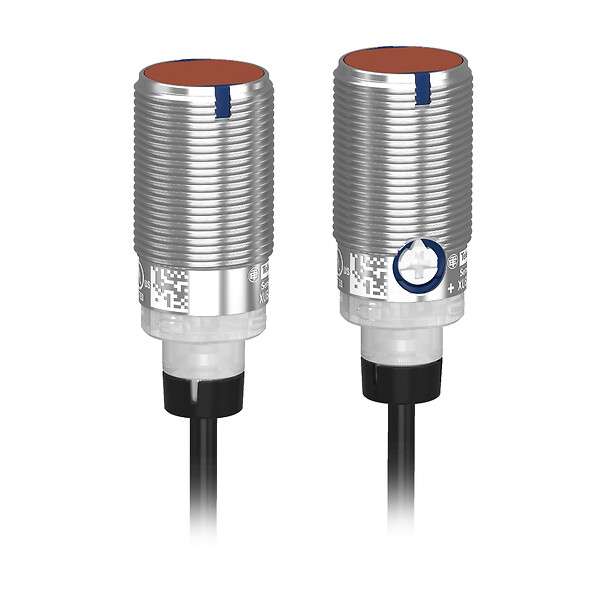
Telemecanique XUB2BPXNL2 Photoelectric Sensor: Metal-Body Thru-Beam for Stable Long Runs
The Telemecanique XUB2BPXNL2 photoelectric sensor is a thru-beam, single-mode sensor designed for industrial stations that value stable interruption detection combined with the mechanical resilience of a metal housing. Thru-beam sensing is frequently selected for long conveyor spans, pallet flow, and transfer points because detection is not based on reflected light from the target. Instead, it is built around a consistent optical link that is either present or interrupted, supporting predictable switching even when products vary in color, transparency, or surface finish.
Product identity and what differentiates it
Manufacturer datasheet information identifies the Telemecanique XUB2BPXNL2 photoelectric sensor as a cylindrical M18 device with a metal body, axial line of sight, discrete output, DC supply circuit, and a thru-beam detection system. The characteristics include Smax 30 m, PNP output type, and a 2 m cable.
Key specifications (practical selection points)
- Brand + code + type: Telemecanique XUB2BPXNL2 photoelectric sensor
- Sensor design: Cylindrical M18
- Material: Metal
- Detection system: Thru beam
- Line of sight: Axial
- Max sensing distance: Smax 30 m
- Supply circuit: DC
- Output: Discrete, PNP
- Connection: Cable, 2 m
Why metal housing can be an operational advantage
In high-traffic zones—near operator access points, gates, or tool changes—sensor bodies are more likely to experience incidental contact. A metal-body M18 can reduce the risk of cracked housings and preserve alignment under minor impacts. With the Telemecanique XUB2BPXNL2 photoelectric sensor, the metal construction complements the thru-beam strategy: long-distance stability from optics, combined with mechanical robustness that keeps the optics aligned over time.
Thru-beam commissioning: controlling variables systematically
A practical commissioning sequence is to establish alignment first, then validate process behavior. Start by aligning the emitter and receiver at the intended operating distance and confirm a stable “beam present” condition. Next, introduce representative products and validate that beam interruption is clean (no flicker or partial blocking), particularly with irregular shapes. Finally, validate that PLC input filters and scan time can capture the shortest interruption that occurs at peak line speed. This is where many “works on the bench” installations fail in production: the optics are fine, but the control system sampling is not aligned with the process speed.
Wiring discipline and maintenance traceability
Because the model is specified with a discrete PNP output and DC supply circuit, it usually aligns with standard 24 VDC panels, but output logic and wiring conventions still must be governed. Document the I/O point as Telemecanique XUB2BPXNL2 photoelectric sensor and include “thru-beam” in the station documentation so the maintenance team understands that a paired device exists. This prevents the common error of swapping only one side of the beam or replacing a thru-beam station with a diffuse sensor because “it was what was on the shelf.”
Operational best practices
- Use rigid mounting brackets and mechanical locking to prevent drift.
- Keep optical faces clean; define cleaning intervals based on contamination risk.
- Verify detection at the fastest product speed and smallest target profile.
- Maintain spares with exact reference text: Telemecanique XUB2BPXNL2 photoelectric sensor.
For cross-portfolio standardization across proximity and photoelectric families, consult Telemecanique sensor resources to keep wiring and mounting conventions consistent.
FAQ
- What detection system is used by the Telemecanique XUB2BPXNL2 photoelectric sensor?
It is specified as a thru-beam device. - What is the listed maximum sensing distance?
Smax is listed as 30 m. - Is the housing metal or plastic?
The datasheet specifies a metal body. - What output type is specified?
Discrete PNP is listed. - What cable length is provided?
A 2 m cable is specified.
Entity recap: The Telemecanique XUB2BPXNL2 photoelectric sensor is an M18 metal, axial, thru-beam device with Smax 30 m, DC supply, discrete PNP output, and a 2 m cable—built for stable long-run interruption detection with robust mechanical integration.