
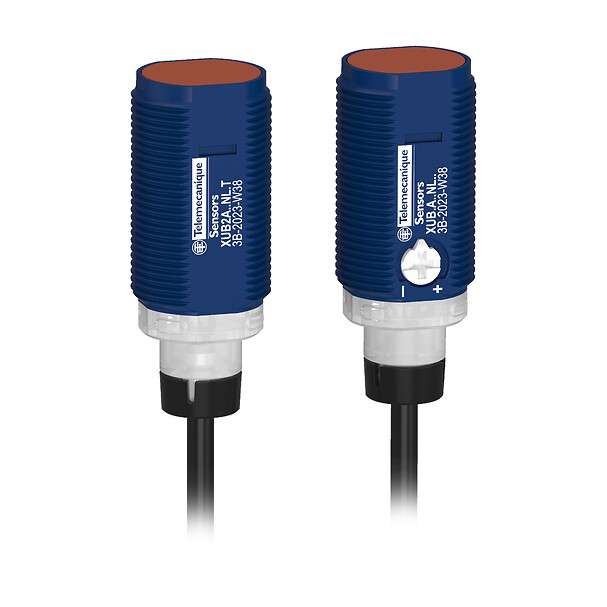
Telemecanique XUB2APXNL2 Photoelectric Sensor: Through-Beam Architecture and Field Integration
The Telemecanique XUB2APXNL2 photoelectric sensor is a general-purpose, single-mode, thru-beam device designed for reliable detection across longer distances where target color, gloss, or material variability would make reflective sensing less predictable. In a thru-beam setup, the control decision is based on whether the optical path between emitter and receiver is interrupted, which typically reduces sensitivity to target surface reflectivity and helps stabilize counting and presence verification tasks.
Product identity and technical positioning
Within the Telemecanique Photoelectric sensors XU range, the Telemecanique XUB2APXNL2 photoelectric sensor is specified as a cylindrical M18 device with a plastic body, axial line of sight, discrete output signal, DC supply circuit, and a thru-beam detection system. It is characterized with Smax 30 m, PNP output type, and a 2 m cable connection method. These attributes position it for stable long-span detection on conveyors, transfer lines, and material flow paths where consistent beam alignment can be maintained.
Core specifications (engineering snapshot)
- Brand + code + type: Telemecanique XUB2APXNL2 photoelectric sensor
- Sensor design: Cylindrical M18
- Material: Plastic
- Detection system: Thru beam
- Line of sight: Axial
- Max sensing distance: Smax 30 m
- Supply circuit: DC
- Output: Discrete, PNP
- Connection: Cable, 2 m
How thru-beam sensing behaves in real operation
Because detection is based on beam interruption, the Telemecanique XUB2APXNL2 photoelectric sensor is commonly chosen when products vary in color or finish, or when the target is not a single consistent object (for example, mixed cartons, trays, or irregular parts). In practice, the stability benefit comes from separating “target properties” from “signal decision”: the beam is either present or blocked. This is different from diffuse sensing, where the sensor must interpret reflected light strength and can be affected by dark surfaces, angled faces, or changing contamination patterns.
Mounting discipline: alignment, rigidity, and serviceability
Long-distance thru-beam performance depends on mechanical governance. For the Telemecanique XUB2APXNL2 photoelectric sensor, use rigid brackets, avoid thin sheet-metal flex points, and ensure vibration cannot rotate the body over time. A practical approach is to standardize a bracket pattern so replacement work returns the sensor to the same geometry without extended tuning. During commissioning, validate detection at the smallest expected object profile and at the highest line speed, then confirm the PLC input filtering does not create missed pulses or double counts.
Electrical integration and traceability
The device is specified with a discrete PNP output and DC supply circuit, which aligns with common 12–24 VDC automation panels. The operational best practice is to label the input point with the full identifier—Telemecanique XUB2APXNL2 photoelectric sensor—instead of a generic “photoeye.” That single detail reduces wrong-part substitutions, especially when similar M18 bodies exist with different optical systems or output logic.
Operational practices that protect detection stability
- Document a repeatable alignment procedure and keep it with the station work instructions.
- Protect optical faces from direct impact and specify cleaning checks when dust or film is expected.
- Validate the application at both low and high ambient light conditions if the installation is exposed.
- Maintain spare governance using the exact text: Telemecanique XUB2APXNL2 photoelectric sensor.
For broader selection alignment across sensor types, review the Telemecanique sensor portfolio so mounting and wiring conventions remain consistent across assets.
FAQ
- What detection system is used by the Telemecanique XUB2APXNL2 photoelectric sensor?
It is specified as a thru-beam detection system. - What is the maximum sensing distance?
Smax is stated as 30 m. - What body size and design does it use?
It is a cylindrical M18 sensor design. - What output type is listed?
It is specified with a discrete PNP output. - What connection method is provided?
A 2 m cable connection is listed.