
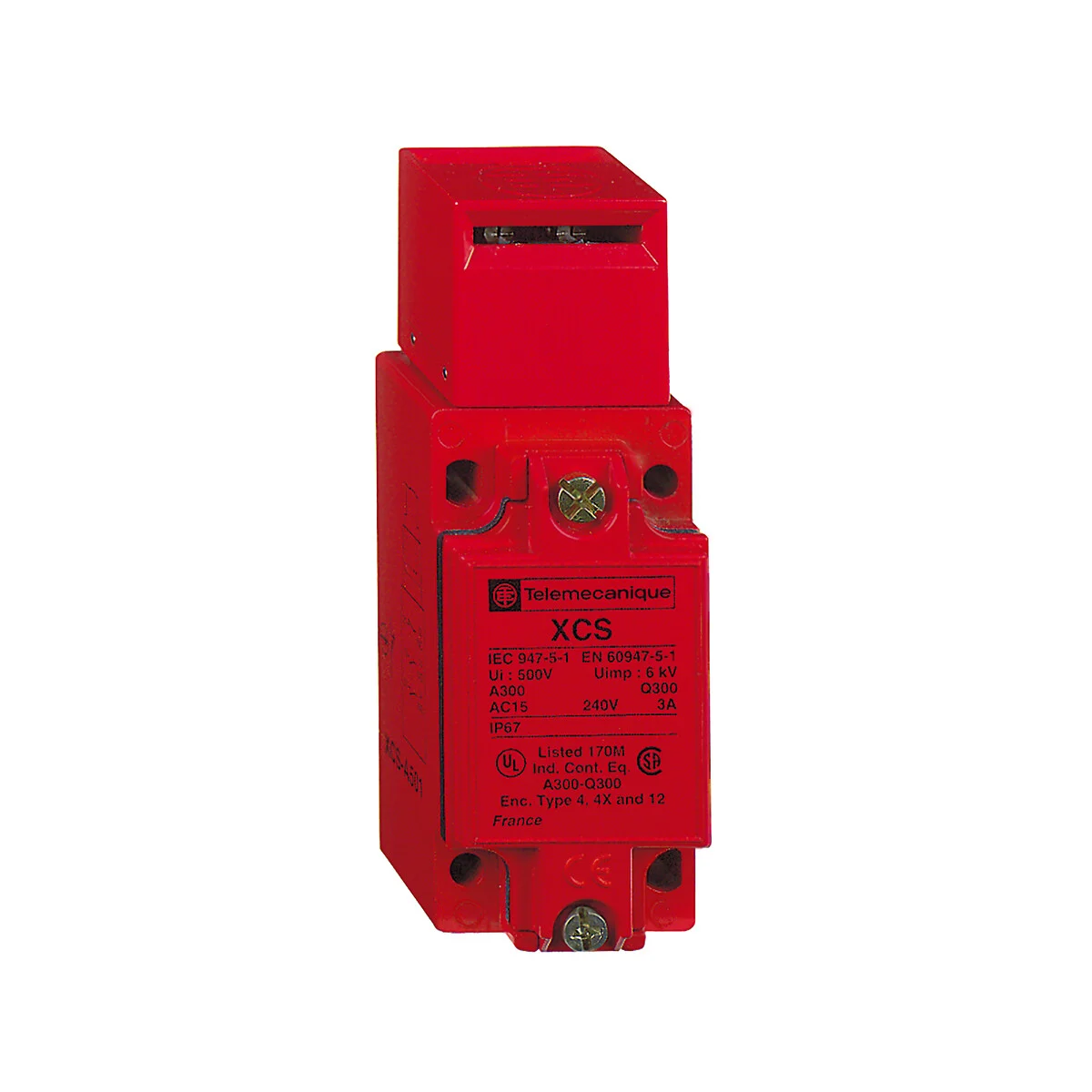
Telemecanique Sensors XCSZ03 Actuator Key: Pivoting Actuator for Metal XCS Safety Interlocks
The Telemecanique Sensors XCSZ03 actuator key is a pivoting actuator designed for metal safety interlock switches in the XCS family. In a guard door system, actuator geometry is the difference between “works on day one” and “works for years.” Pivoting actuator designs are often selected when the guard’s approach path can vary slightly—because the door is large, the hinges are offset, or the frame flexes under repeated use.
Telemecanique Sensors XCSZ03 What “Pivoting Actuator” Means in Practice
A pivoting actuator is typically chosen to provide tolerance against small angular misalignments. If a guard door closes with a slight twist, a pivoting actuator can reduce side forces at the entry point compared with a purely straight, rigid approach. That helps protect the switch head from rubbing wear and reduces nuisance trips that can happen when the actuator barely engages.
For maintenance teams, pivoting behavior can also make the system feel smoother: doors close with less “catching,” which is often a visible sign that the mechanical interface is healthy.
Typical Use with Metal XCS Interlock Families
The Telemecanique Sensors XCSZ03 actuator key is referenced as a pivoting actuator for XCS metal safety interlock switch families such as XCSA, XCSB, XCSC, and XCSE, depending on the switch configuration. The key operational point is to match the actuator reference to the correct switch family and the guard geometry, rather than improvising with a similar-looking part.
Installation: Getting the Alignment Right
Even with pivoting tolerance, good installation remains non-negotiable. The actuator should enter the head without being forced sideways. The most reliable installations share three features:
- Rigid switch mounting: The switch body is mounted to a stable frame member, not to a vibrating cover panel.
- Stable door behavior: Hinges are properly supported, and the door has a repeatable stop position.
- Actuator fixation that does not creep: Fasteners are secure and the mounting plane is flat.
After mounting XCSZ03, close the door slowly and watch the approach. The system should not require the operator to lift or push the door sideways to achieve engagement. If it does, correct the hinge alignment and door stop location first.
Commissioning: Confirm Consistency under Real Use
Commissioning should test realistic behavior, not a single gentle closure. Close the guard quickly, then gently, then with normal operator rhythm. Confirm that the safety circuit transitions consistently each time. Next, open the guard slightly and confirm the circuit drops out at a repeatable point. Repeat the test after several cycles. If results drift, the likely causes are loosened fasteners, door sag, or an unstable door stop.
Because the Telemecanique Sensors XCSZ03 actuator key is often chosen specifically to handle minor approach variation, it is still important to keep that variation within a sensible range. Pivoting helps; it does not compensate for a worn hinge that drops the door significantly.
Maintenance and Troubleshooting
If you see intermittent guard-closed signals, start with mechanical inspection. Look for wear marks, actuator movement on the door, and any change in the door’s closing position. Pivoting actuators can hide early-stage drift by continuing to engage, so a periodic inspection schedule is valuable in high-cycle doors. Tightening fasteners and restoring hinge alignment often resolves the issue without replacing the switch.
For related solutions, visit Telemecanique sensor.
Telemecanique Sensors XCSZ03 FAQ
1) What is XCSZ03?
It is a pivoting actuator key used with metal XCS safety interlock switches for guard doors.
2) Telemecanique Sensors XCSZ03 Why choose a pivoting actuator?
It can tolerate small angular approach variations and reduce side loading at the switch head entry.
3) What is the most common cause of nuisance trips?
Door sag, actuator creep, and a non-repeatable door stop position are frequent causes.
4) How do I validate a healthy installation?
Cycle the door repeatedly and verify consistent engagement feel and consistent safety-state transitions.
5) What should I inspect first during a fault?
Inspect hinges, door stop, actuator fasteners, and any rubbing or wear marks near the entry point.