
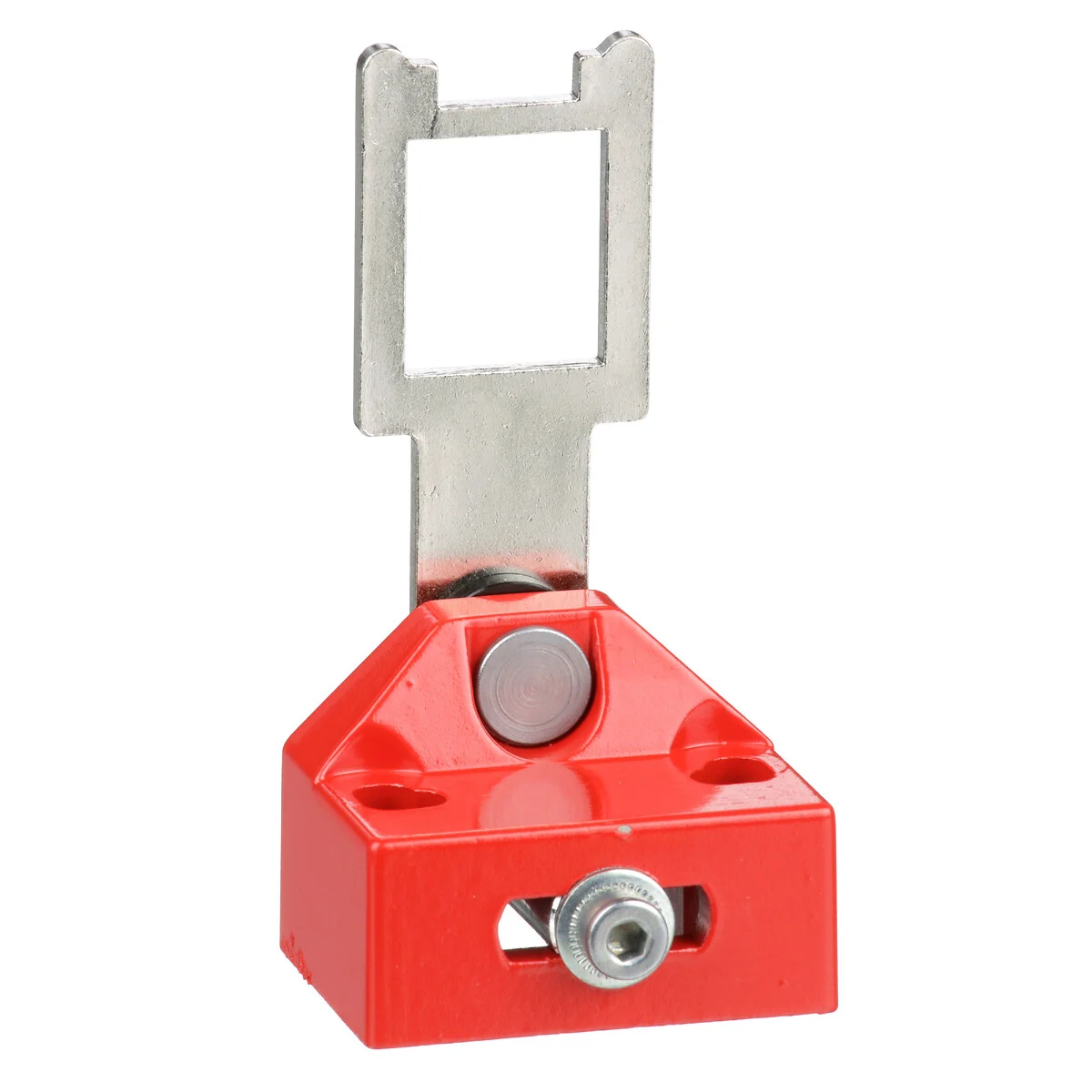
Telemecanique Sensors XCSLE2727312 Solenoid Interlock Safety Switch: Slim Plastic Design with 4NC Contacts
The Telemecanique Sensors XCSLE2727312 solenoid interlock safety switch is intended for guard doors where the control system must manage access as well as monitor position. In modern automation, a guard is often opened frequently—operators clear jams, replace film, clean tooling, or inspect products. If the machine can remain hazardous after a stop command, access control becomes essential. This is where solenoid interlocks are typically used: the machine decides when the guard can be opened.
Telemecanique Sensors XCSLE2727312 Why a Slim Solenoid Interlock Matters
Space is a constant constraint in machine design. Many guard frames have limited mounting depth, or the interlock must fit beside handles, hinges, and cable tracks. A slim body form factor helps reduce interference and simplifies mechanical integration—especially on narrow doors or sliding covers. With XCSLE2727312, the “slim” concept supports a clean installation where the switch does not force a redesign of the guard geometry.
In practice, slim interlocks are often used on packaging lines, assembly cells, and modular conveyor guards where the door structure is light. That makes mounting discipline even more important, because light doors can flex and sag over time.
Technical Identity in Practical Terms
Telemecanique Sensors XCSLE2727312 is described as a safety switch in the XCSLE family with a plastic slim design, a 24 V solenoid concept, slow-break contact operation, and 4 NC contacts. It is specified with 3 entries tapped M20, which supports structured wiring paths and gland-based sealing practices. The “4 NC” configuration is typically appreciated in safety circuits because multiple NC channels can be used for monitoring strategies, diagnostics, or channel separation depending on the safety design.
Telemecanique Sensors XCSLE2727312 Mechanical Installation: The Details That Prevent Downtime
Solenoid interlocks depend on accurate actuator alignment. If the actuator does not enter the head smoothly every time, the interlock will eventually become unreliable. The most common real-world causes of misalignment are:
- Door sag: hinges wear, and a heavy handle can pull the door downward over time.
- Flexible mounting: thin sheet brackets can shift slightly under vibration.
- Actuator twist: if the actuator bracket is not rigid, it can rotate and create rubbing.
A disciplined installation uses rigid mounting surfaces, stable hinges, and an actuator approach path that remains consistent across the full guard travel. A simple field check is to close the guard slowly: the actuator should enter without “catching,” and the electrical state should change in a repeatable way.
Telemecanique Sensors Telemecanique Sensors XCSLE2727312 Wiring and Sealing with M20 Entries
XCSLE2727312 is specified with three M20 cable entries, which can be helpful when wiring needs to route through multiple zones or when designers prefer a neat in/out layout. Sealing performance depends on correct gland selection (matching the cable diameter), correct tightening, and proper strain relief so cables do not pull during repeated guard cycles.
In high-use guards, cable strain near hinges is a frequent failure point. Even a well-rated device can produce intermittent signals if the cable is repeatedly flexed at a tight bend radius. Supporting the cable with a guide or protective conduit often pays back quickly in reduced stoppages.
Commissioning: Test Margin, Not Only Function
Good commissioning validates two things: the interlock functions correctly, and it has enough mechanical margin to remain stable over time. After installation:
- Test with guards fully closed, then slightly misclosed—confirm the system reacts as intended.
- Simulate typical operator behavior (quick close, slow close)—confirm consistent engagement.
- Verify lock/unlock behavior follows the machine’s intended access rules.
Testing only once can hide borderline alignment that fails later. Repeating tests after several dozen cycles helps reveal early drift.
Telemecanique Sensors XCSLE2727312 Maintenance Perspective
If a solenoid interlock starts to fault intermittently, begin with mechanical checks: hinge condition, fasteners, actuator position, and door alignment. Next, inspect cable routing for strain or jacket damage. Only after these are stable should you suspect internal device issues.
For more Telemecanique options and a family overview, see Telemecanique sensor.
Telemecanique Sensors XCSLE2727312 FAQ
1) What is XCSLE2727312 used for?
It is used for guard monitoring with solenoid-based access control, helping manage when a guard can be opened.
2) What contact configuration is specified?
It is specified with 4 NC contacts.
3) What supply voltage is specified?
It is specified for 24 V.
4) What cable entry is specified?
It is specified with three M20 tapped entries.
5) What causes the most frequent issues in the field?
Most issues are caused by misalignment (door sag, actuator shift) or cable strain near the hinge side.