
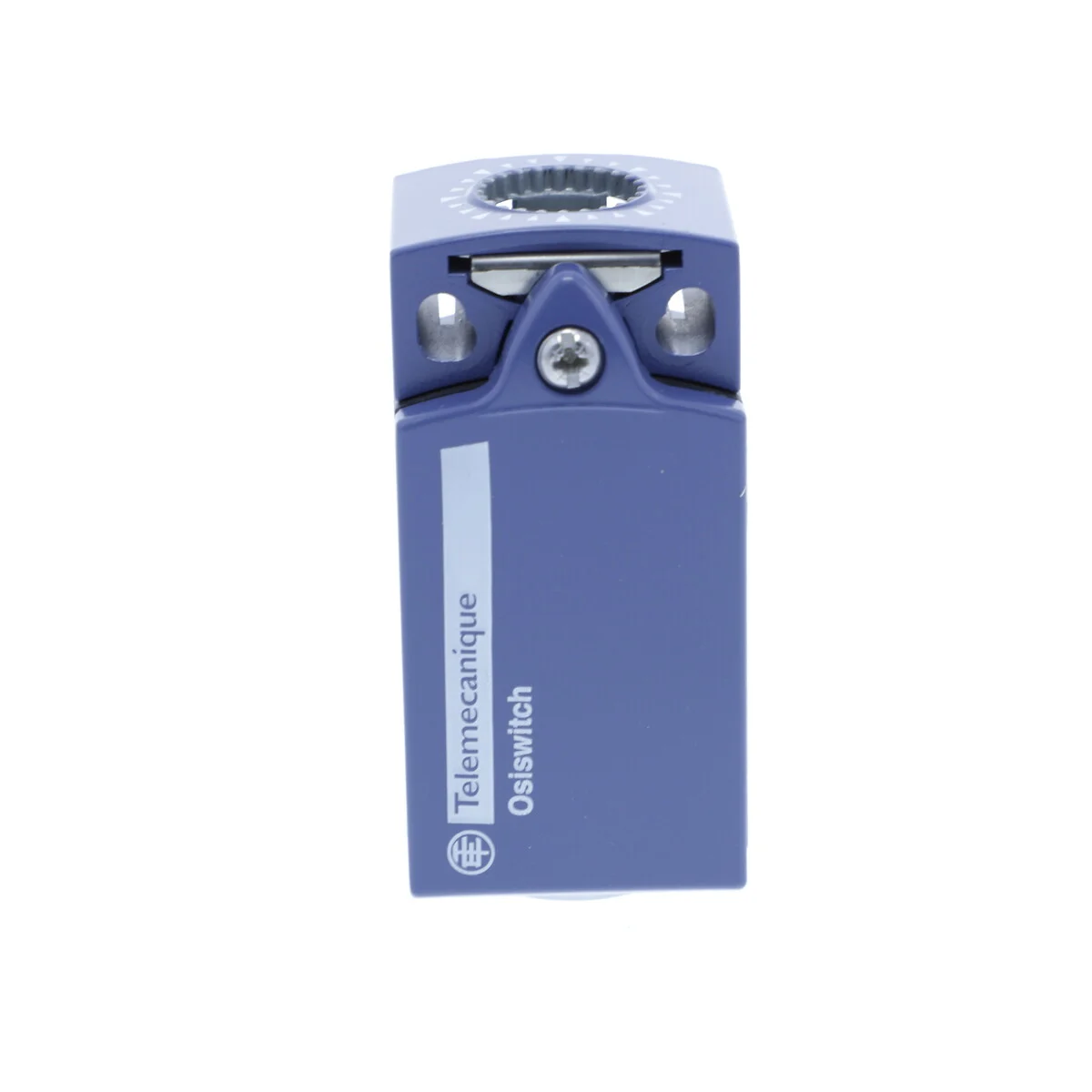
Telemecanique Sensors XCKN2149P20 Limit Switch: Ø50 Variable-Length Roller Lever for Broad Cam Engagement
The Telemecanique Sensors XCKN2149P20 limit switch is an XC Standard compact device designed for robust mechanical position detection where cam engagement needs a wider rolling interface. The model is defined as a limit switch with a spring return thermoplastic roller lever in variable length, featuring a 50 mm roller diameter, and using 1 NC + 1 NO snap-action contacts with an M20 x 1.5 cable gland entry.
In industrial automation, the difference between a stable signal and an intermittent one is often mechanical, not electrical. When a cam approaches a lever with minor alignment variation—because of belt wander, tolerance stack-up, or thermal expansion—a larger roller can help maintain smoother engagement. That is where the Telemecanique Sensors XCKN2149P20 limit switch becomes strategically useful: the Ø50 roller supports consistent rolling contact across broader cam faces.
Rotary Head Architecture and Approach Flexibility
This model is listed with a rotary head and rotary movement of the operating head, matching the roller lever concept. The approach type is specified as lateral approach, 2 directions. For machine builders, two-direction lateral approach can simplify standardization, especially when mirrored stations share common spares or when the same switch is used on left-hand and right-hand assemblies.
Contact Set and Switching Integrity
The Telemecanique Sensors XCKN2149P20 limit switch provides 1 NC + 1 NO contacts with snap action operation. In control terms, snap action provides a clean transition that PLC inputs can interpret reliably. This becomes important in slow-moving mechanisms where a gradual cam movement might otherwise hover around the switching point.
Cam-Driven Actuation Strategy
The switch is specified for actuation by 30° cam. A well-designed 30° cam surface can reduce impact, control overtravel, and produce repeatable switching behavior. With a Ø50 roller, you can also reduce local surface pressure at the contact interface, which supports longer mechanical stability in high-cycle operations.
- Design tip: choose a cam width that consistently contacts the roller across the full travel path.
- Maintenance tip: inspect the cam face for burrs or wear grooves that could create shock loads.
Wiring, Cable Entry, and Mechanical Sealing
The device uses screw-clamp terminals with a clamping capacity of 1 x 0.34…2 x 1.5 mm². Cable entry is specified as 1 entry tapped for M20 x 1.5 cable gland, with cable outer diameter 7–13 mm. These parameters directly inform installation quality: correct cable diameter enables proper gland compression, while correct conductor sizing reduces overheating risk and improves termination reliability.
Industrial control categories listed include A300 / AC-15 and R300 / DC-13, with Ithe 10 A referenced under IEC 60947-5-1 context. This supports disciplined load selection, especially for contactor coils and control circuits.
Telemecanique Sensors XCKN2149P20 Environmental and Mechanical Resistance
The model is listed with IP65 protection and IK04 impact rating, as well as shock and vibration resistance values. For dependable long-term performance, ensure the body mount is rigid and avoid excessive overtravel forces that can stress the rotary head mechanism.
To align this device with broader sensing standards across installations, see Telemecanique sensor.
Telemecanique Sensors XCKN2149P20 FAQ
1) What is distinctive about the actuator on XCKN2149P20?
It uses a thermoplastic roller lever with variable length and a 50 mm roller diameter.
2) What head type is specified?
A rotary head with rotary operating movement is specified.
3) What contact configuration is provided?
It provides 1 NC + 1 NO snap-action contacts.
4) What cable entry does it use?
It uses an M20 x 1.5 tapped entry for cable gland, cable diameter 7–13 mm.
5) What protection rating is listed?
It is listed with IP65 and IK04 ratings.