
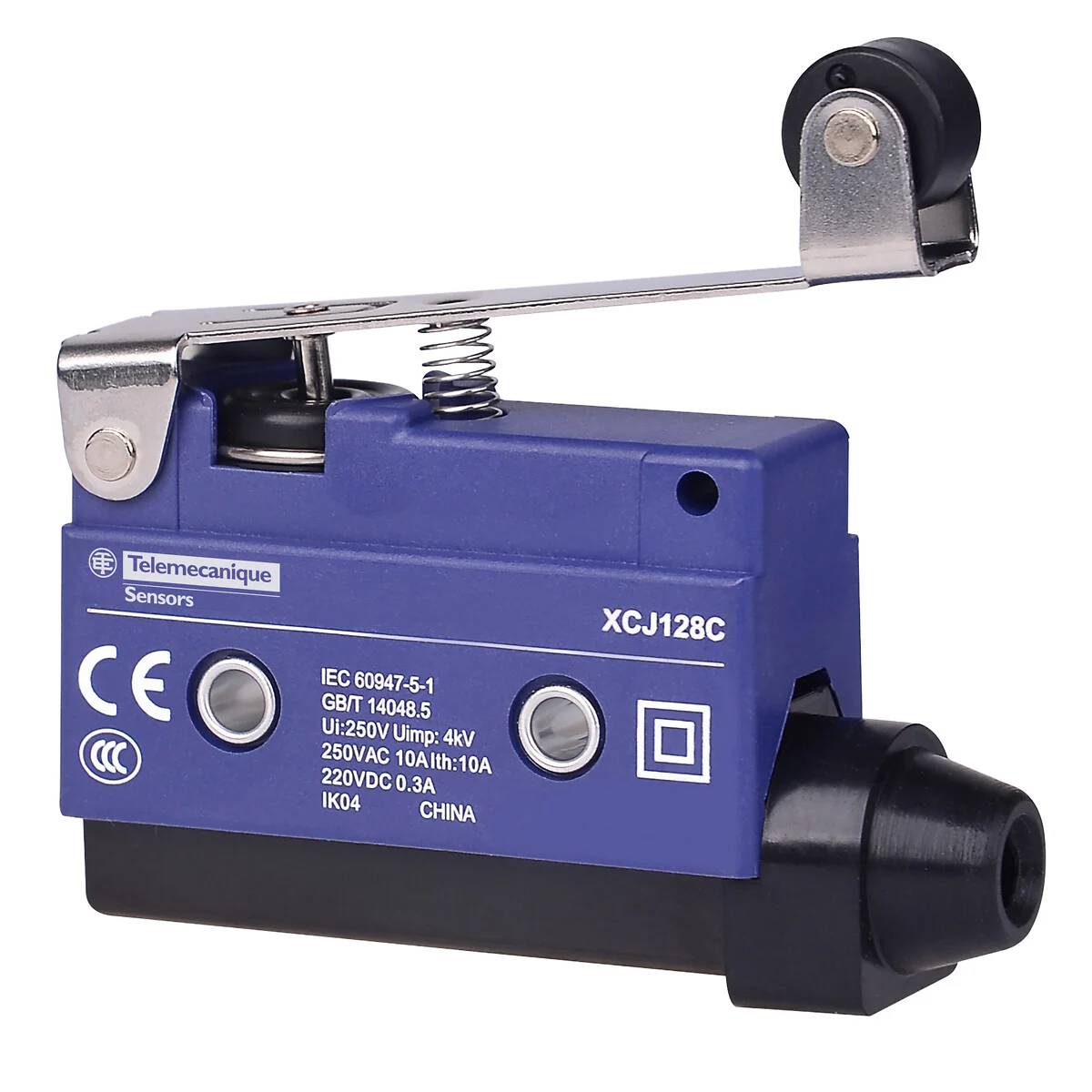
Telemecanique Sensors XCJ110C Limit Switch: Metal End Plunger Technical Overview
The Telemecanique Sensors XCJ110C limit switch is a compact, mechanical position sensor intended for light to medium duty automation tasks. It uses a fixed-body format with a plunger head and a spring return steel plunger that actuates “on end.” In everyday machinery, that means the XCJ110C is well suited to detect when a moving component reaches a defined stop, home position, or end-of-travel point.
Because a limit switch is ultimately a mechanical interface between motion and control logic, the performance of the Telemecanique Sensors XCJ110C limit switch is closely tied to mounting accuracy and consistent actuation geometry. When integrated correctly, it offers predictable switching behavior that is simple to troubleshoot and easy to validate during commissioning.
What Telemecanique Sensors XCJ110C Is and Why the Metal End Plunger Matters
The defining feature of the XCJ110C is its metal end plunger style actuation. Unlike roller actuators that reduce friction through rotation, a metal end plunger is commonly used when a direct axial contact is acceptable and the mechanical striker is well controlled. This approach can be attractive in compact assemblies where the cam or striker hits the sensor squarely and consistently.
In control system documentation, you will often see engineers standardize naming as Telemecanique Sensors XCJ110C limit switch to keep maintenance and spare-parts records consistent across sites.
Telemecanique Sensors XCJ110C Technical Characteristics at a Glance
- Product type: Limit switch for light to medium duty use
- Body type: Fixed
- Head type: Plunger head
- Actuator: Spring return plunger (steel)
- Switch actuation: On end
- Approach type: Vertical approach, 1 direction
- Movement: Linear operating head movement
- Contact mechanism: Snap action
- Electrical connection: Screw-clamp terminals
- Cable entry: Flexible rubber cable gland (typical outer diameter 8.5–10.5 mm)
- Protection class: IP40 for controlled environments
- Operational context: Commonly referenced contact class designations A300 (AC) and R300 (DC)
Typical Applications in Industrial Automation
The Telemecanique Sensors XCJ110C limit switch is usually applied where the machine designer can guarantee a clean, vertical strike onto the plunger. Examples include:
- End-stop detection on guided slides and linear shuttles
- Clamp open/close confirmation where the mechanism lands firmly
- Guard or access panel position confirmation in non-washdown zones
- Packaging stations where actuators return to a fixed home position
In these scenarios, the XCJ110C provides a crisp state transition that is easy to interpret at the PLC input layer. Many teams prefer mechanical limit switches in these roles because the device behavior is transparent: if the actuator is pressed, the contact changes state.
Mounting Strategy and Actuation Design
For dependable results, treat mounting as an engineering task rather than an installation afterthought. With the Telemecanique Sensors XCJ110C limit switch, prioritize:
- Square contact: Align the striker so it contacts the plunger head axially, avoiding side forces.
- Rigid mounting: Secure the body to a stable bracket to prevent drift from vibration.
- Repeatable trip point: Ensure the cam/striker geometry produces the same actuation point each cycle.
- Service access: Leave enough clearance for terminal inspection and cable gland integrity checks.
For broader system planning and consistent spare strategy, you can explore related sensor categories via Telemecanique sensor, especially if your facility standardizes one supplier family for multiple machine platforms.
Electrical Integration Notes
The XCJ110C typically lands on standard digital inputs. Screw-clamp terminals support straightforward wiring and re-termination during maintenance. To improve long-term signal stability:
- Use proper strain relief: Avoid tension on the gland and prevent cable pull-out during servicing.
- Separate noisy conductors: Keep switch wiring away from motor power lines where feasible.
- Apply input filtering if needed: If the machine vibrates near the trip point, PLC filtering can prevent brief toggles.
Maintenance, Diagnostics, and Lifecycle Thinking
The Telemecanique Sensors XCJ110C limit switch is generally easy to validate in the field: manually actuate the plunger and confirm the input state change. During preventive maintenance, inspect for physical damage, verify mounting tightness, and confirm that the striker still meets the plunger squarely. If you observe inconsistent switching, the root cause is often mechanical—misalignment or insufficient travel—rather than an electrical defect.
FAQ
1) What is the actuator type on XCJ110C?
XCJ110C uses a spring return steel plunger with on-end actuation.
2) What approach direction is intended for this limit switch?
It is intended for vertical approach in one direction, where a striker presses the plunger axially.
3) Is XCJ110C appropriate for open, dusty production floors?
It is typically used in controlled environments due to IP40 protection. Consider higher IP protection if contamination is significant.
4) How is wiring typically terminated?
Wiring is terminated using screw-clamp terminals, supporting straightforward field installation.
5) What is a practical first check when the signal is unstable?
Verify mechanical alignment and travel margin at the trip point; these factors commonly cause intermittent toggling.