
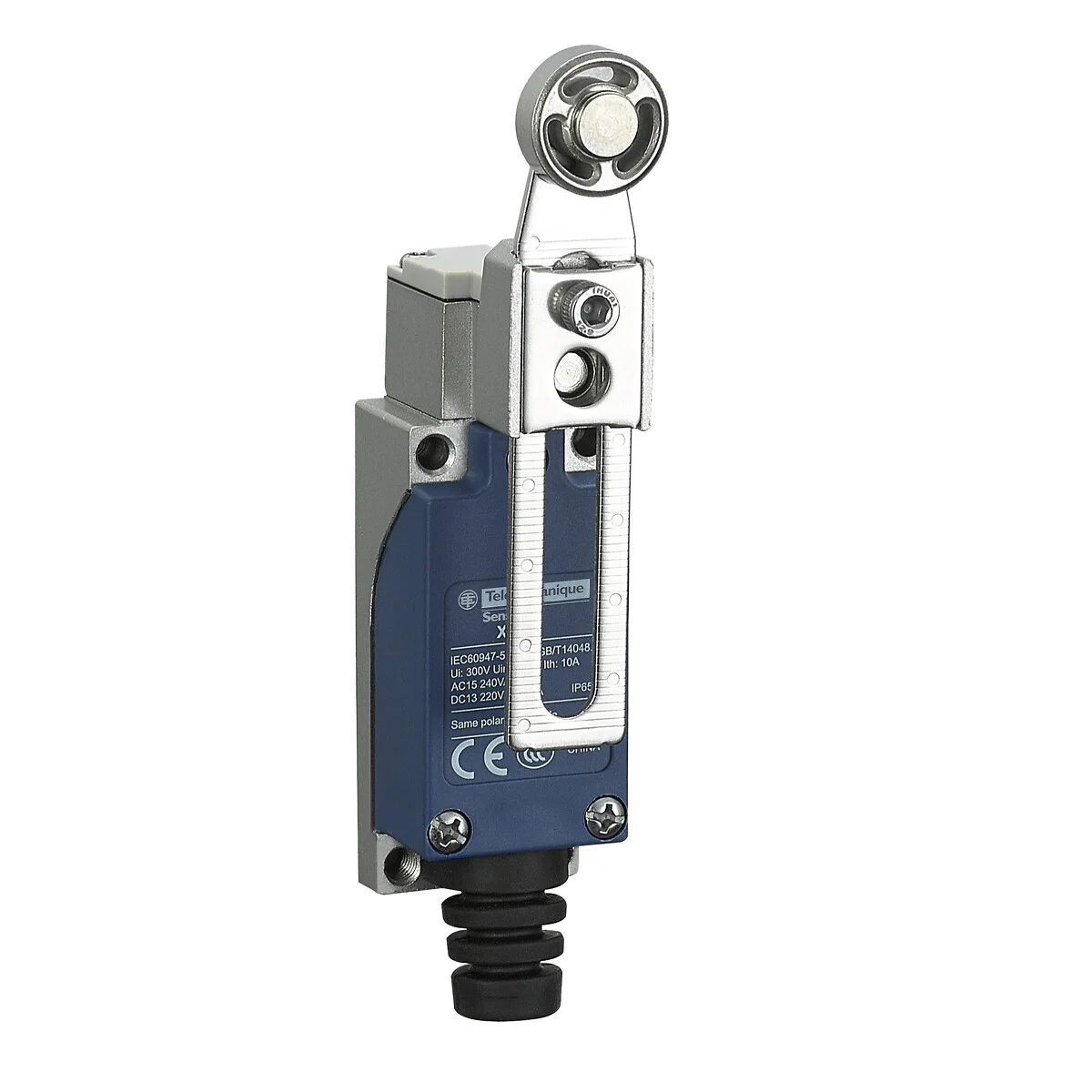
Telemecanique Sensors XCE110C Limit Switch: Metal End Plunger Technical Guide
The Telemecanique Sensors XCE110C limit switch is an OsiSense XC Basic series device built for medium-duty machine position feedback using a plunger head and a spring return plunger (steel). In practical automation terms, Telemecanique XCE110C limit switch is used where the moving element approaches the switch in a controlled, repeatable line—most commonly a vertical approach that presses the plunger on the end of travel to signal a controller.
Product Identity and Keyword Variations
In documentation and engineering conversations, you may see keyword variations such as Telemecanique Sensors XCE110C limit switch, Telemecanique XCE110C limit switch, or Telemecanique Sensors XCE110C position switch. All refer to the same electromechanical limit switch format intended to provide discrete, contact-based switching for machine logic.
Core Technical Characteristics (XCE110C)
- Range / Series: OsiSense XC, Basic
- Device short name: XCE; Body type: Fixed
- Head type: Plunger head; Movement: Linear
- Operator type: Spring return plunger (steel)
- Switch actuation: On end; Approach: Vertical approach, 1 direction
- Material: Plastic and metal
- Electrical connection: Screw-clamp terminals (1 x 1.5 mm²)
- Cable entry: Flexible rubber cable gland; 6–9 mm cable OD
- Contact operation: Snap action; Positive opening: Without
- Operating rate: 120 cycles/min
- IP rating: IP65 (IEC 60529)
- Ratings: A300 (AC 240 V, Ie 3 A, Ithe 10 A) and R300 (DC 220 V, Ie 0.3 A) per IEC 60947-5-1
How the Metal End Plunger Interface Is Typically Used
Unlike roller levers or whisker actuators that tolerate variable contact angles, the Telemecanique Sensors XCE110C limit switch is optimized for a direct press. This is valuable on assemblies with a defined stop, cam, or striker that reaches the switch at the same point each cycle. The linear plunger movement supports clear mechanical intent: when the machine reaches the limit, the plunger compresses and the contact state changes.
In engineering governance terms, this supports a stable signal for PLC inputs, counters, and interlocks (non-safety). Since it is a snap-action switch, it tends to reduce slow-transition ambiguity when the mechanical approach is well-defined.
Installation and Wiring Considerations
The XCE110C uses screw-clamp terminals and a flexible cable gland for 6–9 mm cable outer diameter. When specifying wiring, ensure conductor sizing aligns with the terminal capacity and that the gland is tightened to preserve the IP65 envelope. From a maintenance perspective, it is good practice to route cables to minimize repeated flex at the gland entry point, especially in high-cycle equipment.
Environmental Fit and Durability
With IP65 protection, the Telemecanique XCE110C limit switch supports typical factory-floor conditions where dust and water jets may occur during washdown (within the limits of installation correctness). Shock and vibration resistance specifications point to suitability for machine mounting where cyclic impacts are expected. Choosing XCE110C vs. Other Actuator Styles
Use Telemecanique Sensors XCE110C limit switch when the approach is vertical and single-direction and the actuator can press the plunger reliably. If the approach is lateral, multi-directional, or cam-driven at an angle, a roller lever or whisker style may reduce mechanical complexity. For related product context in the Telemecanique portfolio, see Telemecanique sensor.
FAQ (XCE110C)
- What actuator style does XCE110C use?
It uses a spring return steel plunger with a plunger head and linear movement. - What approach direction is specified?
Vertical approach, one direction, with actuation on the end. - Is XCE110C suitable for dusty or wet areas?
It is rated IP65 per IEC 60529 when installed correctly. - What electrical designations are listed?
A300 for AC and R300 for DC are referenced in relation to IEC 60947-5-1. - How is the cable connected?
Via screw-clamp terminals and a flexible rubber cable gland sized for 6–9 mm cable OD.