
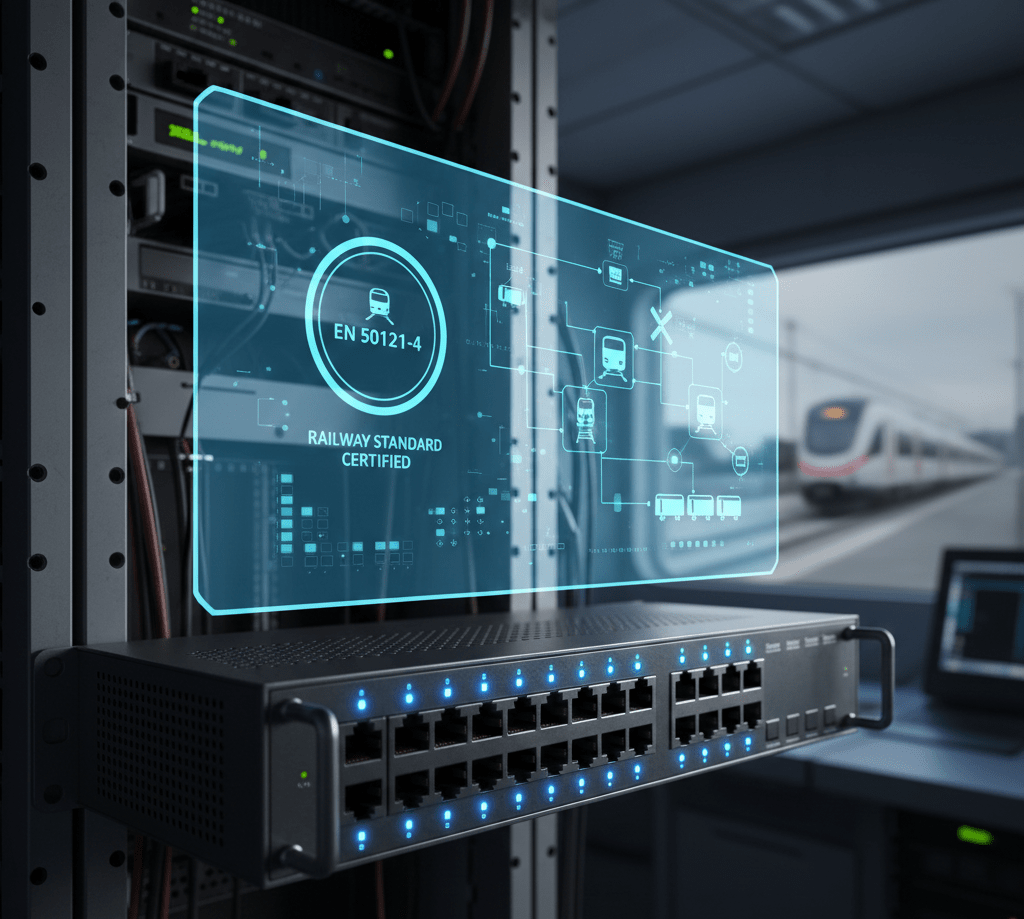
EN50121-4 Railway Standard Certified Industrial Ethernet Switch
Railway and rolling stock applications subject network equipment to severe vibration, shock, electromagnetic interference, and temperature extremes. Advantech EN50121-4 certified industrial Ethernet switches meet stringent railway specifications ensuring reliable operation in trains, trams, and metro systems.
EN50121-4 Certification Requirements
EN50121-4 specifies EMC requirements for railway rolling stock covering emissions and immunity. Switches must withstand electromagnetic fields from traction systems, pantograph arcing, and signaling equipment without malfunction. Conducted and radiated emissions must remain below limits preventing interference with train control systems. Temperature cycling, vibration, and shock tests verify mechanical robustness.
Railway-Specific Features
Wide voltage input (24-110V DC) accommodates various railway power systems including battery-backed emergency power. Vibration resistance per EN 61373 handles track irregularities and wheel impacts. Conformal coating protects against humidity and contaminants in underfloor equipment compartments. M12 circular connectors provide secure connections resistant to vibration-induced disconnection.
Onboard Network Applications
Passenger WiFi, CCTV surveillance, passenger information displays, and train control systems all rely on Ethernet networking. EN50121-4 switches enable IP-based convergence of these systems on unified infrastructure. Ring redundancy ensures continuous operation despite cable damage or equipment failures common in railway environments.
FAQ
Are railway switches different from standard industrial switches?
Yes, railway switches undergo additional testing for vibration, shock, wider voltage ranges, and stringent EMI requirements specific to rolling stock. While expensive, railway certification ensures reliable operation in uniquely demanding mobile environments.
Can non-certified switches work on trains?
Not recommended – uncertified equipment may malfunction from EMI, fail prematurely from vibration, or interfere with safety systems. Railway operators typically mandate certified equipment for compliance and liability reasons.