
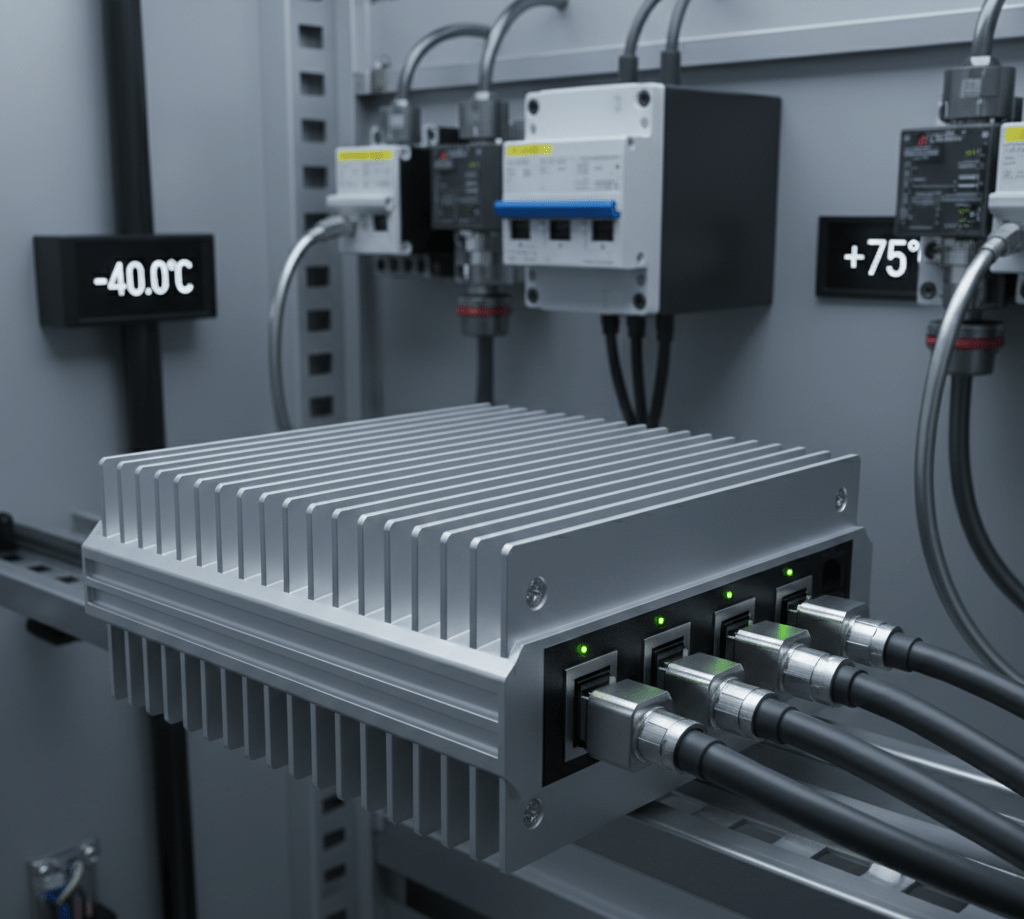
-40°C to +75°C Wide Temperature Industrial Ethernet Switch
Outdoor installations, unheated facilities, and extreme climate locations subject network equipment to temperature ranges far exceeding commercial specifications. Advantech wide temperature industrial Ethernet switches operate reliably from -40°C arctic conditions to +75°C desert heat, enabling networking in the world’s harshest environments.
Component Selection for Temperature Extremes
Commercial switches specify 0°C to 40°C operation. Industrial switches extend this to -20°C to 60°C. Wide temperature models use specially selected components verified across -40°C to +75°C through extensive thermal cycling tests. Low-temperature capacitors, wide-range crystals, and industrial-grade semiconductors maintain functionality at temperature extremes.
Cold Start Capabilities
Starting switches at -40°C presents unique challenges. Electrolytic capacitors lose capacitance, oscillators drift, and some semiconductors refuse operation. Wide temperature switches employ polymer capacitors maintaining capacitance at low temperatures, temperature-compensated oscillators, and firmware optimized for cold starts ensuring reliable boot-up.
High Temperature Operation
Operating at +75°C requires enhanced thermal management. Larger chassis with more extensive heat sinking dissipate heat in high ambient temperatures. Conformal coating protects against humidity in tropical environments. Some models incorporate automatic thermal throttling reducing switch performance slightly if internal temperatures approach limits, preventing damage while maintaining basic connectivity.
FAQ
What applications require wide temperature switches?
Outdoor telecom installations, oil/gas wellhead monitoring, arctic research stations, desert solar farms, cold storage warehouses, and mobile equipment in extreme climates all benefit from extended temperature specifications. Any installation lacking climate control requires industrial temperature ratings.
Do wide temperature switches cost more?
Yes, specialized components and testing increase costs 30-50% over standard industrial switches. However, reliability in extreme environments often justifies investment versus frequent failures with inadequate temperature ratings causing expensive service calls and downtime.